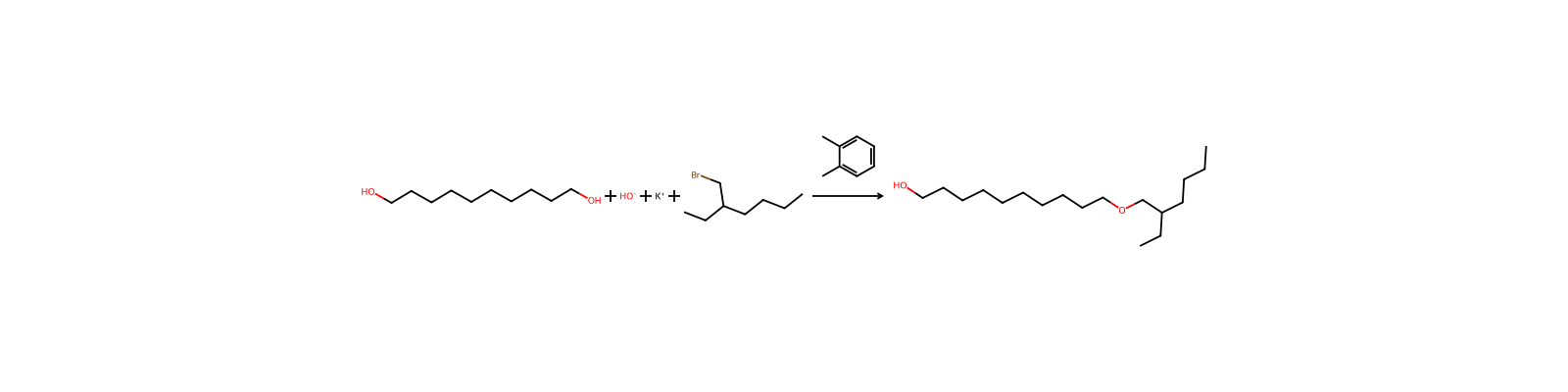
2-Ethylhexyl bromide
Completing data — refresh the page later to see the latest
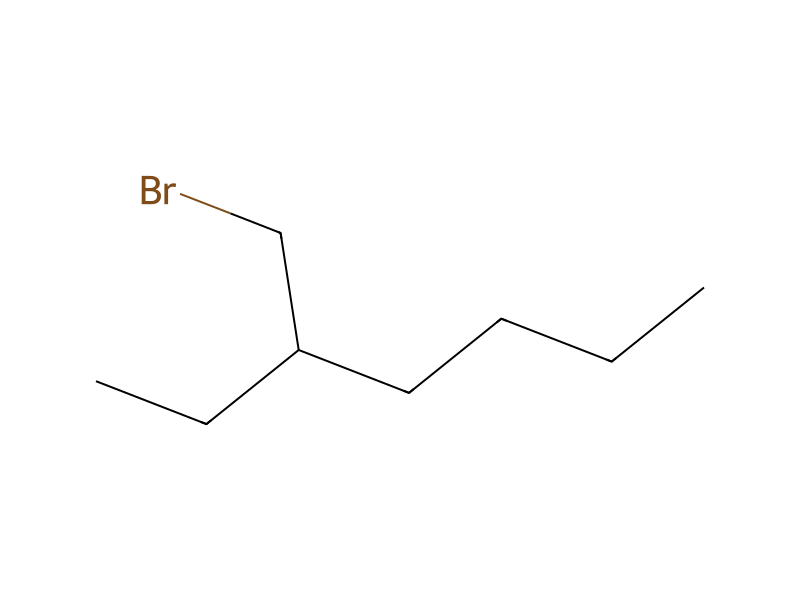
Basic information
- CAS
18908-66-2- Standard SMILES
CCCCC(CC)CBr- InChIKey
NZWIYPLSXWYKLH-UHFFFAOYSA-N- Molecular formula
- C8.H17.Br
- Average molar mass
- 193.12 g/mol
- Monoisotopic mass
- 192.05136264
Names & identifiers
- Preferred name
- 2-Ethylhexyl bromide
- IUPAC
- 3-(bromomethyl)heptane
- English name
- 2-Ethylhexyl bromide
- Molecular formula
- C8H17Br
- Molecular weight
- 193.12
Names & synonyms
2-Ethylhexyl bromide3-(Bromomethyl)heptane18908-66-21-Bromo-2-ethylhexaneHeptane, 3-(bromomethyl)-2-EthylhexylbromideMFCD000002202-Ethyl-1-hexyl bromide1398065-97-8N280JW4C4W2-Ethyl-1-hexyl Bromide; 2-Ethylhexyl Bromide; 3-(Bromomethyl)heptane3-bromomethylheptane
Show more names
OCTYL BROMIDEBromoctaneBROMO ISOOCTANEISO-OCTYL BROMIDEEthylhexyl broMid1-BROMO ISO OCTANE
EINECS 242-659-92-Ethyl-bromohexane3-bromomethyl-heptane1-bromo-2 ethylhexane2-Ethylhexylhydrobromide3-(bromomethyl)-heptane1-bromo-2-ethyl hexane3-(bromo-methyl)-heptane
Database identifiers
- CAS
18908-66-2- PubChem CID
- 86804
- DTXSID
DTXSID80885074- UNII
- N280JW4C4W
- EC Number
- 242-659-9
- Nikkaji
- J103.946F
Properties
Computed structural propertiesFilling in
- XLogP
- 4.5
- Topological polar surface area
- 0 Ų
- Hydrogen bond donors
- 0
- Hydrogen bond acceptors
- 0
- Rotatable bonds
- 5
- Heavy atoms
- 9
- Formal charge
- 0
- Complexity
- 52.5
Experimental & physicochemical properties
Chemical ClassesOther Classes -> Halogenated Aliphatics, Saturated
SpringerMaterials PropertiesDielectric constant
Density1.086 @25 °C
Physical DescriptionColorless liquid; [Sigma-Aldrich MSDS]
Physicochemical properties
- Melting point
- -55 °C · -55°C (estimate)
- Boiling point
- 75 · 75-77 °C16 mm Hg(lit.)
- Density
- 1.086 g/mL · 1.086 g/mL at 25 °C(lit.)
- refractive index
- 20 · n20/D 1.4538(lit.)
- Flash point
- 157 °F · 157 °F
- storage temp.
- 2 · 2-8°C
- solubility
- Chloroform, Ethyl Acetate
- form
- Liquid
Safety & regulation
Safety information is for reference only and does not replace the supplier’s Safety Data Sheet (SDS), applicable regulations, or professional assessment.
GHS classification
GHS Classification
This chemical does not meet GHS hazard criteria for 19% (37 of 195) of reports.
Warning
H302 (55.9%): Harmful if swallowed [Warning Acute toxicity, oral]
P261, P264, P264+P265, P270, P271, P280, P301+P317, P302+P352, P304+P340, P305+P351+P338, P319, P321, P330, P332+P317, P337+P317, P362+P364, P403+P233, P405, and P501 (click each P-code to see the statement)
Aggregated GHS information provided per 195 reports by companies from 11 notifications to the ECHA C&L Inventory. Each notification may be associated with multiple companies.
Hazard information
Regulatory Information
Status: Active Update: 25-11-2021 https://echa.europa.eu/registration-dossier/-/registered-dossier/19046
3-(Bromomethyl)heptane: Does not have an individual approval but may be used under an appropriate group standard
Hazards SummaryStabilized with 1% potassium carbonate; A skin and strong eye irritant; [Sigma-Aldrich MSDS] See 1-Bromohexane.
Hazard Classes and CategoriesAcute Tox. 4 (55.9%)
Safety & protection
Protective Action Criteria (PAC)
12 [mg/m3]
130 [mg/m3]
790 [mg/m3]
Safety data
- PPE
- Eyeshields, Gloves, type ABEK (EN14387) respirator filter
- wgk
- 3
Chemistry & industry
Uses & manufacturing
General Manufacturing InformationHeptane, 3-(bromomethyl)-: ACTIVE
Applications
UsesIntroduction of the 2-ethylhexyl group in organic synthesis; preparation of disinfectants, pharmaceuticals.
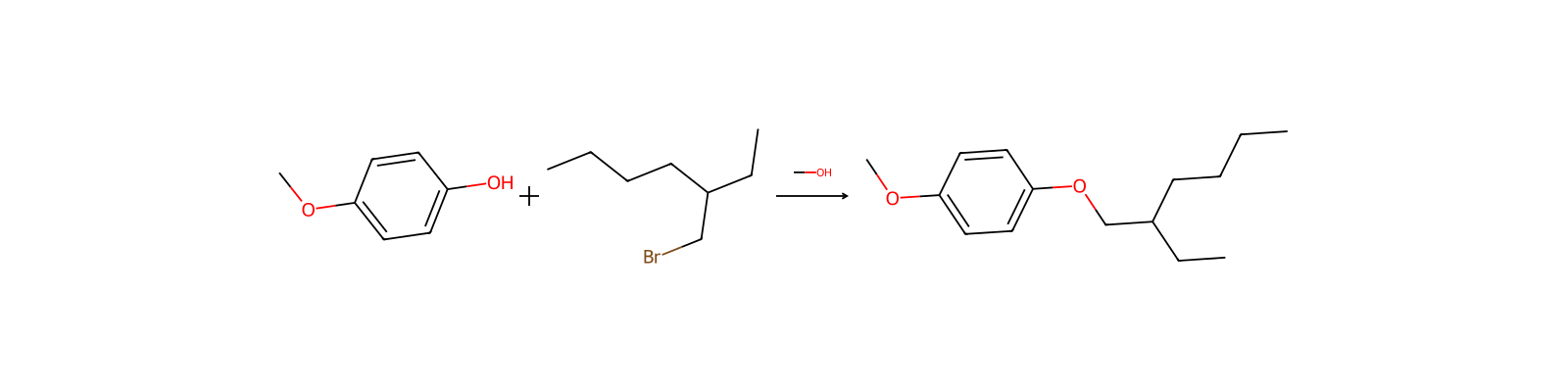
Uses2-Ethylhexyl bromide has been used in the synthesis of:methoxy-4-(2-ethylhexyloxy)benzenephotovoltaic conjugated polymer, having benzo[1,2-b:4,5-b′]difuran building block1-bromo-4-(2′-ethylhexyloxy)benzene3
Upstream & downstream products
Upstream raw materials
Downstream products
Related reactions
103 records






Compound notes
Loading…