

Basic information
- Standard SMILES
N#Cc1ccc(CBr)cc1- InChIKey
UMLFTCYAQPPZER-UHFFFAOYSA-N- Molecular formula
- C8H6BrN
- Average molar mass
- 196.04 g/mol
- Monoisotopic mass
- 194.96836
Names & identifiers
- Preferred name
- 4-(Bromomethyl)benzonitrile
- IUPAC
- 4-(bromomethyl)benzonitrile
- English name
- 4-Cyanobenzyl bromide
- Molecular formula
- C8H6BrN
- Molecular weight
- 196.04
Names & synonyms
4-Cyanobenzyl bromide17201-43-34-(Bromomethyl)benzonitrilep-Cyanobenzyl bromideBenzonitrile, 4-(bromomethyl)-alpha-Bromo-p-tolunitrilep-(Bromomethyl)benzonitrileBenzonitrile, p-(bromomethyl)-p-Tolunitrile, alpha-bromo-NSC 95792p-Toluonitrile, alpha-bromo-RV332B84ZG
Show more names
Para Cyano Benzyl BromideA-BROMO-P-TOLUNITRILE4CNBBAKOS BC-30284-CyanobenzylAKOS BBS-000039704-Cyanobezyl Bromide4-Cynobenzyl bromide
EINECS 241-246-0NSC-95792DTXSID40864744RefChem:515417DTXCID90813227InChI=1/C8H6BrN/c9-5-7-1-3-8(6-10)4-2-7/h1-4H,5H4-bromomethylbenzonitrile4-Bromomethyl-benzonitrile
Database identifiers
- CAS
17201-43-3- PubChem CID
- 86996
- DTXSID
DTXSID40864744- UNII
- RV332B84ZG
- EC Number
- 241-246-0
- Nikkaji
- J266.795I
Properties
Computed structural properties
- XLogP
- 2.2
- Topological polar surface area
- 23.8 Ų
- Hydrogen bond donors
- 0
- Hydrogen bond acceptors
- 1
- Rotatable bonds
- 1
- Heavy atoms
- 10
- Formal charge
- 0
- Complexity
- 139
Physicochemical properties
- Melting point
- 115 · 115-117 °C(lit.)
- Boiling point
- 143 °C · 143 °C / 12mmHg
- Density
- 1.5466 · 1.5466 (rough estimate)
- refractive index
- 1.655 · 1.6550 (estimate)
- storage temp.
- 2 · Inert atmosphere,2-8°C
- solubility
- Chloroform (Slightly), Methanol (Slightly)
- form
- Liquid
- color
- Clear colorless to yellow
- Water Solubility
- Soluble in chloroform and methanol. Insoluble in water.
- BRN
- 636717 · 636717
- InChI
- InChI=1S/C8H6BrN/c9-5-7-1-3-8(6-10)4-2-7/h1-4H,5H2
- InChIKey
- UMLFTCYAQPPZER-UHFFFAOYSA-N
- SMILES
- C(#N)C1=CC=C(CBr)C=C1
- CAS DataBase Reference
- 17201 · 17201-43-3(CAS DataBase Reference)
- FDA UNII
- 332 B84ZG · RV332B84ZG
- NIST Chemistry Reference
- «ALPHA»-bromo-p-tolunitrile(17201-43-3)
- EPA Substance Registry System
- 4 · Benzonitrile, 4-(bromomethyl)- (17201-43-3)
- UNSPSC Code
- 12352100 · 12352100
- NACRES
- 22 · NA.22
- Symbol(GHS)
- 5 · GHS05,GHS08
- Signal word
- Danger
- Hazard statements
- 314 · H314-H334
- Precautionary statements
- 260 · P260-P280-P284-P303+P361+P353-P304+P340+P310-P305+P351+P338
- PPE
- 3 · Eyeshields, Faceshields, Gloves, type P3 (EN 143) respirator cartridges
- Hazard Codes
- C
- Risk Statements
- 34 · 34-42/43
- Safety Statements
- 22 · 22-26-36/37/39-45-28A
- RIDADR
- 3261 · UN 3261 8/PG 2
- WGK Germany
- 3 · 3
- F
- 10 · 10-19-21
- Hazard Note
- Corrosive
- TSCA
- TSCA listed
- HazardClass
- 8 · 8
- PackingGroup
- II
- HS Code
- 29269090 · 29269090
- Storage Class
- 8 A · 8A - Combustible corrosive hazardous materials
- Hazard Classifications
- 1 Skin · Resp. Sens. 1Skin Corr. 1B
- Limited Quantities
- 1 L · 1.0 L (0.3 gallons) (liquid) or 1 Kg (2.2 lbs) (solid)
- Excepted Quantities
- Max Inner Pack (30g or 30ml) and Max Outer Pack (500g or 500ml)
Safety & regulation
GHS classification
GHS Classification
Danger
H314 (98.8%): Causes severe skin burns and eye damage [Danger Skin corrosion/irritation];H318 (35.3%): Causes serious eye damage [Danger Serious eye damage/eye irritation];H334 (88.2%): May cause allergy or asthma symptoms or breathing difficulties if inhaled [Danger Sensitization, respiratory]
P233, P260, P264, P264+P265, P271, P280, P284, P301+P330+P331, P302+P361+P354, P304+P340, P305+P354+P338, P316, P317, P321, P342+P316, P363, P403, P405, and P501 (click each P-code to see the statement)
Aggregated GHS information provided per 85 reports by companies from 10 notifications to the ECHA C&L Inventory. Each notification may be associated with multiple companies.;Information may vary between notifications depending on impurities, additives, and other factors. The percentage value in parenthesis indicates the notified classification ratio from companies that provide hazard codes. Only hazard codes with percentage values above 10% are shown. For more detailed information, please visit ECHA C&L website.
Hazard information
Regulatory InformationBenzonitrile, 4-(bromomethyl)-: Does not have an individual approval but may be used under an appropriate group standard
Hazard Classes and CategoriesSkin Corr. 1B (98.8%);Eye Dam. 1 (35.3%);Resp. Sens. 1 (88.2%)
Regulatory information
Regulatory InformationBenzonitrile, 4-(bromomethyl)-: Does not have an individual approval but may be used under an appropriate group standard
Safety data
- F
- 10-19-21
- PPE
- Eyeshields, Faceshields, Gloves, type P3 (EN 143) respirator cartridges
- wgk
- 3
- tsca
- TSCA listed
- ridadr
- UN 3261 8/PG 2
- hs_code
- 29269090
- risk_code
- 34-42/43
- Signal word
- Danger
- Symbol(GHS)
- GHS05,GHS08
- hazard_code
- C
- hazard_note
- Corrosive
- safety_code
- 22-26-36/37/39-45-28A
- hazard_class
- 8
- Storage Class
- 8A - Combustible corrosive hazardous materials
- packing_group
- II
- Hazard statements
- H314-H334
- Limited Quantities
- 1.0 L (0.3 gallons) (liquid) or 1 Kg (2.2 lbs) (solid)
- Excepted Quantities
- Max Inner Pack (30g or 30ml) and Max Outer Pack (500g or 500ml)
- Hazard Classifications
- Resp. Sens. 1Skin Corr. 1B
- Precautionary statements
- P260-P280-P284-P303+P361+P353-P304+P340+P310-P305+P351+P338
Chemistry & industry
Uses & manufacturing
General Manufacturing InformationBenzonitrile, 4-(bromomethyl)-: ACTIVE
Applications
Uses4-Cyanobenzyl bromide is an important intermediate for pharmaceutical production. It can be used for the synthesis of a series of piperidine-linked aromatic diimidazolines, which have been synthesized as conformationally restricted congeners of the anti-Pneumocystis carinii (PCP) drug, Pentamidine.
UsesA benzyl halide as postemergence herbicides.
Uses4-(Bromomethyl)benzonitrile is used in the synthesis of ligands containing a chelating pyrazolyl-pyridine group with a pendant aromatic nitrile. It is also useful in the preparation of 4-[(2H-tetra-zol-2-yl)methyl]benzonitrile by reaction with 2H-tetrazole in the presence of potassium hydroxide.
Uses4-(Bromomethyl)benzonitrile may be used in the synthesis of ligands containing a chelating pyrazolyl-pyridine group with a pendant aromatic nitrile.
General Description4-(Bromomethyl)benzonitrile reacts with 2H-tetrazole in the presence of KOH to yield 4-[(2H-tetra-zol-2-yl)methyl]benzonitrile.
Upstream & downstream products
Upstream raw materials
Downstream products
Suppliers50 total
国药集团化学试剂有限公司86-21-63210123 · [email protected]
湖北蝶化新材料科技有限公司86-18372897-544 18995560451
梯希爱(上海)化成工业发展有限公司021-67121386 · [email protected]
上海泰矶林实业有限公司02150630626 17717886015 · [email protected]
常熟市海天医药原料有限公司13913622609
上海赫文斯化工有限公司15721252604 17321035817 · [email protected]
韶远科技(上海)有限公司021-50795510 4000665055 · [email protected]
科瑞迪化学400-821-5857 021-64326257 · [email protected]
南通萧畅医药贸易有限公司0513-82104991 18862997351 · [email protected]
上海迈瑞尔生化科技有限公司4006356688 18621169109 · [email protected]
阿法埃莎(中国)化学有限公司400-6106006 · [email protected]
安耐吉化学&3A(安徽泽升科技股份有限公司)400-0056266 · [email protected]
吴江市稣科医药发展有限公司+86-512-6320-2019
上海沸柏化工科技有限公司021-58955608,2250286 15921236618 · [email protected]
上海瀚鸿科技股份有限公司021-54306202 13764082696 · [email protected]
嘉兴市艾森化工有限公司0573-85285100 18627885956 · [email protected]
Pure Chemistry Scientific Inc.001-857-928-2050 or 1-888-588-9418 · [email protected]
武汉威顺达科技发展有限公司86-027-88774375 · [email protected]
石家庄欧特佳化工有限公司0311-87795622 · [email protected]
上海翱跃化工科技有限公司021-021-64367138 15900495324 · [email protected]
武汉丰泰威远科技有限公司027-87465837 19945049750 · [email protected]
杭州东帆化学有限公司86-0571-85151182
孝感深远化工有限公司15527621225; 15527621225 · [email protected]
山东西亚化学有限公司13355009207 13355009207 · [email protected]
玛雅试剂+86 (573) 82222445 (0)18006601000 452520369 · [email protected]
四川库利南科技有限公司400-1166-196 18981987031 · [email protected]
上海耐士化工科技有限公司400-188-0725 +86 21 34310725 13611771617
天津希恩思生化科技有限公司400 638 7771 · [email protected]
南京维奥化工有限公司Please Send Email 18652950785 · [email protected]
深圳法默科技有限公司0755-86648230 · [email protected]
上海思域化工科技有限公司86-21-34053660 · [email protected]
赛默飞世尔科技(中国)有限公司800-810-5118 · [email protected]
TCI AMERICA800-4238616 · [email protected]
TOKYO CHEMICAL INDUSTRY CO., LTD.03-36680489 · [email protected]
TCI Europe320-37350700 · [email protected]
上海贤鼎生物科技有限公司4009209199 · [email protected]
深圳振强药物研发有限公司0755-66853366 13670046396 · [email protected]
深圳康特腾科技有限公司86-0755-86635001 · [email protected]
越林试剂021-62960152 · [email protected]
上海灏云化工科技有限公司021-68367562 · [email protected]
北京环宇世纪化学科技有限公司hysj_bj.com
湖北鑫源顺医药化工有限公司13971561712, 13995564702, 027-50664929 · [email protected]
HBCChem, Inc.+1-510-219-6317 · [email protected]
美岚实业(上海)有限公司021-58958189 · [email protected]
上海爱蝶实业有限公司021-58957966 18930537195 · [email protected]
广拓化学(上海)有限公司021-60899189-8001 18918189673 · [email protected]
湖南华腾制药有限公司400-8592883 · [email protected]
上海御略医药科技有限公司021-60345187 13671753212 · [email protected]
上海麦克林生化科技股份有限公司15221275939 15221275939 · [email protected]
杭州杰恒化工有限公司0571-87396432 · [email protected]
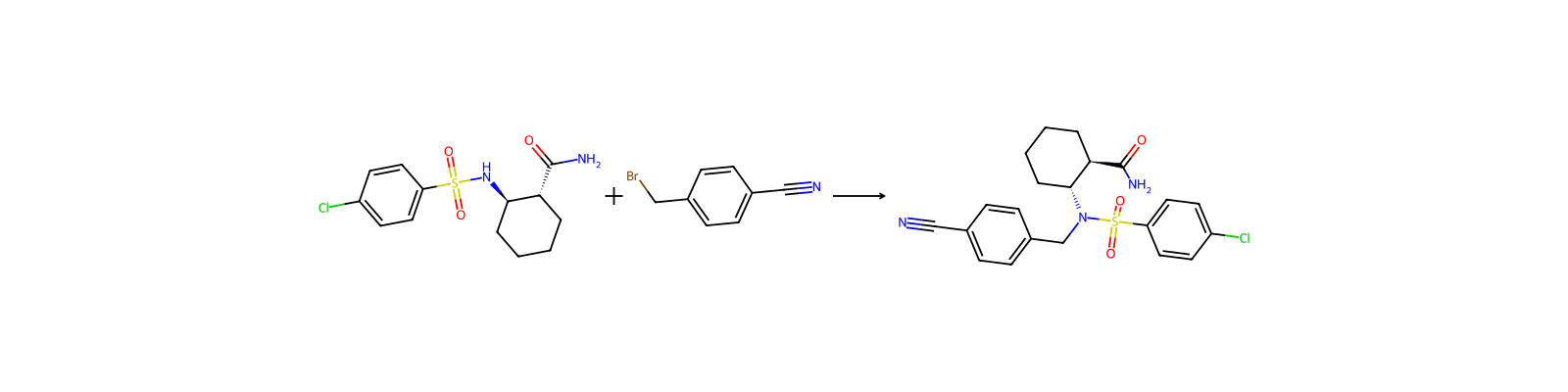
Related reactions
604 records




Linked notes
Loading…