

Basic information
- Standard SMILES
N#Cc1ccc(O)c(O)c1- InChIKey
NUWHYWYSMAPBHK-UHFFFAOYSA-N- Molecular formula
- C7H5NO2
- Average molar mass
- 135.12 g/mol
- Monoisotopic mass
- 135.0320284
Names & identifiers
- Preferred name
- 3,4-Dihydroxybenzonitrile
- IUPAC
- 3,4-dihydroxybenzonitrile
- English name
- 3,4-Dihydroxybenzonitrile
- Molecular formula
- C7H5NO2
- Molecular weight
- 135.12
Names & synonyms
3,4-Dihydroxybenzonitrile17345-61-8DTXSID50169616RefChem:486235DTXCID1092107241-367-94-CyanocatecholBenzonitrile, 3,4-dihydroxy-3,4-Dihydroxy benzonitrileProtocatechunitrileMFCD000164364-Cyanopyrocatechol
Show more names
AKOS B004053TIMTEC-BB SBB0085823,4-DihydroxybenzoniProtocatachuonitrileThymol Impurity 14-d83,4-DihydroxybenzonitriL
3,4-dihydroxybenzenecarbonitrileProtocatechuonitrile3,4-dihydroxy-benzonitrileEINECS 241-367-93,4 Dihydroxy benzonitrileSCHEMBL2172504-Cyano-1,2-dihydroxybenzeneCHEMBL5287739
Database identifiers
- CAS
17345-61-8- PubChem CID
- 87065
- DTXSID
DTXSID50169616- ChEMBL
CHEMBL5287739- EC Number
- 241-367-9
- Nikkaji
- J287.013D
Properties
Computed structural properties
- XLogP
- 1.5
- Topological polar surface area
- 64.3 Ų
- Hydrogen bond donors
- 2
- Hydrogen bond acceptors
- 3
- Rotatable bonds
- 0
- Heavy atoms
- 10
- Formal charge
- 0
- Complexity
- 160
Physicochemical properties
- Melting point
- 155 · 155-159 °C (lit.)
- Boiling point
- 334.8 · 334.8±32.0 °C(Predicted)
- Density
- 1.42 · 1.42±0.1 g/cm3(Predicted)
- vapor pressure
- 0 Pa · 0Pa at 20℃
- storage temp.
- Keep in dark place,Sealed in dry,Room Temperature
- solubility
- soluble in Methanol
- form
- powder to crystal
- pka
- 7.67 · 7.67±0.18(Predicted)
- color
- White to Almost white
- Water Solubility
- insoluble
- BRN
- 2082204 · 2082204
- InChI
- InChI=1S/C7H5NO2/c8-4-5-1-2-6(9)7(10)3-5/h1-3,9-10H
- InChIKey
- NUWHYWYSMAPBHK-UHFFFAOYSA-N
- SMILES
- C(#N)C1=CC=C(O)C(O)=C1
- LogP
- 1.3 at · 1.3 at 20℃
- CAS DataBase Reference
- 17345 · 17345-61-8(CAS DataBase Reference)
- UNSPSC Code
- 12352100 · 12352100
- NACRES
- 22 · NA.22
- Symbol(GHS)
- 6 · GHS06,GHS07
- Signal word
- Danger
- Hazard statements
- 301 · H301-H315-H319-H302-H312-H331-H335
- Precautionary statements
- 261 · P261-P304+P340-P305+P351+P338-P501a-P264-P270-P280-P301+P310+P330-P302+P352+P332+P313+P362+P364-P305+P351+P338+P337+P313-P405-P501
- PPE
- 95 · dust mask type N95 (US), Eyeshields, Gloves
- Hazard Codes
- Xn,Xi
- Risk Statements
- 20 · 20/21/22-36/37/38
- Safety Statements
- 36 · 36/37-36/37/39-26-22
- RIDADR
- 3439 · UN3439
- WGK Germany
- 3 · 3
- Hazard Note
- Irritant
- HazardClass
- 6.1 · 6.1
- PackingGroup
- III
- HS Code
- 29269090 · 29269090
- Storage Class
- 11 · 11 - Combustible Solids
- REACH Registrations
- Active
- Limited Quantities
- 5 kg · 5.0 kg (11 lbs) (solid)
- Excepted Quantities
- Max Inner Pack (30g or 30ml) and Max Outer Pack (1Kg or 1L)
Safety & regulation
GHS classification
GHS Classification
Warning
H302 (95.7%): Harmful if swallowed [Warning Acute toxicity, oral]
P261, P264, P264+P265, P270, P271, P280, P301+P317, P302+P352, P304+P340, P305+P351+P338, P317, P319, P321, P330, P332+P317, P337+P317, P362+P364, P403+P233, P405, and P501 (click each P-code to see the statement)
Aggregated GHS information provided per 46 reports by companies from 6 notifications to the ECHA C&L Inventory. Each notification may be associated with multiple companies.
Hazard information
Regulatory InformationStatus: Active Update: 21-04-2023 https://echa.europa.eu/registration-dossier/-/registered-dossier/22404
Hazard Classes and CategoriesAcute Tox. 4 (95.7%)
Safety data
- PPE
- dust mask type N95 (US), Eyeshields, Gloves
- wgk
- 3
- ridadr
- UN3439
- hs_code
- 29269090
- risk_code
- 20/21/22-36/37/38
- Signal word
- Danger
- Symbol(GHS)
- GHS06,GHS07
- hazard_code
- Xn,Xi
- hazard_note
- Irritant
- safety_code
- 36/37-36/37/39-26-22
- hazard_class
- 6.1
- Storage Class
- 11 - Combustible Solids
- packing_group
- III
- Hazard statements
- H301-H315-H319-H302-H312-H331-H335
- Limited Quantities
- 5.0 kg (11 lbs) (solid)
- Excepted Quantities
- Max Inner Pack (30g or 30ml) and Max Outer Pack (1Kg or 1L)
- REACH Registrations
- Active
- Precautionary statements
- P261-P304+P340-P305+P351+P338-P501a-P264-P270-P280-P301+P310+P330-P302+P352+P332+P313+P362+P364-P305+P351+P338+P337+P313-P405-P501
Chemistry & industry
Applications
Uses3,4-Dihydroxybenzonitrile is mainly used to synthesize drugs containing thiazole, 2-oxazoline, imidazole, triazole and benzopyrimidine structures, such as quinazoline drugs for anticancer. In recent years, in the field of new materials, 3,4-dihydroxybenzonitrile has also been used in the synthesis of photosensitive materials.
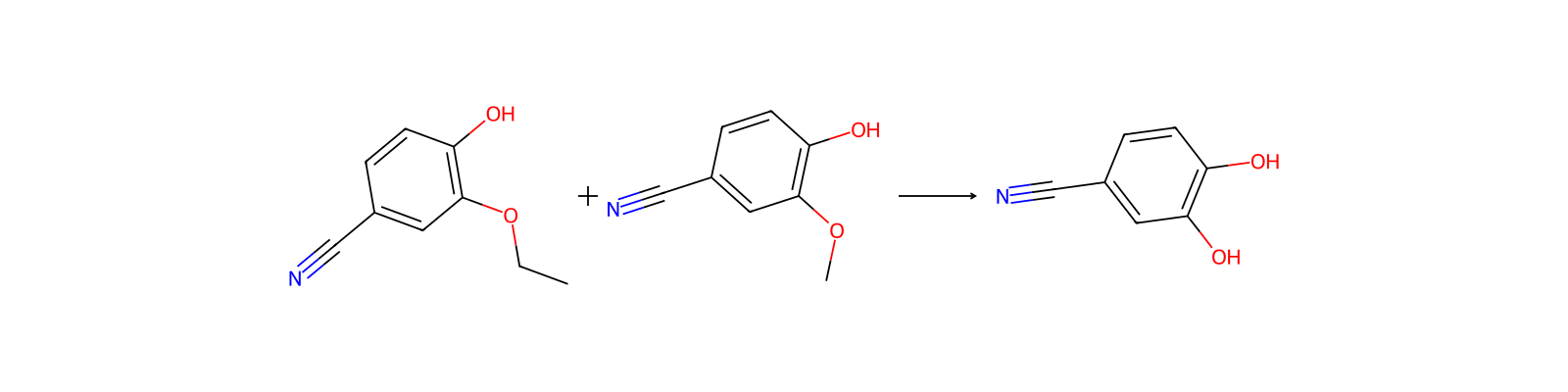
General Description3,4-Dihydroxybenzonitrile can be prepared from 4-hydroxy-3-methoxybenzonitrile. It can also be synthesized by reacting 3,4-dimethoxybenzonitrile, lithium diisopropylamide (LDA) and 1,3-dimethyl-2-imidazolidinone (DMEU).
Upstream & downstream products
Upstream raw materials
Downstream products
Suppliers50 total
梯希爱(上海)化成工业发展有限公司021-67121386 · [email protected]
上海宇之诚医药科技有限公司13361818591 · [email protected]
武汉欣扬瑞和化学科技有限公司153-07155313 15307155313 · [email protected]
INTATRADE GmbH+49 3493/605464 · [email protected]
Baoji Guokang Healthchem co.,ltd+8615604608665 15604608665 · [email protected]
Dayang Chem (Hangzhou) Co.,Ltd.+86-0571-88938639 17705817739 · [email protected]
上海迈瑞尔生化科技有限公司4006356688 18621169109 · [email protected]
阿法埃莎(中国)化学有限公司400-6106006 · [email protected]
安耐吉化学&3A(安徽泽升科技股份有限公司)400-0056266 · [email protected]
上海瀚鸿科技股份有限公司021-54306202 13764082696 · [email protected]
嘉兴市艾森化工有限公司0573-85285100 18627885956 · [email protected]
山东西亚化学有限公司13355009207 13355009207 · [email protected]
天津希恩思生化科技有限公司400 638 7771 · [email protected]
Xiamen AmoyChem Co., Ltd+86-86-5926051114 · [email protected]
南京维奥化工有限公司Please Send Email 18652950785 · [email protected]
济南恒茂医药科技有限公司0531-88262980 13156180564 · [email protected]
赛默飞世尔科技(中国)有限公司800-810-5118 · [email protected]
北京伊诺凯科技有限公司400-810-7969 010-59572699 · [email protected]
南京诺利斯医药科技有限公司13901585132 · [email protected]
上海赢瑞生物医药科技有限公司21-33585366 13311639313 · [email protected]
TCI AMERICA800-4238616 · [email protected]
TOKYO CHEMICAL INDUSTRY CO., LTD.03-36680489 · [email protected]
TCI Europe320-37350700 · [email protected]
上海毕得医药科技股份有限公司400-164-7117 18317119277 · [email protected]
重庆星灿医药科技有限公司13594048950 19923294409 · [email protected]
上海卓因生物科技有限公司021-61317773 · [email protected]
郑州萃智医药科技有限公司19943855286 · [email protected]
上海御略医药科技有限公司021-60345187 13671753212 · [email protected]
杭州杰恒化工有限公司0571-87396432 · [email protected]
上海嵩爰化工科技有限公司010-1234567 18521000990 · [email protected]
上海有朋化工有限公司021-69005955 13701776567 · [email protected]
北京海力扬化学科技有限公司13718199399 · [email protected]
北京欣赛维化学科技有限公司010-56218822 13717722232 · [email protected]
四川海诺威科技有限公司13708085536 13708085536 · [email protected]
上海凯赛化工有限公司021-33516722 13701817765 · [email protected]
上海彤源化工有限公司021-021-69182866 13701855675 · [email protected]
武汉弘德悦欣医药科技有限公司027-83855396 15271852016
上海孚一生物科技有限公司+86 (21) 61124340
上海蓝润化学有限公司021-69515658 ; 69515628 13701998368 · [email protected]
上海容立化学科技有限公司021-69992220 13701886816 · [email protected]
上海康拓化工有限公司021-69185552 13701777608 · [email protected]
池州凯隆进出口贸易有限公司[email protected]
Sigma-Aldrich西格玛奥德里奇(上海)贸易有限公司021-61415566 800-8193336 · [email protected]
TargetMol中国(陶术生物)021-021-33632979 15002134094 · [email protected]
上海皓之翔生物科技有限公司(原上海拓青化工有限公司)526763801 13301653310 · [email protected]
九鼎化学(上海)科技有限公司4009209199 · [email protected]
厦门志信化学有限公司+86-5922680277 +86-13806087780 · [email protected]
sgtlifesciences pvt ltd+91-8790379245 · [email protected]
成都京欣科技有限公司028-85005297 13980656781 · [email protected]
天津凯夫特科技有限公司022-58659859 13820733852 · [email protected]
Related reactions
36 records


Linked notes
Loading…