

Basic information
- Standard SMILES
O=[N+]([O-])c1ccc(S(=O)(=O)O)cc1- InChIKey
SPXOTSHWBDUUMT-UHFFFAOYSA-N- Molecular formula
- C6H5NO5S
- Average molar mass
- 203.17 g/mol
- Monoisotopic mass
- 202.98884343
Names & identifiers
- Preferred name
- 4-Nitrobenzenesulfonic acid
- IUPAC
- 4-nitrobenzenesulfonic acid
- English name
- 4-Nitrobenzenesulfonic acid
- Molecular formula
- C6H5NO5S
- Molecular weight
- 203.17
Names & synonyms
4-NITROBENZENESULFONIC ACID138-42-1Benzenesulfonic acid, 4-nitro-p-Nitrobenzenesulfonic acid4-Nitrobenzenesulfonatep-Nitrophenylsulfonic acid4-Nitrobenzenesulphonic acidBenzenesulfonic acid, p-nitro-F26NQB9BJENSC-5376DTXSID3059682p-NBS
Show more names
4-NITROBENZENESULFONIC ACID HYDRATEZidovudine impurity Jp-Nitrobenzenesulfonicp-Nitrobenzenesulfonate4-nitro-benzenesulfonicaci
para-nitrobenzenesulfonateRefChem:525925DTXCID7034462205-329-54-Nitro-benzenesulfonic acid4-nitrobenzene-1-sulfonic acidMFCD00041886NSC 5376
Database identifiers
- CAS
138-42-1- PubChem CID
- 8740
- DTXSID
DTXSID3059682- UNII
- F26NQB9BJE
- EC Number
- 205-329-5
- Nikkaji
- J184.411C、J343.205J
Properties
Computed structural properties
- XLogP
- 0.8
- Topological polar surface area
- 109 Ų
- Hydrogen bond donors
- 1
- Hydrogen bond acceptors
- 5
- Rotatable bonds
- 1
- Heavy atoms
- 13
- Formal charge
- 0
- Complexity
- 279
Experimental & physicochemical properties
Physical DescriptionNearly white solid; [Acros Organics MSDS]
Physicochemical properties
- Melting point
- 105 · 105-112 °C
- Density
- 1.548 · 1.548 (estimate)
- refractive index
- 1.538 · 1.5380 (estimate)
- storage temp.
- -20 °C · -20°C Freezer, Under inert atmosphere
- solubility
- DMSO (Slightly, Sonicated), Water (Slightly)
- pka
- -1.38 · -1.38±0.50(Predicted)
- form
- Crystalline Powder
- color
- Beige to yellow-orange
- Water Solubility
- 476 g/L · 476g/L(100.5 ºC)
- CAS DataBase Reference
- 138 · 138-42-1(CAS DataBase Reference)
- FDA UNII
- 26 NQB9BJE · F26NQB9BJE
- EPA Substance Registry System
- 4 · Benzenesulfonic acid, 4-nitro- (138-42-1)
- Symbol(GHS)
- 5 · GHS05,GHS07
- Signal word
- Danger
- Hazard statements
- 314 · H314-H335
- Precautionary statements
- 280 · P280-P309+P311
- Hazard Codes
- Xi,C
- Risk Statements
- 36 · 36/37/38
- Safety Statements
- 37 · 37/39-26
- RIDADR
- 2305 · UN 2305 (NITROBENZENESULPHONIC ACID)
- Hazard Note
- Corrosive/Irritant
- TSCA
- TSCA listed
- HazardClass
- 8 · 8
- PackingGroup
- II
- HS Code
- 29049090 · 29049090
- Limited Quantities
- 1 Kg · 1 Kg (2.2 lbs) (solid)
- Excepted Quantities
- Max Inner Pack (30g or 30ml) and Max Outer Pack (500g or 500ml)
Safety & regulation
GHS classification
GHS Classification
Danger
H314 (100%): Causes severe skin burns and eye damage [Danger Skin corrosion/irritation];H317 (33.3%): May cause an allergic skin reaction [Warning Sensitization, Skin];H318 (66.7%): Causes serious eye damage [Danger Serious eye damage/eye irritation]
P260, P261, P264, P264+P265, P272, P280, P301+P330+P331, P302+P352, P302+P361+P354, P304+P340, P305+P354+P338, P316, P317, P321, P333+P317, P362+P364, P363, P405, and P501 (click each P-code to see the statement)
Aggregated GHS information provided per 3 reports by companies from 3 notifications to the ECHA C&L Inventory. Each notification may be associated with multiple companies.;Information may vary between notifications depending on impurities, additives, and other factors. The percentage value in parenthesis indicates the notified classification ratio from companies that provide hazard codes. Only hazard codes with percentage values above 10% are shown. For more detailed information, please visit ECHA C&L website.
Hazard information
Hazards SummaryCauses burns; Inhalation may cause corrosive injuries to upper respiratory tract and lungs; [Acros Organics MSDS] See 2-Methyl-5-nitrobenzenesulfonic acid, 3-Nitrobenzenesulfonic acid, and Sodium 3-nitrobenzenesulfonate.
Hazard Classes and CategoriesSkin Corr. 1B (100%);Skin Sens. 1 (33.3%);Eye Dam. 1 (66.7%)
Toxicology
Adverse EffectsDermatotoxin - Skin burns.;Toxic Pneumonitis - Inflammation of the lungs induced by inhalation of metal fumes or toxic gases and vapors.
Safety data
- tsca
- TSCA listed
- ridadr
- UN 2305 (NITROBENZENESULPHONIC ACID)
- hs_code
- 29049090
- risk_code
- 36/37/38
- Signal word
- Danger
- Symbol(GHS)
- GHS05,GHS07
- hazard_code
- Xi,C
- hazard_note
- Corrosive/Irritant
- safety_code
- 37/39-26
- hazard_class
- 8
- packing_group
- II
- Hazard statements
- H314-H335
- Limited Quantities
- 1 Kg (2.2 lbs) (solid)
- Excepted Quantities
- Max Inner Pack (30g or 30ml) and Max Outer Pack (500g or 500ml)
- Precautionary statements
- P280-P309+P311
Chemistry & industry
Uses & manufacturing
General Manufacturing InformationBenzenesulfonic acid, 4-nitro-: ACTIVE
Applications
Uses4-Nitrobenzenesulfonic acid is less important than the ortho and meta isomers because sulfanilic acid and its derivatives are readily available from aniline and acetanilide.
Uses4-Nitrobenzenesulfonic acid is used in the preparation of diaryl compounds as antiviral agents.
Upstream & downstream products
Upstream raw materials
Downstream products
Suppliers12 total
南通合润生物科技有限公司18362409333 · [email protected]
山东沃德森生物科技有限公司0531-88723173 18596073690 · [email protected]
上海麦克林生化科技股份有限公司15221275939 15221275939 · [email protected]
天津荣燊化工有限公司18317763565; 18317763565 · [email protected]
上海阿拉丁生化科技股份有限公司6206333 13167063860 · [email protected]
上海源叶生物科技有限公司13636370518 · [email protected]
上海吉至生化科技有限公司021-4009004166/18616739031 18616739031 · [email protected]
上海红乐生物科技有限公司021-56145923; 4001631568 · [email protected]
上海先臣化工有限公司+86-021-64606569 +86-18049800532 · [email protected]
上海宝杨宝欣生物科技有限公司021-56698539 19921169802 · [email protected]
江苏艾康生物医药研发有限公司025-58859352 18651614124 · [email protected]
山东彬睿特新材料有限公司0533-2866658 15615638350 · [email protected]
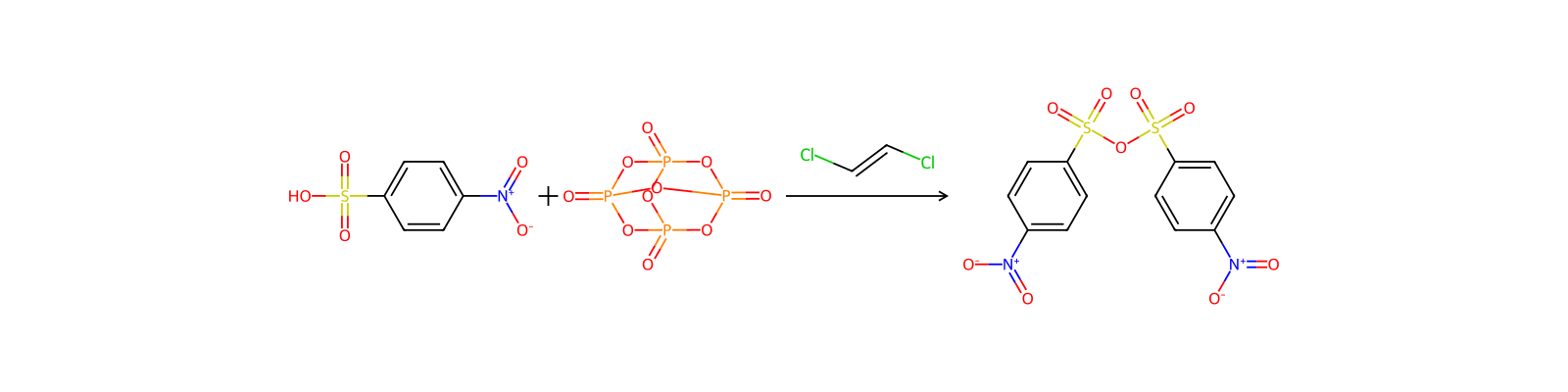
Related reactions
12 records


Linked notes
Loading…