

Basic information
- Standard SMILES
Cc1noc(C)c1CCl- InChIKey
NIFAUKBQIAURIM-UHFFFAOYSA-N- Molecular formula
- C6H8ClNO
- Average molar mass
- 145.59 g/mol
- Monoisotopic mass
- 145.02944156
Names & identifiers
- Preferred name
- Isoxazole, 4-(chloromethyl)-3,5-dimethyl-
- IUPAC
- 4-(chloromethyl)-3,5-dimethyl-1,2-oxazole
- English name
- 4-(Chloromethyl)-3,5-dimethylisoxazole
- Molecular formula
- C6H8ClNO
- Molecular weight
- 145.59
Names & synonyms
4-(Chloromethyl)-3,5-dimethylisoxazole19788-37-5Isoxazole, 4-(chloromethyl)-3,5-dimethyl-EINECS 243-312-4DTXSID0066531RefChem:792450DTXCID3036159243-312-44-Chloromethyl-3,5-dimethylisoxazole4-(chloromethyl)-3,5-dimethyl-1,2-oxazoleMFCD000031544-Chloromethyl-3,5-dimethyl-isoxazole
Show more names
AKOS BC-3064BUTTPARK 99\08-44IFLAB-BB F1915-0021TIMTEC-BB SBB0041073,5-Dimethyl-4-chloromethyl isoxazole4-(chloromethyl)-3,5-dimethyl-isoxazol4-(Chloromethyl)-3,5-dimethylisoxazole >4-(Chloromethyl)-3,5-dimethylisoxazole,96%
F1915-00213,5-Dimethyl-4-chloromethylisoxazole3,5-DIMETHYLISOXAZOLE-4-CARBNYL CHLORIDESCHEMBL189530SMSSF-0044199ALBB-004459chloromethyl-3,5-dimethyl-isoxazole4-chloromethyl-3,5-dimethylisoxazol
Database identifiers
- CAS
19788-37-5- PubChem CID
- 88246
- DTXSID
DTXSID0066531- EC Number
- 243-312-4
- Nikkaji
- J101.399H
Properties
Computed structural properties
- XLogP
- 1.6
- Topological polar surface area
- 26 Ų
- Hydrogen bond donors
- 0
- Hydrogen bond acceptors
- 2
- Rotatable bonds
- 1
- Heavy atoms
- 9
- Formal charge
- 0
- Complexity
- 99.1
Physicochemical properties
- Melting point
- 88 · 88-90°C
- Boiling point
- 87 · 87-88 °C/8 mmHg (lit.)
- Density
- 1.173 g/mL · 1.173 g/mL at 25 °C (lit.)
- refractive index
- 20 · n20/D 1.486(lit.)
- Flash point
- 204 °F · 204 °F
- storage temp.
- 2 · 2-8°C
- pka
- -1.73 · -1.73±0.28(Predicted)
- form
- clear liquid
- color
- Light yellow to Brown
- BRN
- 110780 · 110780
- InChI
- InChI=1S/C6H8ClNO/c1-4-6(3-7)5(2)9-8-4/h3H2,1-2H3
- InChIKey
- NIFAUKBQIAURIM-UHFFFAOYSA-N
- SMILES
- O1C(C)=C(CCl)C(C)=N1
- CAS DataBase Reference
- 19788 · 19788-37-5(CAS DataBase Reference)
- EPA Substance Registry System
- 4 · Isoxazole, 4-(chloromethyl)-3,5-dimethyl- (19788-37-5)
- UNSPSC Code
- 12352100 · 12352100
- NACRES
- 22 · NA.22
- Symbol(GHS)
- 7 · GHS07
- Signal word
- Warning
- Hazard statements
- 302 · H302+H312+H332-H315-H319-H335
- Precautionary statements
- 264 · P264-P302+P352+P332+P313+P362+P364-P305+P351+P338+P337+P313-P261-P280-P305+P351+P338-P280a-P304+P340-P405-P501a
- target organs
- Respiratory system
- PPE
- Eyeshields, Faceshields, Gloves, type ABEK (EN14387) respirator filter
- Hazard Codes
- Xn,Xi
- Risk Statements
- 20 · 20/21/22-36/37/38-37/38-36
- Safety Statements
- 26 · 26-36
- RIDADR
- 3334 · UN 3334
- WGK Germany
- 3 · 3
- TSCA
- TSCA listed
- HazardClass
- IRRITANT
- HS Code
- 29349990 · 29349990
- Storage Class
- 10 · 10 - Combustible liquids
- Hazard Classifications
- 4 DermalAcute · Acute Tox. 4 DermalAcute Tox. 4 InhalationAcute Tox. 4 OralEye Irrit. 2Skin Irrit. 2STOT SE 3
Safety & regulation
GHS classification
GHS Classification
This chemical does not meet GHS hazard criteria for 2.2% (1 of 46) of reports.
Warning
H302 (87%): Harmful if swallowed [Warning Acute toxicity, oral]
P261, P264, P264+P265, P270, P271, P280, P301+P317, P302+P352, P304+P340, P305+P351+P338, P317, P319, P321, P330, P332+P317, P337+P317, P362+P364, P403+P233, P405, and P501 (click each P-code to see the statement)
Aggregated GHS information provided per 46 reports by companies from 6 notifications to the ECHA C&L Inventory. Each notification may be associated with multiple companies.
Hazard information
Regulatory InformationIsoxazole, 4-(chloromethyl)-3,5-dimethyl-: Does not have an individual approval but may be used under an appropriate group standard
Hazard Classes and CategoriesAcute Tox. 4 (87%)
Safety data
- PPE
- Eyeshields, Faceshields, Gloves, type ABEK (EN14387) respirator filter
- wgk
- 3
- tsca
- TSCA listed
- ridadr
- UN 3334
- hs_code
- 29349990
- risk_code
- 20/21/22-36/37/38-37/38-36
- Signal word
- Warning
- Symbol(GHS)
- GHS07
- hazard_code
- Xn,Xi
- safety_code
- 26-36
- hazard_class
- IRRITANT
- Storage Class
- 10 - Combustible liquids
- target organs
- Respiratory system
- Hazard statements
- H302+H312+H332-H315-H319-H335
- Hazard Classifications
- Acute Tox. 4 DermalAcute Tox. 4 InhalationAcute Tox. 4 OralEye Irrit. 2Skin Irrit. 2STOT SE 3
- Precautionary statements
- P264-P302+P352+P332+P313+P362+P364-P305+P351+P338+P337+P313-P261-P280-P305+P351+P338-P280a-P304+P340-P405-P501a
Chemistry & industry
Uses & manufacturing
General Manufacturing InformationIsoxazole, 4-(chloromethyl)-3,5-dimethyl-: INACTIVE
Applications
Uses4-Chloromethyl-3,5-dimethylisoxazole has been used in the preparation of:4(3-oxoalkyl)isoxazole(E)-3,5-dimethyl-4-(2-(thiophene-3-yl)vinyl)isoxazole
General Description4-Chloromethyl-3,5-dimethylisoxazole participates in asymmetric isoxazole annulation reaction.
Upstream & downstream products
Upstream raw materials
Downstream products
Suppliers50 total
梯希爱(上海)化成工业发展有限公司021-67121386 · [email protected]
阿诺西(上海)生物技术有限公司400-1107768 15058188853 · [email protected]
苏州道澜生物医药科技有限公司15952404857 · [email protected]
上海阿拉丁生化科技股份有限公司400-6206333 13167063860 · [email protected]
上海埃逸科技有限公司13916181326 · [email protected]
陕西缔都新材料有限公司81124267 17392282731 · [email protected]
毕佳索(上海毕得医药科技股份有限公司)400-6005915 · [email protected]
上海麦克林生化科技股份有限公司021-50706066 15221275939 · [email protected]
温州共赢化学有限公司+86-0086-577-64498589 +86-15355981851 · [email protected]
Dayang Chem (Hangzhou) Co.,Ltd.+86-0571-88938639 17705817739 · [email protected]
郑州鸿晟医药科技有限公司0371-55695890 15637198702 · [email protected]
北京炎礼生物科技有限公司18600731423 · [email protected]
北京安司莫森技术有限公司010-82954736 13391601435 · [email protected]
韶远科技(上海)有限公司021-50795510 4000665055 · [email protected]
上海迈瑞尔生化科技有限公司4006356688 18621169109 · [email protected]
北京索莱宝科技有限公司010-50973130 17801761073 · [email protected]
上海辅欣医药科技有限公司+86-021-021-50872116 · [email protected]
阿法埃莎(中国)化学有限公司400-6106006 · [email protected]
安耐吉化学&3A(安徽泽升科技股份有限公司)400-0056266 · [email protected]
武汉凯威斯科技有限公司86-027-67849912 · [email protected]
Allfluoro Pharmaceutical Company Limited+86-400-0216110 +86-15958047586 · [email protected]
常州科化生物科技有限公司0519-68985668 13685222090 · [email protected]
上海瀚鸿科技股份有限公司021-54306202 13764082696 · [email protected]
广东方信生物科技有限公司0751-2838688 13376594225 · [email protected]
上海相辉医药科技有限公司13761987713 · [email protected]
常州环灵化工有限公司89803005 18206112582 · [email protected]
上海忝晴化工有限公司+8613816254020 · [email protected]
广东谦进化学试剂有限公司0751-2818792 13435114148 · [email protected]
北京泰亚杰科技有限公司021-33690831-8001 13552411790;18616022633 · [email protected]
艾科试剂4008-755-333 18080918076 · [email protected]
上海思域化工科技有限公司86-21-34053660 · [email protected]
赛默飞世尔科技(中国)有限公司800-810-5118 · [email protected]
TCI AMERICA800-4238616 · [email protected]
TOKYO CHEMICAL INDUSTRY CO., LTD.03-36680489 · [email protected]
TCI Europe320-37350700 · [email protected]
上海贤鼎生物科技有限公司4009209199 · [email protected]
Labex Corporation+91-11-26135922 or +91-11-46160359 · [email protected]
苏州亚科科技股份有限公司0512-87182055 13451648594 · [email protected]
天成化工(江苏)有限公司0512-66387919 18662433356 · [email protected]
镇江卡博医药科技有限公司0511-81886918 18136818960 · [email protected]
上海昶衍化工科技有限公司021-20242659 18930833303 · [email protected]
上海将来实业股份有限公司021-61552785 · [email protected]
HBCChem, Inc.+1-510-219-6317 · [email protected]
上海毕得医药科技股份有限公司400-164-7117 18317119277 · [email protected]
成都零六生物科技有限公司400-1166-196 13458535857 · [email protected]
常州天瑞医药科技有限公司0519-85386832 13382812559 · [email protected]
南京恰风和医药科技有限公司025-57018978 18251899859 · [email protected]
Sigma-Aldrich西格玛奥德里奇(上海)贸易有限公司021-61415566 800-8193336 · [email protected]
常州言己生物科技有限公司0519-83556355 18015005120 · [email protected]
上海珈得尔化学技术有限公司021-4007787-550 400-7787-550 · [email protected]
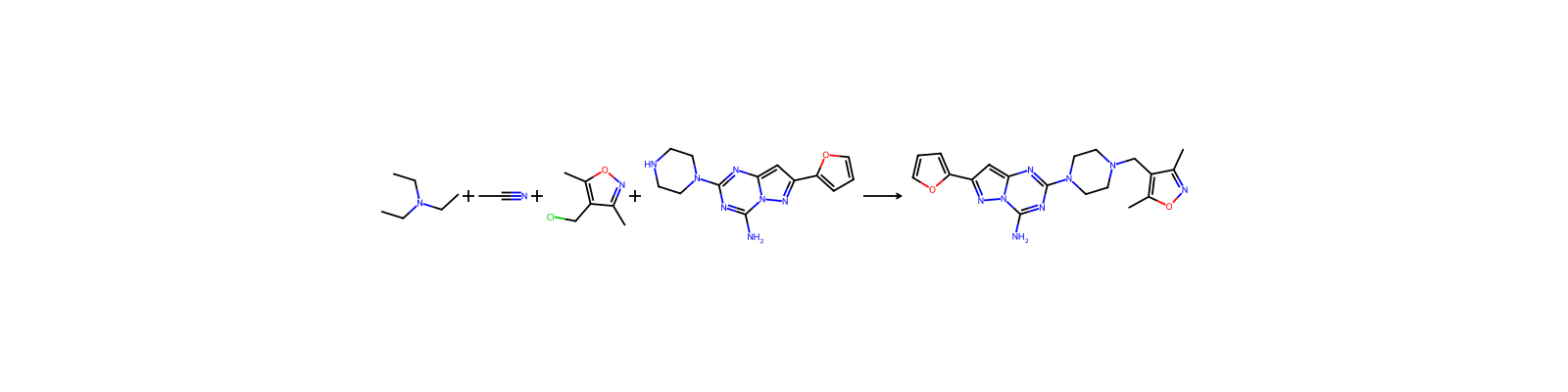
Related reactions
127 records




Linked notes
Loading…