HomeMCPWorkbenchSkills
HomeWorkbenchNotificationsMe
llms.txt · MCP GuidePrivacy Policy · Terms of Service · Supportv1.8.0
  1. Home
  2. /Compound

Di-tert-butyl dicarbonate

HCID 90495
New noteNew reactionRequest quotes
Print preview

Completing data — refresh the page later to see the latest
Basic informationOverviewNames & identifiersPropertiesSafety & regulationChemistry & industryRelated reactionsCompound notes
Substructure searchFind similar structures

Basic information

CAS
24424-99-5
Standard SMILES
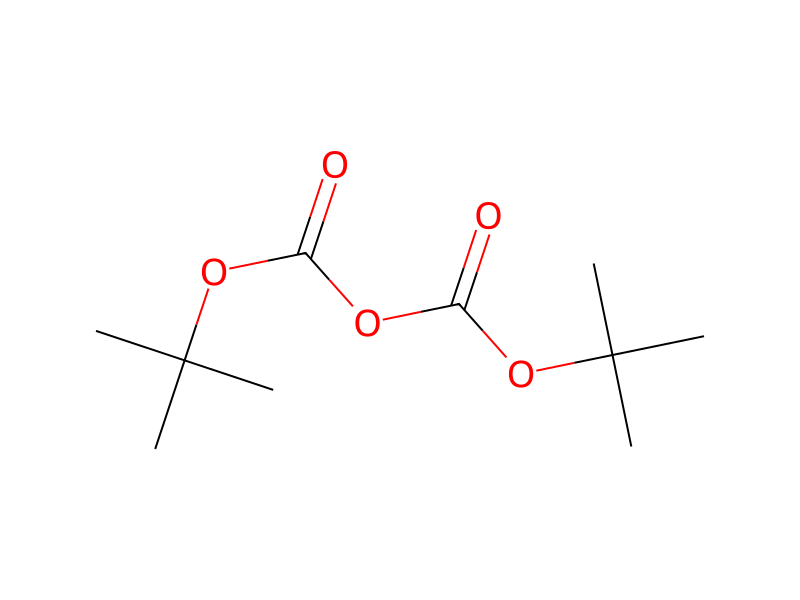
CC(C)(C)OC(=O)OC(=O)OC(C)(C)C
InChIKey
DYHSDKLCOJIUFX-UHFFFAOYSA-N
Molecular formula
C10H18O5
Average molar mass
218.25 g/mol
Monoisotopic mass
218.11542368

Overview

Tert-butoxycarbonyl anhydride is an acyclic carboxylic anhydride. It is functionally related to a dicarbonic acid.

Names & identifiers

Preferred name
Di-tert-butyl dicarbonate
IUPAC
tert-butyl (2-methylpropan-2-yl)oxycarbonyl carbonate
English name
Di-tert-butyl dicarbonate
Molecular formula
C10H18O5
Molecular weight
218.25

Names & synonyms

Di-tert-butyl dicarbonate24424-99-5di-tert-Butyl pyrocarbonateBis(tert-butoxycarbonyl)oxideBOC-anhydrideBoc2ODi-tert-butyldicarbonateDicarbonic acid, bis(1,1-dimethylethyl) esterDi(tert-butyl) carbonateZ10Q236C3GDTXSID4051904Boc2O cpd
Show more names
BOC(BOC)2Otert-butyldicarbonateDBDCDi-tert-butyL
Boc(2)O cpdRefChem:132516DTXCID9030466246-240-1BOC anhydridedi-t-Butyl dicarbonatetert-Butoxycarbonyl anhydrideDiboc

Database identifiers

CAS
24424-99-5
PubChem CID
90495
DTXSID
DTXSID4051904
ChEBI
CHEBI:48500
UNII
Z10Q236C3G
EC Number
246-240-1
Nikkaji
J88.260G

Properties

Computed structural propertiesFilling in

XLogP
2.7
Topological polar surface area
61.8 Ų
Hydrogen bond donors
0
Hydrogen bond acceptors
5
Rotatable bonds
6
Heavy atoms
15
Formal charge
0
Complexity
218

Experimental & physicochemical properties

Chemical ClassesOther Classes -> Esters, Other
Physical DescriptionWhite solid with a mild odor; mp = 22-24 deg C; [Alfa Aesar MSDS]

Physicochemical properties

Melting point
23 °C · 23 °C (lit.)
Boiling point
56 · 56-57 °C/0.5 mmHg (lit.)
Density
0.95 g/mL · 0.95 g/mL at 25 °C (lit.)
vapor pressure
3.85 Pa · 3.85Pa at 25℃
refractive index
20 · n20/D 1.409(lit.)
Flash point
99 °F · 99 °F
storage temp.
2 · 2-8°C
solubility
Chloroform (Sparingly), Methanol (Slightly)
form
Low Melting Crystalline Solid
color
White
Specific Gravity

Safety & regulation

Safety information is for reference only and does not replace the supplier’s Safety Data Sheet (SDS), applicable regulations, or professional assessment.

GHS classification

GHS Classification · 5 items

This chemical does not meet GHS hazard criteria for 0.5% (1 of 183) of reports.

Danger

H225 (26.8%): Highly Flammable liquid and vapor [Danger Flammable liquids]

P210, P233, P240, P241, P242, P243, P260, P261, P264, P264+P265, P271, P272, P280, P284, P302+P352, P303+P361+P353, P304+P340, P305+P351+P338, P305+P354+P338, P316, P317, P319, P320, P321, P332+P317, P333+P317, P337+P317, P362+P364, P370+P378, P403+P233, P403+P235, P405, and P501 (click each P-code to see the statement)

Aggregated GHS information provided per 183 reports by companies from 35 notifications to the ECHA C&L Inventory. Each notification may be associated with multiple companies.

Hazard information

Regulatory Information · 3 items

Chemical: Dicarbonic acid, bis(1,1-dimethylethyl) ester

Status: Active Update: 05-09-2017 https://echa.europa.eu/registration-dossier/-/registered-dossier/5501

Di(t-butyl) carbonate: HSNO Approval: HSR004455 Approved with controls

Hazards Summary · 1 item

Causes dyspnea and weight loss in inhalation lethal-concentration studies of rats; [RTECS] An irritant that may cause serious eye injury; May cause skin sensitization; Highly toxic by inhalation; [Alfa Aesar MSDS] No results in PubMed: 24424-99-5 AND (sensitizer OR sensitization OR allergic OR contact dermatitis)

Hazard Classes and CategoriesFlam. Liq. 2 (26.8%)

Safety & protection

Protective Action Criteria (PAC) · 3 items

0.067 [mg/m3]

0.73 [mg/m3]

Chemistry & industry

Uses & manufacturing

General Manufacturing InformationDicarbonic acid, 1,3-bis(1,1-dimethylethyl) ester: ACTIVE
Applications · 2 items

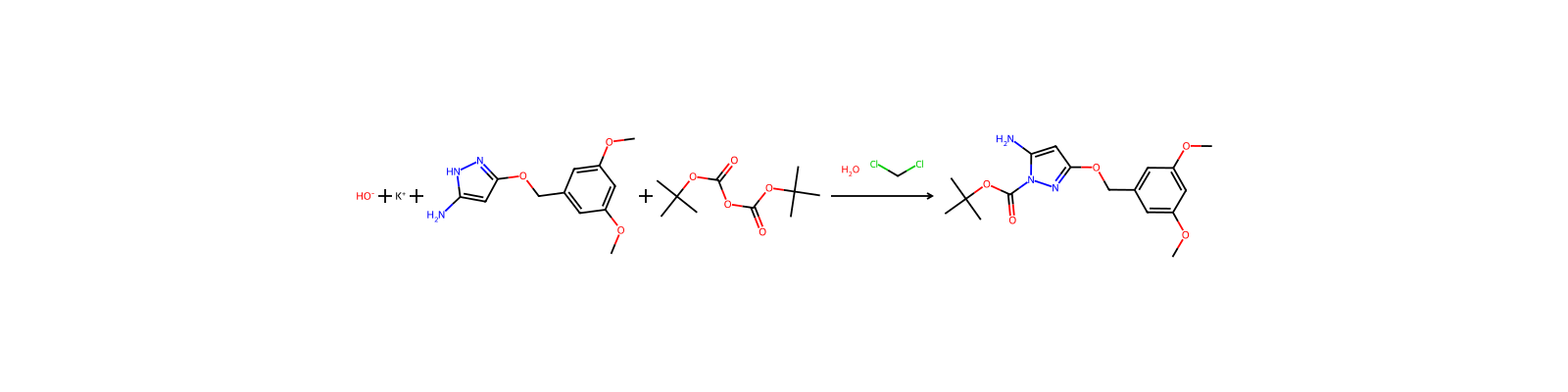
UsesDi-tert-butyl dicarbonate (Boc2O) is a widely used reagent for introducing protecting groups in peptide synthesis. It plays an important role in the preparation of 6-acetyl-1,2,3,4-tetrahydropyridine by reacting with 2-piperidone. It serves as a protecting group used in solid phase peptide synthesis.

General DescriptionDi-tert-butyl dicarbonate (Boc2O) is a reagent mainly used for the introduction of the Boc protecting group to amine functionalities. It is also used as a dehydrating agent in some organic reactions, particularly with carboxylic acids, certain hydroxyl groups, or with primary nitroalkanes.

Preparation methods · 1 item

PreparationThe preparation of Di-tert-butyl dicarbonate is as follows:To a monoester sodium salt solution were added 2g of N, N-dimethylformamide, 1g of pyridine, 1g of triethylamine,Cooling to -5~0°C, 60g diphosgene was slowly added dropwise within 1.5h dropwise addition was complete, warmed to room temperature (25°C), incubated for 2h, the reaction was allowed to stand after filtration, washing organic solution. Dried with anhydrous magnesium sulfate, the solvent was distilled off at atmospheric pressure to give crude product 65~70g. After cooling and crystallization, 57-60g of di-tert-butyl dicarbonate were obtained in a yield of 60-63%.

Upstream & downstream products

Upstream raw materials

Potassium tert-butoxiden-OctaneCarbon dioxide

Related reactions

1,487 records
New reaction record
HRID 6213 reaction equation
HRID 6213As reactantuspto-grants-1993_09
HRID 9087 reaction equation
HRID 9087As reactantuspto-grants-2006_08
HRID 9090 reaction equation
HRID 9090As reactantuspto-grants-2006_08
HRID 9095 reaction equation
HRID 9095As reactantuspto-grants-2006_08
HRID 11192 reaction equation
HRID 11192As reactantuspto-grants-2006_08
HRID 14275 reaction equation
HRID 14275As reactantuspto-grants-2010_06
HRID 15237 reaction equation
HRID 15237As reactantuspto-grants-2010_06
HRID 16751 reaction equation
HRID 16751As reactantuspto-grants-2010_06
Page 1 of 186

Compound notes

Loading…

On this pageBasic informationOverviewNames & identifiersPropertiesSafety & regulationChemistry & industryRelated reactionsCompound notes
More actions
New noteNew reactionRequest quotes
0.95 · 0.950
Water Solubility
Miscible with decalin, toluene, carbon tetrachloride, tetrahydrofuran, dioxane, alcohols, acetone, acetonitrile and dimethylformamide. Immiscible with water.
Sensitive
Moisture Sensitive
BRN
1911173 · 1911173
Stability
Acid Sensitive
Major Application
peptide synthesis
InChI
1S/C10H18O5/c1-9(2,3)14-7(11)13-8(12)15-10(4,5)6/h1-6H3
InChIKey
DYHSDKLCOJIUFX-UHFFFAOYSA-N
SMILES
CC(C)(C)OC(=O)OC(=O)OC(C)(C)C
LogP
1.87 at · 1.87 at 25℃
CAS DataBase Reference
24424 · 24424-99-5(CAS DataBase Reference)
EWG's Food Scores
1 · 1
FDA UNII
10 Q236C3G · Z10Q236C3G
EPA Substance Registry System
Dicarbonic acid, bis(1,1-dimethylethyl) ester (24424-99-5)
UNSPSC Code
12352302 · 12352302
NACRES
22 · NA.22
Symbol(GHS)
2 · GHS02,GHS05,GHS06
Signal word
Danger
Hazard statements
226 · H226-H315-H317-H318-H330-H335
Precautionary statements
210 · P210-P233-P280-P303+P361+P353-P304+P340+P310-P305+P351+P338
target organs
Respiratory system
PPE
Eyeshields, Faceshields, Gloves, type ABEK (EN14387) respirator filter
Hazard Codes
T+,T,F,Xi,F+
Risk Statements
11 · 11-19-26-36/37/38-43-10-40
Safety Statements
16 · 16-26-28-36/37-45-7/9-37/39-24-36/37/39-33
RIDADR
2929 · UN 2929 6.1/PG 1
WGK Germany
3 · 3
RTECS
230000 · HT0230000
F
4.4 · 4.4-10-21
Autoignition Temperature
460 °C · 460 °C
Hazard Note
Flammable/Irritant/Very Toxic
TSCA
TSCA listed
HazardClass
6.1 · 6.1
PackingGroup
I
HS Code
29209010 · 29209010
Storage Class
3 · 3 - Flammable liquids
Hazard Classifications
1 InhalationEye · Acute Tox. 1 InhalationEye Dam. 1Flam. Liq. 3Skin Irrit. 2Skin Sens. 1STOT SE 3
Toxicity
50 orally · LD50 orally in Rabbit: > 5000 mg/kg LD50 dermal Rabbit > 2000 mg/kg
REACH Registrations
Active
Limited Quantities
0.5 Kg · 0.5 Kg (solid)
Excepted Quantities
Max Inner Pack (1g or 1ml) and Max Outer Pack (500g or 500ml)

4.4 [mg/m3]

Toxicology

Toxicity DataLC50 (rat) = 100 mg/m3/4hr

Safety data

F
4.4-10-21
PPE
Eyeshields, Faceshields, Gloves, type ABEK (EN14387) respirator filter
wgk
3
tsca
TSCA listed
rtecs
HT0230000
ridadr
UN 2929 6.1/PG 1
hs_code
29209010
Toxicity
LD50 orally in Rabbit: > 5000 mg/kg LD50 dermal Rabbit > 2000 mg/kg
risk_code
11-19-26-36/37/38-43-10-40
Signal word
Danger
Symbol(GHS)
GHS02,GHS05,GHS06
hazard_code
T+,T,F,Xi,F+
hazard_note
Flammable/Irritant/Very Toxic
safety_code
16-26-28-36/37-45-7/9-37/39-24-36/37/39-33
hazard_class
6.1
Storage Class
3 - Flammable liquids
packing_group
I
target organs
Respiratory system
Hazard statements
H226-H315-H317-H318-H330-H335
Limited Quantities
0.5 Kg (solid)
Excepted Quantities
Max Inner Pack (1g or 1ml) and Max Outer Pack (500g or 500ml)
REACH Registrations
Active
Hazard Classifications
Acute Tox. 1 InhalationEye Dam. 1Flam. Liq. 3Skin Irrit. 2Skin Sens. 1STOT SE 3
Autoignition Temperature
460 °C
Precautionary statements
P210-P233-P280-P303+P361+P353-P304+P340+P310-P305+P351+P338
Carbon tetrachloride
DBU
Tetrahydrofuran

Downstream products

tert-Butyl 4-(4-formyl-1,3-thiazol-2-yl)tetrahydro-1(2H)-pyridinecarboxylateN-4-Boc-2-piperazinecarboxylic acidtert-Butyl 4-(hydroxymethyl)pyridin-2-ylcarbamate1-Boc-piperazinetert-Butyl N-(2-hydroxyethyl)carbamatetert-Butyl 3-(4-amino-2,6-dichlorophenoxy)propylcarbamate1-tert-Butyl 6-methyl 3-formyl-1H-indole-1,6-dicarboxylateSpermidine3-[(N-(tert-Butyloxycarbonyl)amino)methyl]pyridinetert-Butyl N-(2-bromoethyl)carbamate3-tert-Butoxycarbonylamino-isonicotinic acidtert-Butyl 4-formyl-2-methoxyphenyl carb onate, 99(S)-N-Boc-allylglycineN-BOC-piperidine-4-carboxylic acidtert-Butyl 3-formylpyridin-4-ylcarbamate4-Allyl-piperidine-1,4-dicarboxylic acid mono-tert-butyl ester1-Boc-3-oxopiperazine2-(2,2-Dimethyl-propionylamino)-isonicotinic acid1-(4-Pyridylmethyl)piperazine6-(Boc-amino)-hexyl bromideBOC-L-Isoleucine1-Boc-piperazine acetate1-Boc-4-hydroxy-4-(hydroxymethyl)-piperidine4-Chloro-(N-Boc)aniline 97BOC-L-ProlinolN,N-Dimethyl-2-piperazin-1-yl-acetamideN-Boc-D-prolineTert-butyl bis(2-chloroethyl)carbamate4-(Boc-aminomethyl)pyridineN-1-Boc-N-4-Cbz-2-piperazinecarboxylic acid t-butyl estertert-Butyl 4-(methoxycarbonyl)pyridin-2-ylcarbamate4-Bocamino-nicotinic acid(S)-(-)-1-tert-Butoxycarbonyl-3-aminopyrrolidine5-[N-(tert-Butoxycarbonyl)amino]-2-chloropyridine6-Boc-hydrazinonicotinic acidtert-Butyl 4-(5-formyl-4-methyl-1,3-thiazol-2-yl)piperidine-1-carboxylate6-tert-Butoxycarbonylamino-pyridine-2-carboxylic acid(R)-Piperazine-2-carboxylic acid(3-Hydroxymethyl-pyridin-4-yl)-carbamic acid tert-butyl ester1-Boc-4-cyanopiperidine

Additional notes

DefinitionChEBI: Di-tert-butyl dicarbonate is an acyclic carboxylic anhydride. It is functionally related to a dicarbonic acid.