
4-(2-Methoxyethyl)phenol
Completing data — refresh the page later to see the latest

Basic information
- CAS
56718-71-9- Standard SMILES
COCCc1ccc(O)cc1- InChIKey
FAYGEALAEQKPDI-UHFFFAOYSA-N- Molecular formula
- C9H12O2
- Average molar mass
- 152.19 g/mol
- Monoisotopic mass
- 152.08372962
Names & identifiers
- Preferred name
- 4-(2-Methoxyethyl)phenol
- IUPAC
- 4-(2-methoxyethyl)phenol
- English name
- p-(2-Methoxyethyl) phenol
- Molecular formula
- C9H12O2
- Molecular weight
- 152.19
Names & synonyms
4-(2-Methoxyethyl)phenolp-(2-Methoxyethyl)phenolPhenol, 4-(2-methoxyethyl)-4-Methoxy ethyl phenolUNII-PY1W0AKW8Ip-Hydroxyphenethyl methyl etherPY1W0AKW8I4-(2-methoxyethyl) phenolEINECS 260-354-9DTXSID2073564EC 260-354-9METOPROLOL SUCCINATE IMPURITY B [EP IMPURITY]
Show more names
PHMEMetoprolol Impurityp-(2-Methoxyetyl)phenolThe Methoxy ethyl phenol4-beta-Methoxyethylphenol4-HYDROXYPHENYLETHYL METHYL ETHER4-(2-Methoxyethyl)Phenol (56781-17-9)Metoprolol-2
METOPROLOL SUCCINATE IMPURITY B (EP IMPURITY)METOPROLOL TARTRATE IMPURITY B (EP IMPURITY)METOPROLOL TARTRATE IMPURITY B [EP IMPURITY]RefChem:97067DTXCID6042105FAYGEALAEQKPDI-UHFFFAOYSA-N56718-71-9p-(2-Methoxyethyl) phenol
Database identifiers
- CAS
56718-71-9- PubChem CID
- 92516
- DTXSID
DTXSID2073564- ChEMBL
CHEMBL1094369- UNII
- PY1W0AKW8I
- EC Number
- 260-354-9
- Nikkaji
- J40.673B
Properties
Computed structural propertiesFilling in
- XLogP
- 1.9
- Topological polar surface area
- 29.5 Ų
- Hydrogen bond donors
- 1
- Hydrogen bond acceptors
- 2
- Rotatable bonds
- 3
- Heavy atoms
- 11
- Formal charge
- 0
- Complexity
- 95.7
Experimental & physicochemical properties
LogP1.85
Physicochemical properties
- Melting point
- 42 · 42-45 °C(lit.)
- Boiling point
- 125 °C · 125 °C / 3mmHg
- Density
- 1.06 · 1.060±0.06 g/cm3(Predicted)
- vapor pressure
- 0.41 Pa · 0.41Pa at 20℃
- Flash point
- 230 °F · >230 °F
- storage temp.
- Sealed in dry,Room Temperature
- solubility
- Chloroform (Slightly), Methanol (Slightly)
- form
- Solid
- pka
- 10 · 10.00±0.15(Predicted)
- color
- White to Off-White
- Water Solubility
- 8.42 g/L · 8.42g/L at 20℃
- InChI
- InChI=1S/C9H12O2/c1-11-7-6-8-2-4-9(10)5-3-8/h2-5,10H,6-7H2,1H3
Safety & regulation
Safety information is for reference only and does not replace the supplier’s Safety Data Sheet (SDS), applicable regulations, or professional assessment.
GHS classification
GHS Classification
This chemical does not meet GHS hazard criteria for 6.9% (4 of 58) of reports.
Warning
H315 (89.7%): Causes skin irritation [Warning Skin corrosion/irritation]
P261, P264, P264+P265, P271, P280, P302+P352, P304+P340, P305+P351+P338, P319, P321, P332+P317, P337+P317, P362+P364, P403+P233, P405, and P501 (click each P-code to see the statement)
Aggregated GHS information provided per 58 reports by companies from 12 notifications to the ECHA C&L Inventory. Each notification may be associated with multiple companies.
Hazard information
Regulatory InformationREACH registered substance: p-(2-methoxyethyl)phenol (EC: 260-354-9)
Hazard Classes and CategoriesSkin Irrit. 2 (89.7%)
Safety data
- PPE
- dust mask type N95 (US), Eyeshields, Gloves
- wgk
- 3
- hs_code
- 29095000
- risk_code
- 36/37/38
- Signal word
- Warning
- Symbol(GHS)
- GHS07
- hazard_code
- Xi
- safety_code
- 26-36
- Storage Class
- 11 - Combustible Solids
- target organs
- Respiratory system
- Hazard statements
- H315-H319-H335
- REACH Registrations
- Active
Chemistry & industry
Applications
Description4-(2-Methoxyethyl)phenol (also known as p-(2-Methoxyethyl)phenol) is the starting material for the synthesis of metoprolol tartrate. Metoprolol tartrate is a selective β₁-blocker used in the treatment of various cardiovascular conditions, particularly hypertension.
Uses4-(2-Methoxyethyl)phenol is an Impurity of Metoprolol.
Uses4-(2-Methoxyethyl)phenol may be used in the preparation of methyl analog of metoprolol (MAM).
General Description4-(2-Methoxyethyl)phenol can be prepared by reacting methyl vinyl ether and 4-bromonitrobenzene.
Upstream & downstream products
Upstream raw materials
Downstream products
Related reactions
23 records
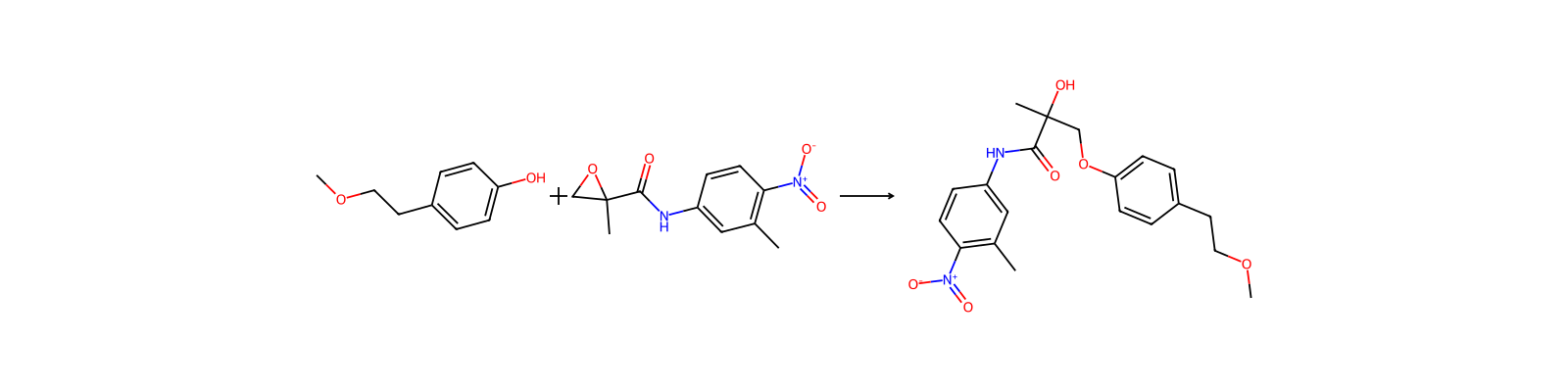


Compound notes
Loading…