HomeMCPWorkbenchSkills
HomeWorkbenchNotificationsMe
llms.txt · MCP GuidePrivacy Policy · Terms of Service · Supportv1.8.3
  1. Home
  2. /Compound

(L)-ethyl lactate

HCID 92831
New reaction
Print
Basic informationOverviewNames & identifiersPropertiesSafety & regulationChemistry & industryRelated reactionsCompound notes
Substructure searchFind similar structures

Basic information

CAS
687-47-8
Standard SMILES
CCOC(=O)[C@H](C)O
InChIKey
LZCLXQDLBQLTDK-BYPYZUCNSA-N
Molecular formula
C5H10O3
Average molar mass
118.13 g/mol
Monoisotopic mass
118.06299418

Overview

Ethyl (2S)-lactate is the (2S)-enantiomer of ethyl lactate. It has a role as a Saccharomyces cerevisiae metabolite. It is an enantiomer of an ethyl (2R)-lactate.

Names & identifiers

Preferred name
(L)-ethyl lactate
IUPAC
ethyl (2S)-2-hydroxypropanoate
English name
Ethyl L(-)-lactate
Molecular formula
C5H10O3
Molecular weight
118.13

Names & synonyms

Ethyl L-lactate(-)-ETHYL L-LACTATE(L)-ethyl lactate(L)-(-)-ethyl lactateEthyl (S)-2-hydroxypropionatePropanoic acid, 2-hydroxy-, ethyl ester, (2S)-(-)-ethyl lactateDTXSID9042336GA1IKU79WZ(S)-(-)-ethyl lactateEINECS 211-694-1ETHYL LACTATE, S-
Show more names
ETHYL (S)-(-)-LACTATEEthyl (S)-2-hydroxypropanoateL-Ethyl Lactate(S)-Ethyl 2-hydroxypropanoate(-)-ETHYL (S)-2-HYDROXYPROPIONATEETHYL-(S)-LACTATEethyl (2S)-lactateEthyl L-lactate 99%
ETHYL LACTATE NATURALDTXCID7022336Lactic acid, ethyl ester, (S)EC 211-694-1FEMA NO. 2440, L-(-)-ETHYL 2-HYDROXYPROPIONATELACTIC ACID, ETHYL ESTER, (-)-ethyl llactate

Database identifiers

CAS
687-47-8
PubChem CID
92831
DTXSID
DTXSID9042336
ChEMBL
CHEMBL3560966
ChEBI

Properties

Computed structural properties

XLogP
0.2
Topological polar surface area
46.5 Ų
Hydrogen bond donors
1
Hydrogen bond acceptors
3
Rotatable bonds
3
Heavy atoms
8
Formal charge
0
Complexity
79.7

Experimental & physicochemical properties

SolventsSolvents -> Esters (<C12)
FragrancesFragrance Ingredient (Ethyl (L)-lactate) -> IFRA transparency List
Vapor Pressure1.6 [mmHg]
Physical Description · 2 items

Liquid

Clear colorless liquid; [Sigma-Aldrich MSDS]

Physicochemical properties

Melting point
26 °C · −26 °C(lit.)
alpha
-10 · -10 º (neat)
Boiling point
154 °C · 154 °C(lit.)
Density
1.034 g/mL · 1.034 g/mL at 20 °C(lit.)
vapor density
4.1 · 4.1 (vs air)
vapor pressure
2 mm · 2 mm Hg ( 20 °C)
refractive index
20 · n20/D 1.4130(lit.)
FEMA
2440 · 2440 | ETHYL LACTATE

Safety & regulation

Safety information is for reference only and does not replace the supplier’s Safety Data Sheet (SDS), applicable regulations, or professional assessment.

GHS classification

GHS Classification · 6 items

Danger

H226: Flammable liquid and vapor [Warning Flammable liquids]

P210, P233, P240, P241, P242, P243, P261, P264+P265, P271, P280, P303+P361+P353, P304+P340, P305+P354+P338, P317, P319, P370+P378, P403+P233, P403+P235, P405, and P501 (click each P-code to see the statement)

Danger

H226 (100%): Flammable liquid and vapor [Warning Flammable liquids]

P210, P233, P240, P241, P242, P243, P261, P264+P265, P271, P280, P303+P361+P353, P304+P340, P305+P354+P338, P317, P319, P370+P378, P403+P233, P403+P235, P405, and P501 (click each P-code to see the statement)

Hazard information

Regulatory Information · 4 items

Propanoic acid, 2-hydroxy-, ethyl ester, (2S)- is listed on the EPA's Chemical Data Reporting (CDR) system. Manufacturers and importers of Propanoic acid, 2-hydroxy-, ethyl ester, (2S)- are required to report information about their production and use of this chemical to the EPA under the Toxic Substances Control Act (TSCA). (40 eCFR Part 711)

PMN - indicates a commenced PMN (Pre-Manufacture Notices) substance.

REACH registered substance: Ethyl (S)-2-hydroxypropionate (EC: 211-694-1)

(S)-(-)-Ethyl lactate: Does not have an individual approval but may be used under an appropriate group standard

Hazards SummaryNot a skin irritant in rabbits; No skin sensitization observed in in vivo assay of mice; No developmental toxicity observed in chronic dermal studies of rats; May cause serious eye injury; [Sigma-Aldrich MSDS] See Ethyl lactate.
Hazard Classes and Categories · 3 items

Flam. Liq. 3 (100%)

Flammable liquid - category 3

Flam. Liq. 3

Toxicology

Chemistry & industry

Uses & manufacturing

Uses · 2 items

Used to formulate plant protection products, biocidal products, washing-cleaning products, polishes-waxes, air care products, laboratory chemicals, functional fluids (lubricants, greases, heat transfer fluids, and metal working fluids), paints-coatings-printing inks, textile and leather finishing products, antifreeze and de-icing products, fillers-putties-plasters, adhesives-sealants, paper-board processing products (dyes, finishing, impregnation), fuels, adsorbents, processing aids (i.e. pH regulators, flocculants, and precipitants), pharmaceuticals, polymers, water softeners and treatment chemicals, surface treatment products for the electronics industry, metal surface treatment products (including those for galvanizing and electroplating), non-metal surface treatment products, perfumes-fragrances, and cosmetics-personal care products; [ExPub: ECHA REACH Registrations] Permitted for use as an inert ingredient in non-food pesticide products; [EPA]

Metal Machining [Category: Heat or Machine]

U.S. Production2023: 700,000 - <850,000 lb
Consumer UsesSolvent
Industry UsesSemiconductor and photovoltaic agent
Use ClassificationFragrance Ingredients
General Manufacturing Information · 2 items

Computer and Electronic Product Manufacturing

Propanoic acid, 2-hydroxy-, ethyl ester, (2S)-: ACTIVE

Applications · 3 items

Uses(-)-Ethyl L-Lactate is a naturally occuring chemical compound that is often used as an industrial solvent in chemical reactions.

UsesEthyl L-lactate is used in the preparation of food additives, aryl aldimines, fragrances and in pharmaceutical preparations. It can be considered as a green solvent in chemical industries due to its biodegradable nature. As a solvent, it used in the production of nitrocellulose, cellulose acetate and cellulose ethers.

Related reactions

87 records
New reaction record
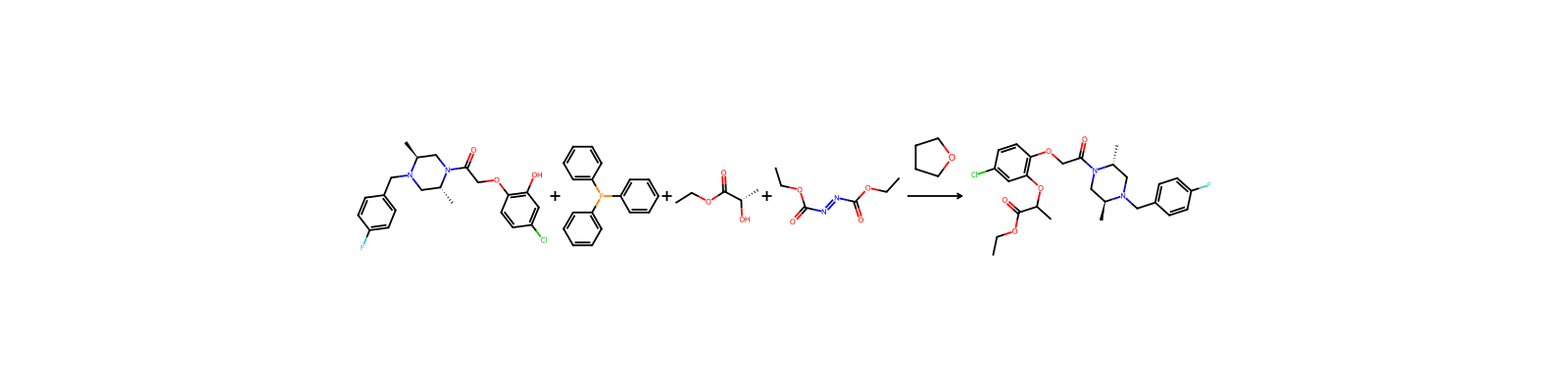
HRID 11619 reaction equation
HRID 11619As reactant
HRID 32960 reaction equation
HRID 32960As reactant
HRID 32975 reaction equation
HRID 32975As reactant
HRID 33019 reaction equation
HRID 33019As reactant
HRID 33624 reaction equation
HRID 33624As reactant
HRID 33639 reaction equation
HRID 33639As reactant
HRID 33683 reaction equation
HRID 33683As reactant
HRID 78995 reaction equation
HRID 78995As reactant
PreviousPage 1 of 11

Compound notes

On this pageBasic informationOverviewNames & identifiersPropertiesSafety & regulationChemistry & industryRelated reactionsCompound notes
CHEBI:78322
UNII
GA1IKU79WZ
EC Number
211-694-1
Nikkaji
J70.573J
Flash point
54.6 · 54.6±6.4 °C
storage temp.
30 °C · Store below +30°C.
solubility
Chloroform (Soluble), Ethyl Acetate (Slightly), Methanol (Slightly)
pka
13.21 · 13.21±0.20(Predicted)
form
Liquid
color
Clear colorless to pale yellow
PH
4 · 4 (50g/l, H2O, 20℃)
Odor
fruit-like odor
optical activity
20 · [α]20/D 10.5±1°, neat
Viscosity
3.6 mm2/s · 3.6mm2/s
explosive limit
1.5 · 1.5-16.4%(V)
Water Solubility
SOLUBLE
Merck
14 · 14,3817
BRN
1720839 · 1720839
InChI
1S/C5H10O3/c1-3-8-5(7)4(2)6/h4,6H,3H2,1-2H3/t4-/m0/s1
InChIKey
LZCLXQDLBQLTDK-BYPYZUCNSA-N
SMILES
C[C@H](O)C(OCC)=O
LogP
0.31 at · 0.31 at 20℃
CAS DataBase Reference
687 · 687-47-8(CAS DataBase Reference)
FDA UNII
1 IKU79WZ · GA1IKU79WZ
NIST Chemistry Reference
2 · Propanoic acid, 2-hydroxy-, ethyl ester, (S)-(687-47-8)
EPA Substance Registry System
2 · Propanoic acid, 2-hydroxy-, ethyl ester, (2S)- (687-47-8)
UNSPSC Code
85151701 · 85151701
NACRES
24 · NA.24
Symbol(GHS)
2 · GHS02,GHS05,GHS07
Signal word
Danger
Hazard statements
226 · H226-H318-H335
Precautionary statements
210 · P210-P233-P240-P241-P280-P305+P351+P338
target organs
Respiratory system
PPE
Eyeshields, Faceshields, Gloves, type ABEK (EN14387) respirator filter
Hazard Codes
Xi,F
Risk Statements
10 · 10-37-41
Safety Statements
24 · 24-26-39
RIDADR
1192 · UN 1192 3/PG 3
WGK Germany
1 · 1
RTECS
5075000 · OD5075000
Autoignition Temperature
752 °F · 752 °F
Hazard Note
Irritant/Flammable
TSCA
TSCA listed
HazardClass
3 · 3
PackingGroup
III
HS Code
29181100 · 29181100
Storage Class
3 · 3 - Flammable liquids
Hazard Classifications
1 Flam · Eye Dam. 1Flam. Liq. 3STOT SE 3
Toxicity
50 orally · LD50 orally in Rabbit: > 2000 mg/kg
REACH Registrations
Active
Adverse EffectsNeurotoxin - Acute solvent syndrome
Toxicity DataLC50 (rat) > 5,400 mg/m3/4hr

Safety data

PPE
Eyeshields, Faceshields, Gloves, type ABEK (EN14387) respirator filter
wgk
1
tsca
TSCA listed
rtecs
OD5075000
ridadr
UN 1192 3/PG 3
hs_code
29181100
Toxicity
LD50 orally in Rabbit: > 2000 mg/kg
risk_code
10-37-41
Signal word
Danger
Symbol(GHS)
GHS02,GHS05,GHS07
hazard_code
Xi,F
hazard_note
Irritant/Flammable
safety_code
24-26-39
hazard_class
3
Storage Class
3 - Flammable liquids
packing_group
III
target organs
Respiratory system
Hazard statements
H226-H318-H335
REACH Registrations
Active
Hazard Classifications
Eye Dam. 1Flam. Liq. 3STOT SE 3
Autoignition Temperature
752 °F
Precautionary statements
P210-P233-P240-P241-P280-P305+P351+P338

General DescriptionEthyllactate is an economically viablegreen solvent used in organic synthesis. It is generally employed in organic reactions like multi-component reactions, cycloaddition reaction, asymmetric induction, photochemical synthesis, and ligand-free coupling reactions, etc.

Upstream & downstream products

Upstream raw materials

Holmium OxideFatty acid (C10~C20)EthanolEthyl lactateConcentrated sulfuric acidAqueous agentLactic acid(R)-(-)-alpha-(Trifluoromethyl)benzyl alcohol(S)-(+)-alpha-(Trifluoromethyl)benzyl alcohol(+)-Ethyl D-lactateTrifluoroacetophenoneEthyl pyruvate

Downstream products

Lofexidine(R)-(-)-2-Chloropropan-1-olTetrahydrofuran2-(Tetrahydro-pyran-2-yloxy)-propionic acid ethyl esterPropanoic acid, 2-hydroxy-, hydrazide, (2S)-

Additional notes

DefinitionChEBI: The (2S)-enantiomer of ethyl lactate.