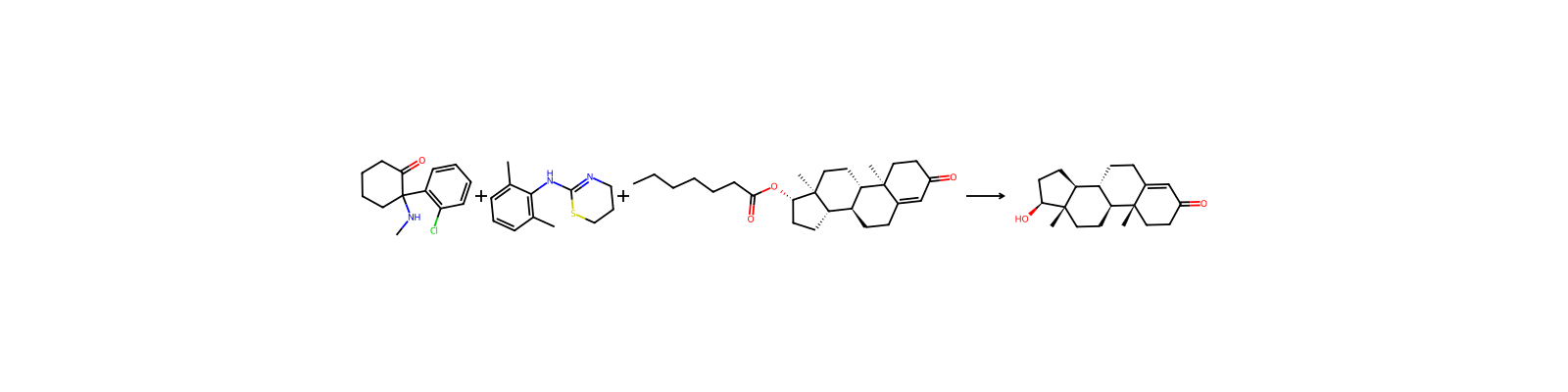

Basic information
- CAS
315-37-7- Standard SMILES
CCCCCCC(=O)O[C@H]1CC[C@H]2[C@@H]3CCC4=CC(=O)CC[C@]4(C)[C@H]3CC[C@]12C- InChIKey
VOCBWIIFXDYGNZ-IXKNJLPQSA-N- Molecular formula
- C26H40O3
- Average molar mass
- 400.6 g/mol
- Monoisotopic mass
- 400.29774514
Overview
Testosterone Enanthate can cause developmental toxicity according to state or federal government labeling requirements.
Names & identifiers
- Preferred name
- Testosterone Enanthate
- IUPAC
- [(8R,9S,10R,13S,14S,17S)-10,13-dimethyl-3-oxo-1,2,6,7,8,9,11,12,14,15,16,17-dodecahydrocyclopenta[a]phenanthren-17-yl] heptanoate
- English name
- Testosterone enanthate
- Molecular formula
- C26H40O3
- Molecular weight
- 400.59
Names & synonyms
testosterone enanthate315-37-7AndrotardylTestosterone heptanoateTestinonTestosterone enantateEveroneTestosterone heptylateTestosterone 17-enanthateNSC-17591TestateXyosted
Show more names
EnanthateTestosterone EnanthatTestosterone EthanateTestosterone enthateTesto ETestostrovalTestosterone oenanthateTestosterone Enanthate 300mg17-[(1-Oxoheptyl)oxy]androst-4-en-3-one
17-Hydroxyandrost-4-en-3-one, 17-heptanoate17-((1-Oxoheptyl)oxy)androst-4-en-3-oneTestosterone enanthate ciiiTestosteroni enantas7Z6522T8N93-oxoandrost-4-en-17beta-yl heptanoateAndrost-4-en-3-one, 17-(1-oxoheptyl)oxy-, (17beta)-CHEBI:9464
Database identifiers
- CAS
315-37-7- PubChem CID
- 9416
- DTXSID
DTXSID701016540- ChEMBL
CHEMBL1200335- ChEBI
CHEBI:9464- UNII
- 7Z6522T8N9
- EC Number
- 206-253-5
- Nikkaji
- J5.664B
Properties
Computed structural properties
- XLogP
- 6.3
- Topological polar surface area
- 43.4 Ų
- Hydrogen bond donors
- 0
- Hydrogen bond acceptors
- 3
- Rotatable bonds
- 7
- Heavy atoms
- 29
- Formal charge
- 0
- Complexity
- 679
Experimental & physicochemical properties
DrugsPharmaceuticals -> Listed in ZINC15
LipidsLipids -> Sterol Lipids [ST] -> Steroids [ST02] -> C19 steroids (androgens) and derivatives [ST0202]
SolubilityInsoluble
Human Drugs
FDA approved drugs -> Active ingredient
FDA approved drugs -> Active ingredient
Pharmaceuticals
Endocrine DisruptorsPotential endocrine disrupting compound
Melting Point
34-39ºC
36 - 37.5 °C
Physical DescriptionSolid
Physicochemical properties
- Melting point
- 34 · 34-39°C
- alpha
- 77 · 77 º
- Boiling point
- 463.22 °C · 463.22°C (rough estimate)
- Density
- 1.0562 · 1.0562 (rough estimate)
- refractive index
- 1.47 · 1.4700 (estimate)
- storage temp.
- 2 · 2-8°C
- solubility
- Practically insoluble in water, very soluble in anhydrous ethanol, freely soluble in fatty oils.
- form
- powder
- color
- white to beige
- InChI
- InChI=1/C26H40O3/c1-4-5-6-7-8-24(28)29-23-12-11-21-20-10-9-18-17-19(27)13-15-25(18,2)22(20)14-16-26(21,23)3/h17,20-23H,4-16H2,1-3H3/t20-,21-,22-,23-,25-,26-/s3
- InChIKey
- VOCBWIIFXDYGNZ-IXKNJLPQSA-N
- SMILES
- [C@@]12([H])CCC3=CC(=O)CC[C@]3(C)[C@@]1([H])CC[C@]1(C)[C@H](CC[C@@]21[H])OC(=O)CCCCCC |&1:0,10,12,16,18,21,r|
- CAS DataBase Reference
- 315 · 315-37-7(CAS DataBase Reference)
- FDA UNII
- 7 Z6522T8N9 · 7Z6522T8N9
- Proposition 65 List
- Testosterone Enanthate
- NCI Drug Dictionary
- Everone
- NIST Chemistry Reference
- Testosterone enanthate(315-37-7)
- UNSPSC Code
- 12352200 · 12352200
- NACRES
- 24 · NA.24
- Symbol(GHS)
- 7 · GHS07,GHS08
- Signal word
- Danger
- Hazard statements
- 302 · H302-H350-H361
- Precautionary statements
- 201 · P201-P202-P264-P270-P301+P312-P308+P313
- Hazard Codes
- T
- Risk Statements
- 45 · 45-63
- Safety Statements
- 53 · 53-22-36/37/39-45
- WGK Germany
- 3 · 3
- RTECS
- 3080000 · XA3080000
- HS Code
- 2937290000 · 2937290000
- Storage Class
- 6.1 C · 6.1C - Combustible acute toxic Cat.3toxic compounds or compounds which causing chronic effects
- Hazard Classifications
- 4 OralCarc · Acute Tox. 4 OralCarc. 1BRepr. 2
- Toxicity
- 7519 mg/kg/5W- · man,TDLo,intramuscular,7519mg/kg/5W- (7519mg/kg),LUNGS, THORAX, OR RESPIRATION: DYSPNEA,New England Journal of Medicine. Vol. 308, Pg. 508, 1983.
Safety & regulation
GHS classification
GHS Classification
Danger
H302 (96.8%): Harmful if swallowed [Warning Acute toxicity, oral]
P203, P261, P264, P270, P271, P280, P301+P317, P302+P352, P304+P340, P317, P318, P321, P330, P362+P364, P405, and P501 (click each P-code to see the statement)
Aggregated GHS information provided per 62 reports by companies from 8 notifications to the ECHA C&L Inventory. Each notification may be associated with multiple companies.
Hazard information
Regulatory InformationHazard Traits - Developmental Toxicity
Other Safety InformationIMAP assessments - Androst-4-en-3-one, 17-[(1-oxoheptyl)oxy]-, (17.beta.)-: Environment tier I assessment
Hazard Classes and CategoriesAcute Tox. 4 (96.8%)
Toxicology
Drug Induced Liver Injury
Drug Induced Liver Injury Rank (DILIrank 2.0)
Testosterone enanthate
vMost-DILI-concern
8
Warnings & precautions
DOI:10.1016/j.drudis.2016.02.015
Safety data
- wgk
- 3
- rtecs
- XA3080000
- hs_code
- 2937290000
- Toxicity
- man,TDLo,intramuscular,7519mg/kg/5W- (7519mg/kg),LUNGS, THORAX, OR RESPIRATION: DYSPNEA,New England Journal of Medicine. Vol. 308, Pg. 508, 1983.
- risk_code
- 45-63
- Signal word
- Danger
- Symbol(GHS)
- GHS07,GHS08
- hazard_code
- T
- safety_code
- 53-22-36/37/39-45
- Storage Class
- 6.1C - Combustible acute toxic Cat.3toxic compounds or compounds which causing chronic effects
- Hazard statements
- H302-H350-H361
- Hazard Classifications
- Acute Tox. 4 OralCarc. 1BRepr. 2
- Precautionary statements
- P201-P202-P264-P270-P301+P312-P308+P313
Chemistry & industry
Pharmacology
Protein BindingCirculating testosterone is primarily bound in serum to sex hormone-binding globulin (SHBG) and albumin. Approximately 98% of testosterone in plasma is bound to SHBG while 2% remains unbound (i.e. free).
Pharmacodynamics
Administration of ester derivatives of testosterone as testosterone enanthate generates an increase in serum testosterone to levels reaching 400% from the baseline within 24 hours of administration. These androgen levels remain elevated for 3-5 days after initial administration. Continuous administration of testosterone enanthate shows a significant suppression of dihydrotestosterone, serum PSA, HDL and FSH, as well as a slight increase in serum estradiol. The levels of dihydrotestosterone and FSH can remain suppressed even 14 days after treatment termination. There are no changes in mood and sexual activity by the presence of testosterone enanthate.
Mechanism of Action
The effects of testosterone in humans and other vertebrates occur by way of two main mechanisms: by activation of the androgen receptor (directly or as DHT), and by conversion to estradiol and activation of certain estrogen receptors. Free testosterone (T) is transported into the cytoplasm of target tissue cells, where it can bind to the androgen receptor, or can be reduced to 5α-dihydrotestosterone (DHT) by the cytoplasmic enzyme 5α-reductase. DHT binds to the same androgen receptor even more strongly than T, so that its androgenic potency is about 2.5 times that of T. The T-receptor or DHT-receptor complex undergoes a structural change that allows it to move into the cell nucleus and bind directly to specific nucleotide sequences of the chromosomal DNA. The areas of binding are called hormone response elements (HREs), and influence transcriptional activity of certain genes, producing androgen effects. Such activities are useful as endogenous androgens like testosterone and dihydrotestosterone are responsible for the normal growth and development of the male sex organs and for maintenance of secondary sex characteristics. These effects include the growth and maturation of the prostate, seminal vesicles, penis, and scrotum; the development of male hair distribution, such as facial, pubic, chest, and axillary hair; laryngeal enlargement, vocal cord thickening, and alterations in body musculature and fat distribution. Male hypogonadism, a clinical syndrome resulting from insufficient secretion of testosterone, has two main etiologies. Primary hypogonadism is caused by defects of the gonads, such as Klinefelter’s syndrome or Leydig cell aplasia, whereas secondary hypogonadism is the failure of the hypothalamus (or pituitary) to produce sufficient gonadotropins (FSH, LH).
Biological Half-LifeTestosterone enanthate presents a long half-life in the range of 7-9 days.
Metabolism/Metabolites
To start its activity, testosterone enanthate has to be processed by enzymes in the bloodstream. These enzymes will catalyze the molecule at the ester location of the moiety. Once processed in this manner, the testosterone enanthate molecule is metabolized to various 17-keto steroids through two different pathways. Subsequently, the major active metabolites are estradiol and DHTd. Testosterone is metabolized to DHT by steroid 5α-reductase in skin, liver and urogenital tract. In reproductive tissues DHT is further metabolized to androstanediol.
FDA Pharmacological Classification
TESTOSTERONE ENANTHATE
Androstanes [CS]; Androgen [EPC]; Androgen Receptor Agonists [MoA]
MeSH Pharmacological Classification
Compounds that interact with ANDROGEN RECEPTORS in target tissues to bring about the effects similar to those of TESTOSTERONE. Depending on the target tissues, androgenic effects can be on SEX DIFFERENTIATION; male reproductive organs, SPERMATOGENESIS; secondary male SEX CHARACTERISTICS; LIBIDO; development of muscle mass, strength, and power.
Absorption, Distribution and Excretion
The pharmacokinetic profile of testosterone enanthate was studied in a regime of multiple dosing and the testosterone level was reported to present a Cmax above 1200 ng/dl after 24 hours of the last dose. The concentration decreased sequentially until it reached 600 ng/dl after one week. The pharmacokinetic profile of testosterone enanthate presented differences depending on the administered dose in which the tmax was shifted to a range of 36-48 hours. The plasma testosterone level plateaued below the therapeutic range after 3-4 weeks. This reports showed that the different formulation of testosterone enanthate and testosterone cypionate generates a different profile and thus, they are not therapeutically equivalent.
About 90% of a dose of testosterone given intramuscularly is excreted in the urine as glucuronic and sulfuric acid conjugates of testosterone and its metabolites; about 6% of a dose is excreted in the feces, mostly in the unconjugated form. The inactivation of testosterone occurs primarily in the liver.
The volume of distribution following intravenous administration of testosterone is of approximately 1 L/kg.
Cellular LocationsExtracellular
Uses & manufacturing
Use ClassificationPharmaceuticals
Applications
DescriptionTestosterone enanthate (Item No. 22546) is an analytical reference standard categorized as an anabolic androgenic steroid. It is an ester of the naturally occurring androgen, testosterone (Item Nos. 15645 | ISO60154) with a longer half-life. Formulations containing testosterone enanthate have been tested for use in hypogonadism and as a potential male contraceptive. Formulations containing it have been associated with higher levels of total cholesterol, low density lipoproteins, and triglycerides and lower levels of high density lipoproteins. Anabolic steroids, including testosterone enanthate, have been used to enhance physical performance in racehorses and athletes, and methods to detect steroids, their derivatives, and their metabolites have been developed. This product is intended for research and forensic applications.
UsesTestosterone Enanthate is a derivative of testosterone (T155000), the principal hormone of the testes, produced by the interstitial cells.
Upstream & downstream products
Upstream raw materials
Suppliers100 total
国药集团化学试剂有限公司86-21-63210123 · [email protected]
Shanghai Biolang Biotechnology Co., Ltd.+86-15970428662 +86-13397199602 · [email protected]
INTATRADE GmbH+49 3493/605464 · [email protected]
Hebei shuoxi biotechnology co. LTD+8613081092107
T&W GROUP021-61551611 13296011611 · [email protected]
Baoji Guokang Healthchem co.,ltd+8615604608665 15604608665 · [email protected]
Hebei Henghe Import and Export Trading Co. LTD+8618032935937 18032916000 · [email protected]
上海钰源生物化学有限公司021-13814116 13814116708 · [email protected]
陕西林奈生物化工有限公司15327269642 · [email protected]
Syntechem Co.,Ltd[email protected]
河北秒变生物科技有限公司17733850068
Cangzhou Wanyou New Material Technology Co.,Ltd18631714998 · [email protected]
河北缤享新材料科技有限公司+8618633865755 · [email protected]
山东洛克化工有限公司17653113209 13065062079 · [email protected]
MedBio脉铂医药021-69568360 18916172912 · [email protected]
Pure Chemistry Scientific Inc.001-857-928-2050 or 1-888-588-9418 · [email protected]
Zhejiang J&C Biological Technology Co.,Limited+1-2135480471 · [email protected]
佛山宝诺生物科技有限公司0757-85921206 18520245316 · [email protected]
浙江佑宁医药有限公司15557595058
南京唯博特医药科技有限公司18066048793; 18014498793 · [email protected]
云南西力生物技术股份有限公司0871-65217109 · [email protected]
武汉盈邦医药有限公司+86-13296627870; +86-13971566811 · [email protected]
天津希恩思生化科技有限公司400 638 7771 · [email protected]
Hebei Qige Biological Technology Co. Ltd+86 +8618733132031
Wuhan Demeikai Biotechnology Co., Ltd+8618942921723 · [email protected]
斯百全化学(上海)有限公司021-021-021-67601398-809-809-809 15221380277 · [email protected]
广州普罗艾森生物医药有限公司19098059326 · [email protected]
Wuhan NCE Biomedical Co.,Ltd.4000-027-021 |24 +86-13986109188 | +86-15623472865 | +81-08033611988
上海诺宝化工有限公司+86(0)21 60484900
Hubei Datong Bio-Chemical Technology Co.,Ltd027-87666700 · [email protected]
Clearsynth Labs Limited+91-22-26355700 · [email protected]
广州爱纯医药科技有限公司020-39119399 18927568969 · [email protected]
南京生利德生物科技有限公司025-57798810 18652991625 · [email protected]
深圳市石金谷科技有限公司(0086)755-61930359 (0086)18038192047 · [email protected]
南京世洲生物科技有限公司13675144456 · [email protected]
Xunteng International Trading Co.,Limited—
湖北鑫源顺医药化工有限公司13971561712, 13995564702, 027-50664929 · [email protected]
HBCChem, Inc.+1-510-219-6317 · [email protected]
北京汤普森生物科技有限公司+86-13439059536 +86-15201677815 · [email protected]
雷丁试剂0510-85629785 18013409632 · [email protected]
杭州杰恒化工有限公司0571-87396432 · [email protected]
Taizhou Xinen Biotechnology Co., Ltd.+8615068633455 · [email protected]
上海孚一生物科技有限公司+86 (21) 61124340
池州凯隆进出口贸易有限公司[email protected]
石家庄通洋进出口有限公司[email protected]
珠海安哲生物科技有限公司13169972583 · [email protected]
南京伶亚生物医药科技有限公司18068075658 · [email protected]
Wuhan Biocar Bio-Pharm Co., Ltd.86 15387057351 · [email protected]
武汉森威尔世纪化工有限公司027-86652399 · [email protected]
上海波以尔化工有限公司021-50182298 021-50180596 · [email protected]
Additional notes
DefinitionChEBI: Testosterone enanthate is a heptanoate ester and a sterol ester. It has a role as an androgen. It is functionally related to a testosterone.
Related reactions
1 records
Compound notes
Loading…