

Basic information
- Standard SMILES
COC(=O)C1C(C=C(Cl)Cl)C1(C)C- InChIKey
QJOOIMSFFIUFKX-UHFFFAOYSA-N- Molecular formula
- C9.H12.Cl2.O2
- Average molar mass
- 223.09 g/mol
- Monoisotopic mass
- 222.02143498
Overview
See other relationships...
Names & identifiers
- Preferred name
- Cyclopropanecarboxylic acid, 3-(2,2-dichloroethenyl)-2,2-dimethyl-, methyl ester
- IUPAC
- methyl 3-(2,2-dichloroethenyl)-2,2-dimethylcyclopropane-1-carboxylate
- English name
- Methyl 3-(2,2-dichlorovinyl)-2,2-dimethyl-(1-cyclopropane)carboxylate
- Molecular formula
- C9H12Cl2O2
- Molecular weight
- 223.1
Names & synonyms
61898-95-1Methyl 3-(2,2-dichlorovinyl)-2,2-dimethylcyclopropanecarboxylatePermethrinic Acid Methyl EsterCyclopropanecarboxylic acid, 3-(2,2-dichloroethenyl)-2,2-dimethyl-, methyl esterEINECS 263-308-6DTXSID0028113RefChem:581169DTXCID508113263-308-6methyl 3-(2,2-dichloroethenyl)-2,2-dimethylcyclopropane-1-carboxylateMFCD00044765Permethrinic acid-methyl ester
Show more names
DV EsterDV METHYL ESTERMETHYL PERMETHRATEPERMETHRIN EP IMP BDV Methyl chrysanthematePermethricacidmethylesterMETHYL 3-(2 2-DICHLOROETHENYL)-2 2-DIME&Permethrin Impurity 2(Permethrin EP Impurity B)Permethrin EP Impurity B (Permethrinic Acid Methyl Ester)
EINECS 261-977-9Methyl 3-(2,2-dichlorovinyl)-2,2-dimethyl-(1-cyclopropane)carboxylate59897-94-8Methyl cis-3-(2,2-dichlorovinyl)-2,2-dimethylcyclopropanecarboxylatetrans-3-(2,2-Dichloroethenyl)-2,2-dimethylcyclopropanecarboxylic acid, methyl esterPermethrin EP Impurity BC9H12Cl2O2Permetrinic acid, methyl ester
Database identifiers
- CAS
59897-93-7、59897-94-8、61898-95-1- PubChem CID
- 94591
- DTXSID
DTXSID0028113- EC Number
- 261-977-9、263-308-6
- Nikkaji
- J23.512A
Properties
Computed structural properties
- XLogP
- 3.6
- Topological polar surface area
- 26.3 Ų
- Hydrogen bond donors
- 0
- Hydrogen bond acceptors
- 2
- Rotatable bonds
- 3
- Heavy atoms
- 13
- Formal charge
- 0
- Complexity
- 254
Experimental & physicochemical properties
PesticidesPesticide degradation product
LogP3.63
Density1.17 @25 °C
Physicochemical properties
- Boiling point
- 234 · 234-235 °C
- Density
- 1.304 · 1.304
- refractive index
- 1.492 · 1.492-1.5
- solubility
- Chloroform (Slightly), Methanol (Slightly)
- form
- Oil
- color
- Colourless
- Henry's Law Constant
- 6.1 · 6.1×10-2 mol/(m3Pa) at 25℃, Zhang et al. (2010)
- Stability
- Light Sensitive
- EPA Substance Registry System
- 3 · Cyclopropanecarboxylic acid, 3-(2,2-dichloroethenyl)-2,2-dimethyl-, methyl ester (61898-95-1)
- Symbol(GHS)
- 8 · GHS08
- Signal word
- Warning
- Hazard statements
- 315 · H315
- Precautionary statements
- 264 · P264-P280-P302+P352-P321-P332+P313-P362
- Hazard Codes
- Xi
- Risk Statements
- 36 · 36/37/38
- Safety Statements
- 37 · 37/39-26-36
- TSCA
- TSCA listed
Safety & regulation
GHS classification
GHS Classification
Danger
H315 (100%): Causes skin irritation [Warning Skin corrosion/irritation]
P261, P264, P264+P265, P271, P272, P273, P280, P302+P352, P304+P340, P305+P354+P338, P317, P319, P321, P332+P317, P333+P317, P362+P364, P403+P233, P405, and P501 (click each P-code to see the statement)
Aggregated GHS information provided per 2 reports by companies from 2 notifications to the ECHA C&L Inventory. Each notification may be associated with multiple companies.
Hazard information
Hazard Classes and CategoriesSkin Irrit. 2 (100%)
Safety & protection
Protective Action Criteria (PAC)
15 [mg/m3]
170 [mg/m3]
990 [mg/m3]
Toxicology
USGS Health-Based Screening Levels for Evaluating Water-Quality
Methyl trans-3-(2,2-dichlorovinyl)-2,2-dimethyl-(1-cyclopropane)-carboxylate
Pesticide degradation product
Smith, C.D. and Nowell, L.H., 2024. Health-Based Screening Levels for evaluating water-quality data (3rd ed.). DOI:10.5066/F71C1TWP
Safety data
- tsca
- TSCA listed
- risk_code
- 36/37/38
- Signal word
- Warning
- Symbol(GHS)
- GHS08
- hazard_code
- Xi
- safety_code
- 37/39-26-36
- Hazard statements
- H315
- Precautionary statements
- P264-P280-P302+P352-P321-P332+P313-P362
Chemistry & industry
Uses & manufacturing
General Manufacturing InformationCyclopropanecarboxylic acid, 3-(2,2-dichloroethenyl)-2,2-dimethyl-, methyl ester: ACTIVE
Applications
UsesPermethrinic Acid Methyl Ester is an impurity of the insecticide Permethrin (P288500), which is synthetic pyrethroid insecticide with low mammalian toxicity. Permethrinic Acid Methyl Ester is also used as a reactant in preperation of β-ketoesters via sodium hydroxide catalyzed crossed Claisen condensation of ketene silyl acetals and methyl esters.
Upstream & downstream products
Upstream raw materials
Downstream products
Suppliers33 total
陕西缔都新材料有限公司81124267 17392282731 · [email protected]
Hebei Chuanghai Biotechnology Co., Ltd+86-17732866630 · [email protected]
湖北威德利化学试剂有限公司181-6332-1995 18062128043 · [email protected]
济南百隆化学有限公司[email protected] · [email protected]
广州隽沐生物科技股份有限公司020-36607679; 13502246435 · [email protected]
Dayang Chem (Hangzhou) Co.,Ltd.+86-0571-88938639 17705817739 · [email protected]
安耐吉化学&3A(安徽泽升科技有限公司)021-58432009 400-005-6266 · [email protected]
广东元丰化学试剂有限公司0751-2829979 13318593351 · [email protected]
梯希爱(上海)化工贸易有限公司021-61109150 · [email protected]
广东云星生物技术有限公司0751-18902340975/189023400307 18902340307 · [email protected]
上海柯维化学技术有限公司021-64609169 18901607656 · [email protected]
学研惠(武汉)科技有限公司15727060112 · [email protected]
常州翔龙医药科技有限公司18915873328 18915873328 · [email protected]
江苏艾康生物医药研发有限公司025-66028182 17714375163 · [email protected]
深圳振强药物研发有限公司+86-0755-66853366 +86-13670046396 · [email protected]
珠海安哲生物科技有限公司13169972583 · [email protected]
韶远科技(上海)有限公司021-50795510 4000665055 · [email protected]
广东翁江化学试剂有限公司0751-2815987 13927875076 · [email protected]
HANGZHOU LEAP CHEM CO., LTD.+86-571-87711850 +86-15355479329 · [email protected]
广东翁江化学试剂有限公司0751-2886766 13927870850 · [email protected]
艾吉析科技(上海)有限公司17721401538;17717235263 17721401538 · [email protected]
sgtlifesciences pvt ltd+91-8790379245 · [email protected]
湖北万业众诚化学试剂有限责任公司18671296875 · [email protected]
BOC Sciences16314854226 · [email protected]
南京艾比克斯生化科技有限公司025-87193546 18652950785 · [email protected]
杭州洁汉化工有限公司+86-571-86217390; +8618058761490 · [email protected]
Capot Chemical Co.,Ltd.+86-(0)57185586718 +86-13336195806 · [email protected]
深圳聚合生化科技有限公司+86-400-002-6226 · [email protected]
广州市桐晖药业有限公司020-66392521-118 18922260391 · [email protected]
爆牛贸易重庆有限公司+86-023-6139-8061 +86-86-13650506873 · [email protected]
BOC Sciences+1-631-485-4226 · [email protected]
重庆卡兰医药有限公司[email protected]
梯尔希(南京)药物研发有限公司18012923235 · [email protected]
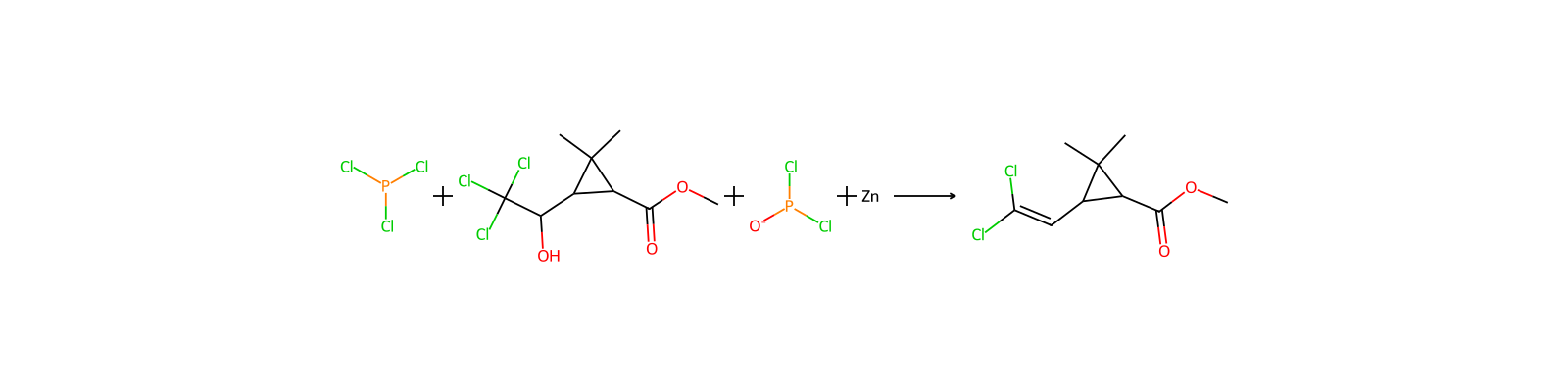
Related reactions
10 records


Linked notes
Loading…