

Basic information
- Standard SMILES
Nc1ccc(F)cc1F- InChIKey
CEPCPXLLFXPZGW-UHFFFAOYSA-N- Molecular formula
- C6H5F2N
- Average molar mass
- 129.11 g/mol
- Monoisotopic mass
- 129.0390056
Overview
2,4-difluoroaniline is a dark reddish-purple liquid. (NTP, 1992)
Names & identifiers
- Preferred name
- 2,4-Difluoroaniline
- IUPAC
- 2,4-difluoroaniline
- English name
- 2,4-Difluoroaniline
- Molecular formula
- C6H5F2N
- Molecular weight
- 129.11
Names & synonyms
2,4-DIFLUOROANILINE367-25-92,4-DifluorobenzenamineBenzenamine, 2,4-difluoro-Aniline, 2,4-difluoro-DTXSID602506440P93L7KWDNSC-10297DTXCID905064RefChem:82418206-687-52,4-Difluroaniline
Show more names
Difluoroaniline4-Difluoroaniline2,4-difluoro-anilinAKOS 911272,4-Difluoranilin2,4-DIFLOUROANILINE
2,4-DifluorophenylamineMFCD000076482.4-difluoroaniline2,?4-?difluoro-BenzenamineFlurbiprofen Impurity 53CCRIS 46212,4-Difluoro AnilineEINECS 206-687-5
Database identifiers
- CAS
367-25-9- PubChem CID
- 9709
- DTXSID
DTXSID6025064- ChEMBL
CHEMBL1423658- UNII
- 40P93L7KWD
- EC Number
- 206-687-5
- Nikkaji
- J193.875D
Properties
Computed structural properties
- XLogP
- 1.5
- Topological polar surface area
- 26 Ų
- Hydrogen bond donors
- 1
- Hydrogen bond acceptors
- 3
- Rotatable bonds
- 0
- Heavy atoms
- 9
- Formal charge
- 0
- Complexity
- 97.1
Experimental & physicochemical properties
Density1.268 (NTP, 1992) - Denser than water; will sink
Solubility10 to 50 mg/mL at 68.9 °F (NTP, 1992)
Flash Point145 °F (NTP, 1992)
Boiling Point338 °F at 753 mmHg (NTP, 1992)
Melting Point18.5 °F (NTP, 1992)
Physical Description2,4-difluoroaniline is a dark reddish-purple liquid. (NTP, 1992)
Physicochemical properties
- Melting point
- -7.5 °C · -7.5 °C (lit.)
- Boiling point
- 170 °C/753 · 170 °C/753 mmHg (lit.)
- Density
- 1.268 g/mL · 1.268 g/mL at 25 °C (lit.)
- refractive index
- 20 · n20/D 1.506(lit.)
- Flash point
- 145 °F · 145 °F
- storage temp.
- 2 · Keep in dark place,Inert atmosphere,2-8°C
- solubility
- Not miscible or difficult to mix.
- form
- Liquid
- pka
- 3.26 · 3.26±0.10(Predicted)
- Specific Gravity
- 1.284 · 1.284 (20/4℃)
- color
- Clear brown
- Water Solubility
- 1 · 1-5 g/100 mL at 20.55 ºC
- Merck
- 14 · 14,3147
- BRN
- 2802556 · 2802556
- Stability
- Stable. Combustible. Incompatible with strong oxidizing agents, acids, acid chlorides, acid anhydrides.
- InChI
- 1S/C6H5F2N/c7-4-1-2-6(9)5(8)3-4/h1-3H,9H2
- InChIKey
- CEPCPXLLFXPZGW-UHFFFAOYSA-N
- SMILES
- Nc1ccc(F)cc1F
- LogP
- 1.7 at · 1.7 at 25℃ and pH5-9
- CAS DataBase Reference
- 367 · 367-25-9(CAS DataBase Reference)
- EWG's Food Scores
- 1 · 1
- FDA UNII
- 40 P93L7KWD · 40P93L7KWD
- NIST Chemistry Reference
- 2 · 2,4-Difluoroaniline(367-25-9)
- EPA Substance Registry System
- 2 · 2,4-Difluoroaniline (367-25-9)
- UNSPSC Code
- 12352100 · 12352100
- NACRES
- 22 · NA.22
- Symbol(GHS)
- 6 · GHS06
- Signal word
- Danger
- Hazard statements
- 302 · H302-H311
- Precautionary statements
- 264 · P264-P270-P280-P301+P312-P302+P352+P312-P361+P364
- PPE
- Eyeshields, Faceshields, Gloves, type ABEK (EN14387) respirator filter
- Hazard Codes
- Xn,T,Xi
- Risk Statements
- 20 · 20/21/22-36/37/38
- Safety Statements
- 28 · 28-36/37/39-26-36
- RIDADR
- 2941 · UN 2941 6.1/PG 3
- WGK Germany
- 1 · 1
- RTECS
- 3680000 · BX3680000
- F
- 8 · 8-9-23
- Hazard Note
- Toxic
- TSCA
- TSCA listed
- HazardClass
- 6.1 · 6.1
- PackingGroup
- III
- HS Code
- 29214210 · 29214210
- Storage Class
- 6.1 C · 6.1C - Combustible acute toxic Cat.3toxic compounds or compounds which causing chronic effects
- Hazard Classifications
- 3 DermalAcute · Acute Tox. 3 DermalAcute Tox. 4 Oral
- REACH Registrations
- Inactive
- Limited Quantities
- 5 L · 5.0 L (1.3 gallons) (liquid) or 5.0 kg (11 lbs) (solid)
- Excepted Quantities
- Max Inner Pack (30g or 30ml) and Max Outer Pack (1Kg or 1L)
Safety & regulation
GHS classification
GHS Classification
Danger
H302 (99.4%): Harmful if swallowed [Warning Acute toxicity, oral]
P261, P262, P264, P264+P265, P270, P271, P273, P280, P301+P317, P302+P352, P304+P340, P305+P351+P338, P316, P319, P321, P330, P332+P317, P337+P317, P361+P364, P362+P364, P391, P403+P233, P405, and P501 (click each P-code to see the statement)
Aggregated GHS information provided per 157 reports by companies from 10 notifications to the ECHA C&L Inventory. Each notification may be associated with multiple companies.
Hazard information
Regulatory Information
Chemical: Benzenamine, 2,4-difluoro-
Status: Active Update: 19-02-2019 https://echa.europa.eu/registration-dossier/-/registered-dossier/24338
Benzenamine, 2,4-difluoro-: Does not have an individual approval but may be used under an appropriate group standard
DOT LabelPoison
Fire HazardsThis compound is combustible. (NTP, 1992)
Health HazardsACUTE/CHRONIC HAZARDS: This compound may be irritating to tissues. (NTP, 1992)
Reactive GroupAryl Halides
Reactivity Profile
Anilines are chemical bases. They neutralize acids to form salts plus water. These acid-base reactions are exothermic. The amount of heat that is evolved per mole of amine in a neutralization is largely independent of the strength of the amine as a base. Amines may be incompatible with isocyanates, halogenated organics, peroxides, phenols (acidic), epoxides, anhydrides, and acid halides. Flammable gaseous hydrogen is generated by amines in combination with strong reducing agents, such as hydrides.
Air and Water ReactionsThis chemical may be sensitive to prolonged exposure to air. (NTP, 1992). Water soluble.
Hazard Classes and CategoriesAcute Tox. 4 (99.4%)
Safety & protection
Fire FightingFires involving this compound can be controlled with a dry chemical, carbon dioxide or Halon extinguisher. (NTP, 1992)
First Aid
EYES: First check the victim for contact lenses and remove if present. Flush victim's eyes with water or normal saline solution for 20 to 30 minutes while simultaneously calling a hospital or poison control center. Do not put any ointments, oils, or medication in the victim's eyes without specific instructions from a physician. IMMEDIATELY transport the victim after flushing eyes to a hospital even if no symptoms (such as redness or irritation) develop.
Nonfire Spill Response
SMALL SPILLS AND LEAKAGE: If you spill this chemical, FIRST REMOVE ALL SOURCES OF IGNITION. Then, use absorbent paper to pick up all liquid spill material. Seal the absorbent paper, as well as any of your clothing which may be contaminated, in a vapor-tight plastic bag for eventual disposal. Wash any surfaces you may have contaminated with a soap and water solution. Do not reenter the contaminated area until the Safety Officer (or other responsible person) has verified that the area has been properly cleaned.
Isolation and EvacuationExcerpt from ERG Guide 153 [Substances - Toxic and/or Corrosive (Combustible)]:
Personal Protective Equipment (PPE)
RECOMMENDED RESPIRATOR: Where the neat test chemical is weighed and diluted, wear a NIOSH-approved half face respirator equipped with an organic vapor/acid gas cartridge (specific for organic vapors, HCl, acid gas and SO2) with a dust/mist filter. (NTP, 1992)
Safety data
- F
- 8-9-23
- PPE
- Eyeshields, Faceshields, Gloves, type ABEK (EN14387) respirator filter
- wgk
- 1
- tsca
- TSCA listed
- rtecs
- BX3680000
- ridadr
- UN 2941 6.1/PG 3
- hs_code
- 29214210
- risk_code
- 20/21/22-36/37/38
- Signal word
- Danger
- Symbol(GHS)
- GHS06
- hazard_code
- Xn,T,Xi
- hazard_note
- Toxic
- safety_code
- 28-36/37/39-26-36
- hazard_class
- 6.1
- Storage Class
- 6.1C - Combustible acute toxic Cat.3toxic compounds or compounds which causing chronic effects
- packing_group
- III
- Hazard statements
- H302-H311
- Limited Quantities
- 5.0 L (1.3 gallons) (liquid) or 5.0 kg (11 lbs) (solid)
- Excepted Quantities
- Max Inner Pack (30g or 30ml) and Max Outer Pack (1Kg or 1L)
- REACH Registrations
- Inactive
- Hazard Classifications
- Acute Tox. 3 DermalAcute Tox. 4 Oral
- Precautionary statements
- P264-P270-P280-P301+P312-P302+P352+P312-P361+P364
Chemistry & industry
Uses & manufacturing
General Manufacturing InformationBenzenamine, 2,4-difluoro-: ACTIVE
Applications
Description2,4-difluoroaniline is an important intermediate used in organic synthesis, pharmaceuticals agrochemicals, dyes, and agricultural chemicals.
Uses2,4-Difluoroaniline is an important raw material and intermediate used in organic synthesis, pharmaceuticals agrochemicals and dyestuff fields.
General DescriptionDark reddish-purple liquid.
Upstream & downstream products
Upstream raw materials
Downstream products
Suppliers50 total
国药集团化学试剂有限公司86-21-63210123 · [email protected]
梯希爱(上海)化成工业发展有限公司021-67121386 · [email protected]
衢州润东化工有限公司0570-8789886 18892685668 · [email protected]
上海阿拉丁生化科技股份有限公司400-6206333 13167063860 · [email protected]
爱斯特(成都)生物制药股份有限公司+86-28-85122536 85324413 · [email protected]
北京安司莫森技术有限公司010-82954736 13391601435 · [email protected]
韶远科技(上海)有限公司021-50795510 4000665055 · [email protected]
科瑞迪化学400-821-5857 021-64326257 · [email protected]
Syntechem Co.,Ltd[email protected]
上海迈瑞尔生化科技有限公司4006356688 18621169109 · [email protected]
Wuhan EnTai Technology Development Co,.Ltd86-27-82330560 · [email protected]
阿法埃莎(中国)化学有限公司400-6106006 · [email protected]
太原市瑞和丰科贸有限公司+86 351 7031519 · [email protected]
上海德默医药科技有限公司400-021-7337 2355568890 · [email protected]
安耐吉化学&3A(安徽泽升科技股份有限公司)400-0056266 · [email protected]
石家庄斯迪亚诺精细化工有限公司0311-89250318 13582355795 · [email protected]
武汉凯威斯科技有限公司86-027-67849912 · [email protected]
上海瀚鸿科技股份有限公司021-54306202 13764082696 · [email protected]
上海景颜化工科技有限公司13817811078 · [email protected]
嘉兴市艾森化工有限公司0573-85285100 18627885956 · [email protected]
Pure Chemistry Scientific Inc.001-857-928-2050 or 1-888-588-9418 · [email protected]
上海隆盛化工有限公司58099637 13585536065 · [email protected]
上海攀鸿化工科技有限公司021-56491756 13512199871 · [email protected]
成都福尔斯特医药技术有限公司028-87078428 028-87074958 · [email protected]
中塑供应链管理(山东)有限公司15726167122
杭州东帆化学有限公司86-0571-85151182
孝感深远化工有限公司15527621225; 15527621225 · [email protected]
山东西亚化学有限公司13355009207 13355009207 · [email protected]
玛雅试剂+86 (573) 82222445 (0)18006601000 452520369 · [email protected]
四川库利南科技有限公司400-1166-196 18981987031 · [email protected]
上海耐士化工科技有限公司400-188-0725 +86 21 34310725 13611771617
天津希恩思生化科技有限公司400 638 7771 · [email protected]
河南多贝化工有限公司0370-2785118 17550508557 · [email protected]
艾科试剂4008-755-333 18080918076 · [email protected]
上海思域化工科技有限公司86-21-34053660 · [email protected]
赛默飞世尔科技(中国)有限公司800-810-5118 · [email protected]
北京伊诺凯科技有限公司400-810-7969 010-59572699 · [email protected]
TCI AMERICA800-4238616 · [email protected]
TOKYO CHEMICAL INDUSTRY CO., LTD.03-36680489 · [email protected]
TCI Europe320-37350700 · [email protected]
上海贤鼎生物科技有限公司4009209199 · [email protected]
深圳振强药物研发有限公司0755-66853366 13670046396 · [email protected]
深圳康特腾科技有限公司86-0755-86635001 · [email protected]
越林试剂021-62960152 · [email protected]
Clearsynth Labs Limited+91-22-26355700 · [email protected]
无锡中坤生化科技有限公司+86 0510-85629785
上海将来实业股份有限公司021-61552785 · [email protected]
安徽科迪达化工有限公司0554-2106669 · [email protected]
日照力德士化工有限公司010-51268198 · [email protected]
美岚实业(上海)有限公司021-58958189 · [email protected]
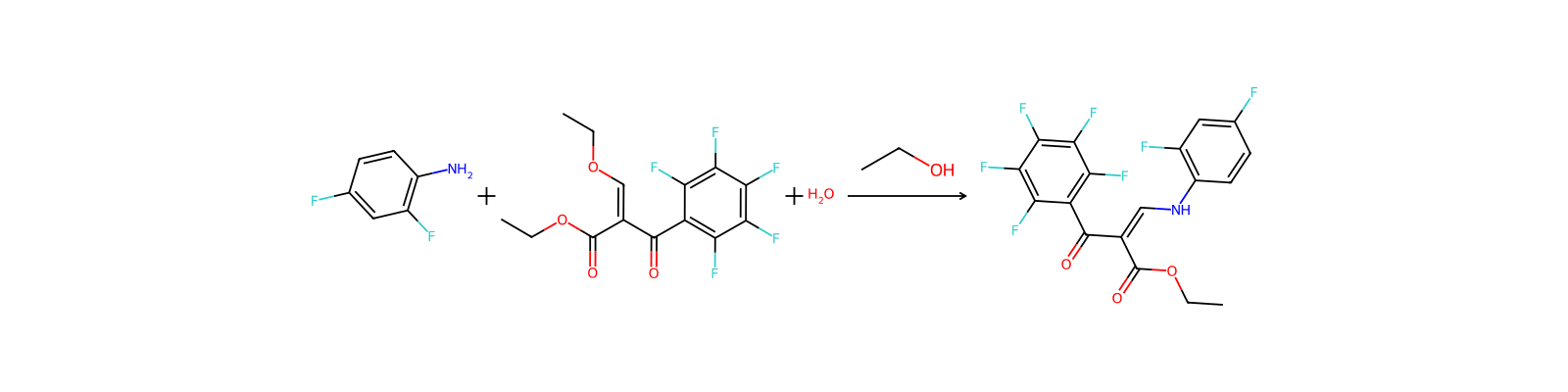
Related reactions
373 records


Linked notes
Loading…