

Basic information
- Standard SMILES
O=C(O)c1ccc(C(=O)O)c(O)c1- InChIKey
CDOWNLMZVKJRSC-UHFFFAOYSA-N- Molecular formula
- C8H6O5
- Average molar mass
- 182.13 g/mol
- Monoisotopic mass
- 182.02152329
Names & identifiers
- Preferred name
- 2-Hydroxyterephthalic acid
- IUPAC
- 2-hydroxyterephthalic acid
- English name
- 2-hydroxyterephthalic acid
- Molecular formula
- C8H6O5
- Molecular weight
- 182.13
Names & synonyms
2-Hydroxyterephthalic acid636-94-22-Hydroxy-1,4-benzenedicarboxylic acid2-hydroxyterephthalateDTXSID40212983RefChem:87618DTXCID701354742-hydroxybenzene-1,4-dicarboxylic acidHydroxyterephthalic acidMFCD098353681,4-Benzenedicarboxylic acid, 2-hydroxy-2-hydroxyterephthalicacid
Show more names
DK72702-HydroxyterephthaLTerephthalic acid, hydroxy-2-HydroxyterephthalicAcid>2-Hydroxyterephthalic acid 97%
H2BDC-OHNSC-1090982-HYDROXYBENZENE-1,4-DIOIC ACID2-hydroxy terephthalic acid2-Hydroxyterephthalic acid #SCHEMBL193180SCHEMBL6630337SCHEMBL6631013
Database identifiers
- CAS
636-94-2- PubChem CID
- 97257
- DTXSID
DTXSID40212983- EC Number
- 692-426-4
- Nikkaji
- J94.856J
Properties
Computed structural properties
- XLogP
- 1.5
- Topological polar surface area
- 94.8 Ų
- Hydrogen bond donors
- 3
- Hydrogen bond acceptors
- 5
- Rotatable bonds
- 2
- Heavy atoms
- 13
- Formal charge
- 0
- Complexity
- 225
Physicochemical properties
- Melting point
- 312 · 312-317 °C
- Boiling point
- 436.9 · 436.9±40.0 °C(Predicted)
- Density
- 1.612 · 1.612±0.06 g/cm3(Predicted)
- storage temp.
- Inert atmosphere,Room Temperature
- form
- powder to crystal
- pka
- 2.56 · 2.56±0.10(Predicted)
- color
- White to Yellow to Orange
- InChI
- InChI=1S/C8H6O5/c9-6-3-4(7(10)11)1-2-5(6)8(12)13/h1-3,9H,(H,10,11)(H,12,13)
- InChIKey
- CDOWNLMZVKJRSC-UHFFFAOYSA-N
- SMILES
- C1(C(O)=O)=CC=C(C(O)=O)C=C1O
- CAS DataBase Reference
- 636 · 636-94-2
- UNSPSC Code
- 26111700 · 26111700
- NACRES
- 23 · NA.23
- Symbol(GHS)
- 7 · GHS07
- Signal word
- Warning
- Hazard statements
- 302 · H302-H315-H319-H335
- Precautionary statements
- 261 · P261-P264-P270-P301+P312-P302+P352-P305+P351+P338
- target organs
- Respiratory system
- Hazard Codes
- Xn
- Risk Statements
- 22 · 22-36/37/38
- Safety Statements
- 26 · 26
- WGK Germany
- 3 · 3
- HS Code
- 29182900 · 29182900
- Storage Class
- 11 · 11 - Combustible Solids
- Hazard Classifications
- 4 OralEye · Acute Tox. 4 OralEye Irrit. 2Skin Irrit. 2STOT SE 3
Safety & regulation
GHS classification
GHS Classification
Warning
H302 (97.7%): Harmful if swallowed [Warning Acute toxicity, oral];H315 (100%): Causes skin irritation [Warning Skin corrosion/irritation];H319 (100%): Causes serious eye irritation [Warning Serious eye damage/eye irritation];H335 (97.7%): May cause respiratory irritation [Warning Specific target organ toxicity, single exposure; Respiratory tract irritation]
P261, P264, P264+P265, P270, P271, P280, P301+P317, P302+P352, P304+P340, P305+P351+P338, P319, P321, P330, P332+P317, P337+P317, P362+P364, P403+P233, P405, and P501 (click each P-code to see the statement)
Aggregated GHS information provided per 43 reports by companies from 6 notifications to the ECHA C&L Inventory. Each notification may be associated with multiple companies.;Information may vary between notifications depending on impurities, additives, and other factors. The percentage value in parenthesis indicates the notified classification ratio from companies that provide hazard codes. Only hazard codes with percentage values above 10% are shown. For more detailed information, please visit ECHA C&L website.
Hazard information
Hazard Classes and CategoriesAcute Tox. 4 (97.7%);Skin Irrit. 2 (100%);Eye Irrit. 2 (100%);STOT SE 3 (97.7%)
Safety data
- wgk
- 3
- hs_code
- 29182900
- risk_code
- 22-36/37/38
- Signal word
- Warning
- Symbol(GHS)
- GHS07
- hazard_code
- Xn
- safety_code
- 26
- Storage Class
- 11 - Combustible Solids
- target organs
- Respiratory system
- Hazard statements
- H302-H315-H319-H335
- Hazard Classifications
- Acute Tox. 4 OralEye Irrit. 2Skin Irrit. 2STOT SE 3
- Precautionary statements
- P261-P264-P270-P301+P312-P302+P352-P305+P351+P338
Chemistry & industry
Applications
Uses2-Hydroxyterephthalic acid is a useful reagent and reactant in the field of nanotechnology, and material science. Della Pia, A., et al.: Faraday Discuss., 204, 191-213 (2017);
General DescriptionThis product has been enhanced for energy efficiency.
Upstream & downstream products
Upstream raw materials
Downstream products
Suppliers50 total
梯希爱(上海)化成工业发展有限公司021-67121386 · [email protected]
衢州润东化工有限公司0570-8789886 18892685668 · [email protected]
苏州道澜生物医药科技有限公司15952404857 · [email protected]
上海阿拉丁生化科技股份有限公司400-6206333 13167063860 · [email protected]
杭州奥得科技有限公司0571-88772972-0 15057128248 · [email protected]
上海瀚麟生物科技有限公司183-0212-4410 18302124410 · [email protected]
爱斯特(成都)生物制药股份有限公司+86-28-85122536 85324413 · [email protected]
Baoji Guokang Healthchem co.,ltd+8615604608665 15604608665 · [email protected]
湖北科乐精细化工有限公司027-59101668 19945030958 · [email protected]
Dayang Chem (Hangzhou) Co.,Ltd.+86-0571-88938639 17705817739 · [email protected]
毕佳索(上海毕得医药科技股份有限公司)400-6005915 · [email protected]
上海晶抗生物工程有限公司021-54721350 13524668266 · [email protected]
石家庄斯迪亚诺精细化工有限公司0311-89250318 13582355795 · [email protected]
郑州研德生物科技有限公司0371-63682289 15538176268 · [email protected]
Nanjing jinheyou Trading Co., Ltd.15705188088 · [email protected]
上海忆嵘生物科技有限公司18049974220 · [email protected]
上海源叶生物科技有限公司13636370518 · [email protected]
上海遐瑞医药科技有限公司+86 21 61551611
TCI AMERICA800-4238616 · [email protected]
TOKYO CHEMICAL INDUSTRY CO., LTD.03-36680489 · [email protected]
TCI Europe320-37350700 · [email protected]
洛阳佳得康化工科技有限公司16668001218 · [email protected]
赛纳斯特化学(欢迎点击联系)021-60343070
常州凯立医药科技有限公司0519-81096292 15312577869 · [email protected]
武汉普洛夫生物科技有限公司17612776928 · [email protected]
湖北隆信化工实业有限公司15271551270 · [email protected]
HBCChem, Inc.+1-510-219-6317 · [email protected]
上海笛柏生物科技有限公司400-008-9730,021-54359730 400-008-9730 · [email protected]
北京奥秘佳得医药科技有限公司+86-13522808617 · [email protected]
Labnetwork lnc.+86-27-50766799 +86-18062016861 · [email protected]
重庆星灿医药科技有限公司13594048950 19923294409 · [email protected]
上海卓因生物科技有限公司021-61317773 · [email protected]
天津普西唐生物医药科技有限公司010-60605840 · [email protected]
上海麦克林生化科技股份有限公司15221275939 15221275939 · [email protected]
湖北巨胜科技有限公司027-59599241 18871490274 · [email protected]
吉林中科研伸科技有限公司0431-80534353 19917294565 · [email protected]
Sigma-Aldrich西格玛奥德里奇(上海)贸易有限公司021-61415566 800-8193336 · [email protected]
九鼎化学(上海)科技有限公司4009209199 · [email protected]
北京建强伟业科技有限公司(FUSION弗珍试剂品牌)0531-88924771 15614660963 · [email protected]
上海玻尔化学试剂有限公司19102157732 · [email protected]
上海大然化学有限公司021-64478606 15900664856 · [email protected]
武汉多普乐生物医药有限公司+86-02787215551 19945035818 · [email protected]
南京熙朗化工产品有限公司18936048580 · [email protected]
南京择优新材料科技有限公司173-40521416 17340521416 · [email protected]
北京华威锐科化工科技有限公司89508211 18501085097 · [email protected]
湖北阡陌生物科技有限公司0711-3812399 18062309155 · [email protected]
武汉沃格达生物科技有限公司15071299552 · [email protected]
武汉克米克生物医药技术有限公司027-13163388153 13163388153 · [email protected]
山东西亚化学有限公司4009903999 13395398332 · [email protected]
郑州安慕斯化工产品有限公司15981811963 18737195735 · [email protected]
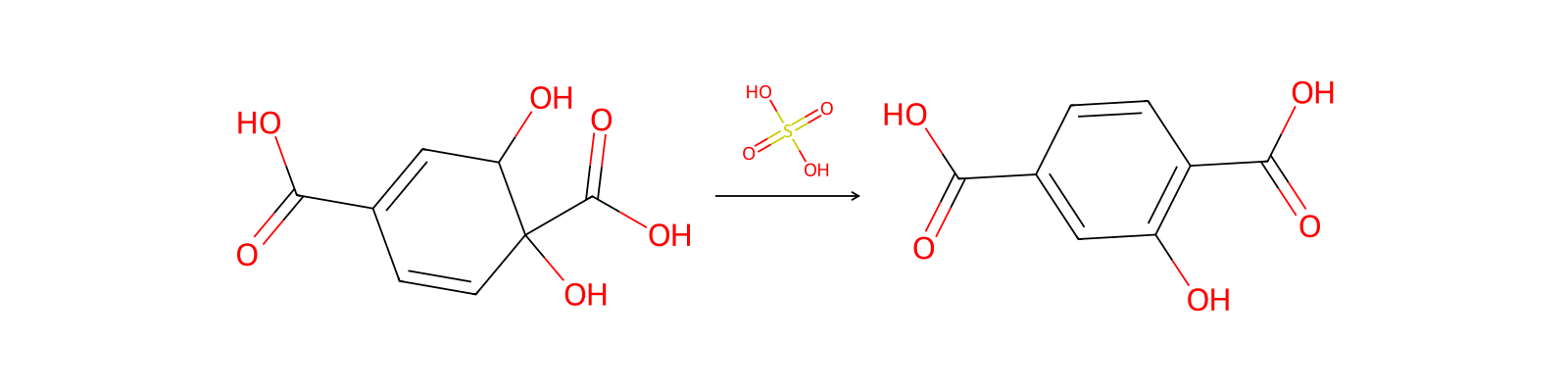
Related reactions
6 records



Linked notes
Loading…