HomeMCPWorkbenchSkills
HomeWorkbenchNotificationsMe
llms.txt · MCP GuidePrivacy Policy · Terms of Service · Supportv1.8.0
  1. Home
  2. /Compound

Cyanoacetic acid

HCID 9740
New noteNew reactionRequest quotes
Print preview

Completing data — refresh the page later to see the latest

Basic informationNames & identifiersPropertiesSafety & regulationChemistry & industryRelated reactionsCompound notes
Substructure searchFind similar structures

Basic information

CAS
372-09-8
Standard SMILES
N#CCC(=O)O
InChIKey
MLIREBYILWEBDM-UHFFFAOYSA-N
Molecular formula
C3H3NO2
Average molar mass
85.06 g/mol
Monoisotopic mass
85.01637834

Names & identifiers

Preferred name
Cyanoacetic acid
IUPAC
2-cyanoacetic acid
English name
Cyanoacetic acid
Molecular formula
C3H3NO2
Molecular weight
85.06

Names & synonyms

CYANOACETIC ACID372-09-82-Cyanoacetic acidAcetic acid, cyano-Malonic mononitrileAcide cyanacetiqueCyanessigsaeureMalonic acid mononitrileMonocyanoacetic acidcyanoethanoic acidUSAF KF-17Kyselina kyanoctova
Show more names
2-cyanoacetateCyanicycnab acidCYADNCCH2COOHCyanoaceticusafkf-17CyanessigsureCYANOCETIC ACID
DTXSID0027149QZT550H2Y9NSC-5571DTXCID707149CHEBI:51889RefChem:129042206-743-9Cyanoaceticacid

Database identifiers

CAS
372-09-8
PubChem CID
9740
DTXSID
DTXSID0027149
ChEMBL
CHEMBL3185860
ChEBI
CHEBI:51889
UNII
QZT550H2Y9
EC Number
206-743-9
Nikkaji
J2.581J

Properties

Computed structural propertiesFilling in

XLogP
-0.8
Topological polar surface area
61.1 Ų
Hydrogen bond donors
1
Hydrogen bond acceptors
3
Rotatable bonds
1
Heavy atoms
6
Formal charge
0
Complexity
98

Experimental & physicochemical properties

LogPlog Kow = -0.76
Densitygreater than 1.1 at 68 °F (USCG, 1999)
Color/FormHygroscopic crystals
Solubility · 2 items

Sol in water, alcohol, ether; slightly sol in benzene, chloroform

Slightly sol in acetic acid

Boiling Point108 °C at 15 mm Hg
Decomposition · 2 items

Decomposes at 320 °F (160 °C) with release of acetonitrile.

When heated to decomposition it emits toxic fumes of /nitrogen oxide and hydrogen cyanide/.

Melting Point · 2 items

151 °F (USCG, 1999)

66 °C

Vapor Pressure0.03 [mmHg]
Physical Description · 2 items

Cyanoacetic acid is a yellow-brown liquid with an unpleasant odor. Sinks and mixes with water. (USCG, 1999)

Safety & regulation

Safety information is for reference only and does not replace the supplier’s Safety Data Sheet (SDS), applicable regulations, or professional assessment.

GHS classification

GHS Classification · 6 items

This chemical does not meet GHS hazard criteria for 1.2% (3 of 245) of reports.

Danger

H302+H332 (21.2%): Harmful if swallowed or if inhaled [Warning Acute toxicity, oral; acute toxicity, inhalation];H302 (98.4%): Harmful if swallowed [Warning Acute toxicity, oral];H314 (98.8%): Causes severe skin burns and eye damage [Danger Skin corrosion/irritation];H318 (67.3%): Causes serious eye damage [Danger Serious eye damage/eye irritation];H332 (86.9%): Harmful if inhaled [Warning Acute toxicity, inhalation];H412 (12.2%): Harmful to aquatic life with long lasting effects [Hazardous to the aquatic environment, long-term hazard]

P260, P261, P264, P264+P265, P270, P271, P273, P280, P301+P317, P301+P330+P331, P302+P361+P354, P304+P340, P305+P354+P338, P316, P317, P321, P330, P363, P405, and P501 (click each P-code to see the statement)

Aggregated GHS information provided per 245 reports by companies from 22 notifications to the ECHA C&L Inventory. Each notification may be associated with multiple companies.;Reported as not meeting GHS hazard criteria per 3 of 245 reports by companies.;There are 21 notifications provided by 242 of 245 reports by companies with hazard statement code(s).;Information may vary between notifications depending on impurities, additives, and other factors. The percentage value in parenthesis indicates the notified classification ratio from companies that provide hazard codes. Only hazard codes with percentage values above 10% are shown. For more detailed information, please visit ECHA C&L website.

Hazard information

Regulatory Information · 3 items

Chemical: Acetic acid, cyano-

Status: Active Update: 16-04-2014 https://echa.europa.eu/registration-dossier/-/registered-dossier/7134;Status: Active Update: 31-08-2022 https://echa.europa.eu/registration-dossier/-/registered-dossier/13908

Cyanoacetic acid: Does not have an individual approval but may be used under an appropriate group standard

DOT Label

Chemistry & industry

Pharmacology

Metabolism/Metabolites · 3 items

... In vivo and in vitro metabolism of 3-dimethylaminopropionitrile (DMAPN) and its urotoxic effect on male Sprague-Dawley rats /were investigated/. Rats were given 175, 350, or 525 mg/kg DMAPN or DMAPN metabolites orally for 5 days, and urinary metabolites and volumes were measured. By day 5, 44% of the DMAPN dose was excreted unchanged. Beta-aminopropionitrile and cyanoacetic acid were the major urinary metabolites, as identified by gas chromatography. /It was/ concluded that DMAPN is metabolized via a cytochrome P450 mixed-function oxidase system and the urotoxic effects of DMAPN may be related to its metabolism.

... Cyanoacetic acid has been studied with reference to its possible role in the production of the symptoms of lathyrism by 3-aminopropionitrile. Injection of 14C-labeled 3-aminopropionitrile in rats showed that 25-30% could be recovered as cyanoacetic acid ... /However/ cyanoacetic acid is not responsible for the skeletal deformities, and such produced by feeding 3-aminopropionitrile.

Organic nitriles are converted into cyanide ions through the action of cytochrome P450 enzymes in the liver. Cyanide is rapidly absorbed and distributed throughout the body. Cyanide is mainly metabolized into thiocyanate by either rhodanese or 3-mercaptopyruvate sulfur transferase. Cyanide metabolites are excreted in the urine. (L96)

Uses & manufacturing

Uses · 4 items

Used in the synthesis of pharmaceuticals and the fungicide cymoxanil; [HSDB]

Synthesis of intermediates; manuf barbital

Chemical intermediate for malonic acid; diethyl malonate for pharmaceuticals

... For the production of the fungicide cymoxanil and the cough remedy dextromethorphan.

U.S. Exports · 2 items

(1972) No Data

(1975) No Data

U.S. Imports · 2 items

(1972) No Data

(1975) No Data

U.S. Production · 5 items

This chemical is listed as a High Production Volume (HPV) (65FR81686). Chemicals listed as HPV were produced in or imported into the U.S. in >1 million pounds in 1990 and/or 1994. The HPV list is based on the 1990 Inventory Update Rule. (IUR) (40 CFR part 710 subpart B; 51FR21438).

Related reactions

780 records
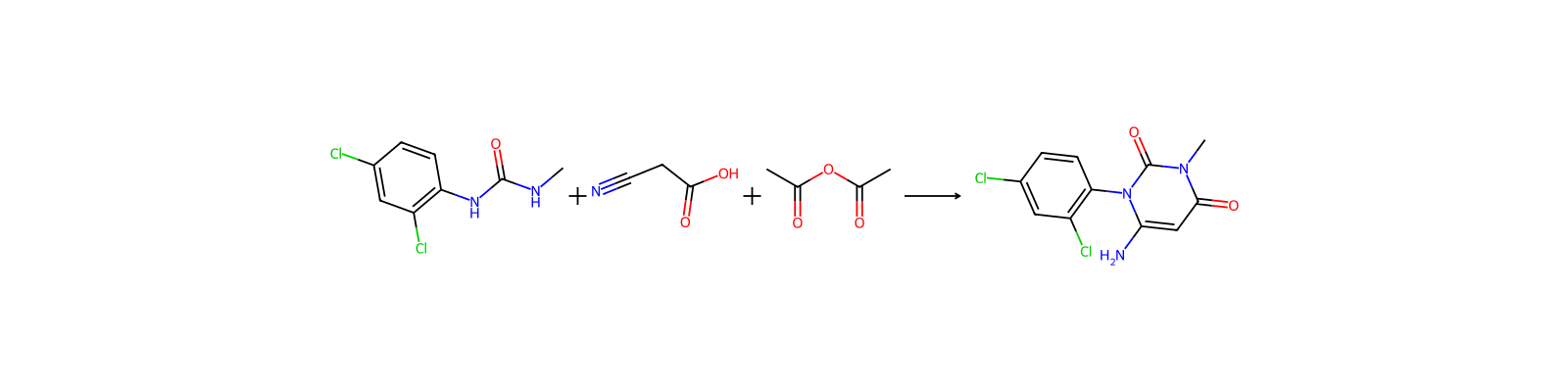
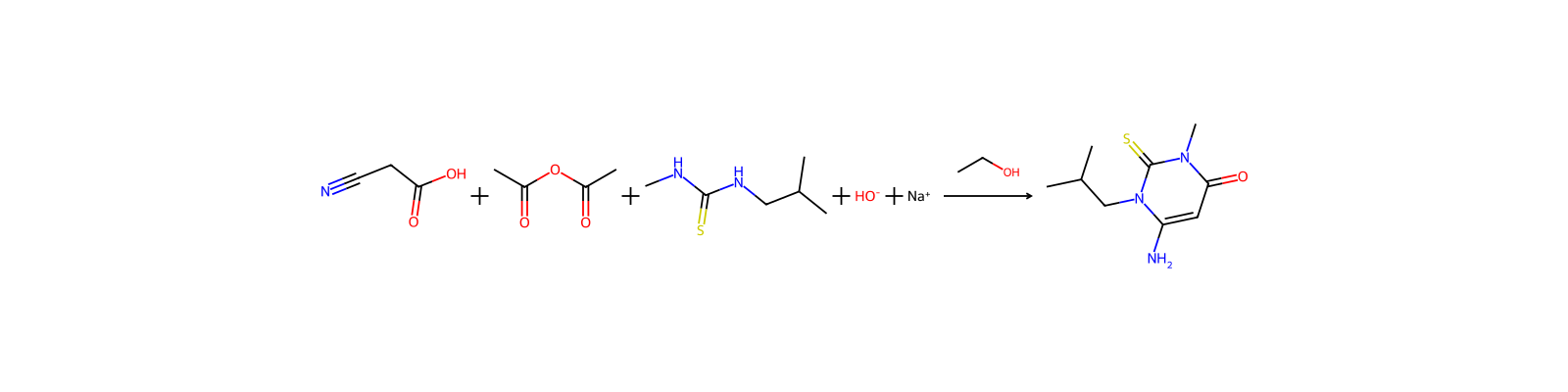
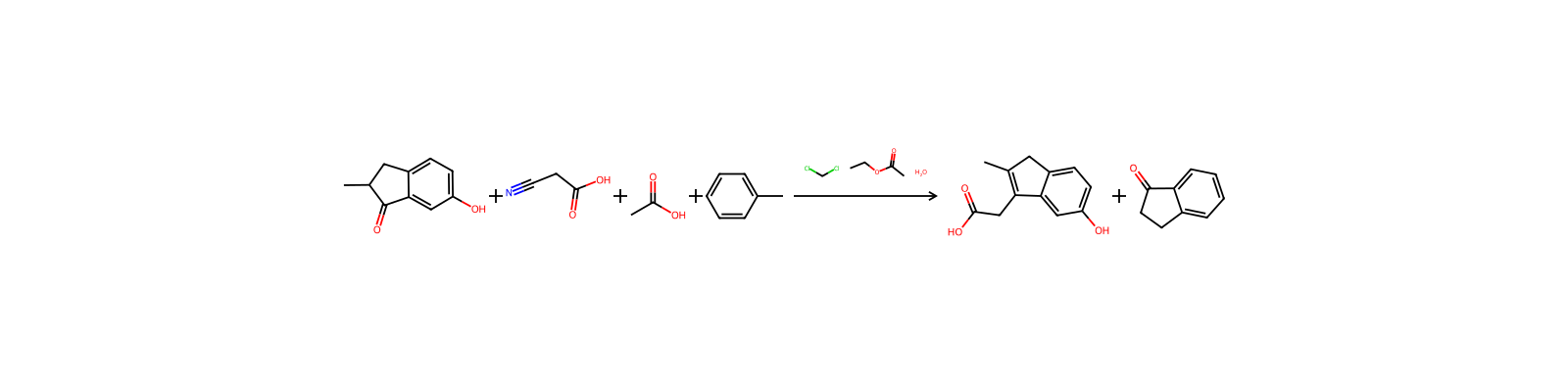
New reaction record
HRID 7597 reaction equation
HRID 7597As reactantuspto-grants-2006_08
HRID 11283 reaction equation
HRID 11283As reactantuspto-grants-2006_08
HRID 26660 reaction equation
HRID 26660As reactantuspto-grants-1979_04
HRID 27370 reaction equation
HRID 27370As reactantuspto-grants-1980_09
HRID 27374 reaction equation
HRID 27374As reactantuspto-grants-1980_09
HRID 31065 reaction equation
HRID 31065As reactantuspto-grants-2008_09
HRID 37693 reaction equation
HRID 37693As reactantuspto-grants-1995_05
HRID 37699 reaction equation
HRID 37699As reactantuspto-grants-1995_05
Page 1 of 98

Compound notes

Loading…

On this pageBasic informationNames & identifiersPropertiesSafety & regulationChemistry & industryRelated reactionsCompound notes
More actions
New noteNew reactionRequest quotes

White hygroscopic solid; [Hawley] White crystalline solid; [MSDSonline]

Dissociation ConstantspKa = 2.45 at 25 °C
Other Experimental PropertiesHygroscopic; decomp at 160 °C into CO2 and acetonitrile

Physicochemical properties

Melting point
65 °C · 65 °C
Boiling point
108 °C0.15 · 108 °C0.15 mm Hg(lit.)
Density
1.3676 · 1.3676 (rough estimate)
bulk density
700 kg/m3 · 700kg/m3
vapor pressure
0.1 mm · 0.1 mm Hg ( 100 °C)
refractive index
1.3764 · 1.3764 (estimate)
Flash point
226 °F · 226 °F
storage temp.
30 °C · Store below +30°C.
solubility
2 O: · H2O: soluble50mg/mL, clear, colorless to very faintly yellow
pka
2.45 · 2.45(at 25℃)
form
Adhering Crystalline Solid
color
White to light beige
PH
1.6 · 1.6 (50g/l, H2O, 20℃)
Water Solubility
1000 g/L · 1000 g/L (20 ºC)
Sensitive
Hygroscopic
Merck
14 · 14,2689
BRN
506325 · 506325
Dielectric constant
33 · 33.0(4℃)
InChI
1S/C3H3NO2/c4-2-1-3(5)6/h1H2,(H,5,6)
InChIKey
MLIREBYILWEBDM-UHFFFAOYSA-N
SMILES
OC(=O)CC#N
LogP
-0.76 · -0.76
CAS DataBase Reference
372 · 372-09-8(CAS DataBase Reference)
FDA UNII
550 H2Y9 · QZT550H2Y9
NIST Chemistry Reference
Acetic acid, cyano-(372-09-8)
EPA Substance Registry System
Cyanoacetic acid (372-09-8)
UNSPSC Code
12352106 · 12352106
NACRES
22 · NA.22
Symbol(GHS)
5 · GHS05,GHS07
Signal word
Danger
Hazard statements
302 · H302-H314-H290
Precautionary statements
501 · P501-P260-P270-P234-P264-P280-P390-P303+P361+P353-P301+P330+P331-P363-P301+P312+P330-P304+P340+P310-P305+P351+P338+P310-P406-P405
PPE
3 · Eyeshields, Faceshields, Gloves, type P3 (EN 143) respirator cartridges
Hazard Codes
C
Risk Statements
22 · 22-31-34-52/53-20/22
Safety Statements
26 · 26-36/37/39-45-61-20
RIDADR
3261 · UN 3261 8/PG 2
WGK Germany
2 · 2
RTECS
3675000 · AG3675000
F
3 · 3-10-21
TSCA
TSCA listed
HS Code
2926 · 2926 90 70
HazardClass
8 · 8
PackingGroup
II
Storage Class
8 A · 8A - Combustible corrosive hazardous materials
Hazard Classifications
4 InhalationAcute · Acute Tox. 4 InhalationAcute Tox. 4 OralEye Dam. 1Skin Corr. 1B
Hazardous Substances Data
372 · 372-09-8(Hazardous Substances Data)
Toxicity
50 orally · LD50 orally in Rabbit: 1500 mg/kg LD50 dermal Rabbit > 2000 mg/kg
REACH Registrations
Active
Corrosive
Fire HazardsSpecial Hazards of Combustion Products: Toxic oxides of nitrogen and toxic and flammable acetonitrile vapors may form in fire. (USCG, 1999)
Fire PotentialCombustible solid. When heated to decomp, emits ... flammable acetonitrile vapor.
Health HazardsContact irritates eyes and may irritate skin. (USCG, 1999)
Hazards Summary · 1 item

A corrosive substance that can cause injury to the skin and eyes; A respiratory tract irritant; Emergency treatment: see Acetonitrile. [HSDB] A skin and eye irritant; [CAMEO] A corrosive substance that can cause injury to the skin, eyes, and respiratory tract; Inhalation may cause chemical pneumonitis; [MSDSonline]

Reactive GroupAcids, Carboxylic;Nitriles;Acids, Weak
Reactivity ProfileWhite, moderately toxic solid, combustible. When heated to decomposition it emits toxic fumes of nitrile and oxides of nitrogen. A stirred mixture with furfuryl alcohol exploded violently upon heating [MCA Case History No 858].
Atmospheric Standards · 1 item

This action promulgates standards of performance for equipment leaks of Volatile Organic Compounds (VOC) in the Synthetic Organic Chemical Manufacturing Industry (SOCMI). The intended effect of these standards is to require all newly constructed, modified, and reconstructed SOCMI process units to use the best demonstrated system of continuous emission reduction for equipment leaks of VOC, considering costs, non air quality health and environmental impact and energy requirements. Cyanoacetic acid is produced, as an intermediate or a final product, by process units covered under this subpart.

Air and Water ReactionsWater soluble.
Other Hazardous ReactionsCombustion may produce irritants and toxic gases.
Toxic Combustion ProductsCombustion may produce irritants and toxic gases.

Safety & protection

Fire FightingFire Extinguishing Agents: Water, foam, dry chemical, carbon dioxide (USCG, 1999)
First AidINHALATION: move to fresh air.;INGESTION: give large amounts of water; get medical attention.;EYES: flush with water for at least 15 min.;SKIN: flush with water. (USCG, 1999)
Fire Fighting Procedures · 2 items

... Water ... effective in controlling fire; however, resulting liquid ... extremely corrosive ...

Use water spray, dry chemical, or carbon dioxide. Use water spray to keep fire-exposed containers cool. Control corrosive runoff and isolate discharged material for proper disposal. Approach fire from upwind to avoid hazardous vapors and toxic decomposition products.

Storage Conditions · 2 items

Protect against physical damage. Separate from other storage ... /Store/ away from any area where fire hazard may be acute. Outside or detached storage is preferred ...

Store in a cool, dry, well-ventilated location. Separate from acids, alkalies, oxidizing materials, reducing agents.

Cleanup MethodsStop or control the leak, if this can be done without undue risk. Absorb in noncombustible material for proper disposal.
Nonfire Spill Response · 1 item

Excerpt from ERG Guide 154 [Substances - Toxic and/or Corrosive (Non-Combustible)]:;ELIMINATE all ignition sources (no smoking, flares, sparks or flames) from immediate area. Do not touch damaged containers or spilled material unless wearing appropriate protective clothing. Stop leak if you can do it without risk. Prevent entry into waterways, sewers, basements or confined areas. Absorb or cover with dry earth, sand or other non-combustible material and transfer to containers. DO NOT GET WATER INSIDE CONTAINERS. (ERG, 2024)

Disposal Methods · 1 item

SRP: The most favorable course of action is to use an alternative chemical product with less inherent propensity for occupational exposure or environmental contamination. Recycle any unused portion of the material for its approved use or return it to the manufacturer or supplier. Ultimate disposal of the chemical must consider: the material's impact on air quality; potential migration in soil or water; effects on animal, aquatic, and plant life; and conformance with environmental and public health regulations.

Preventive Measures · 1 item

SRP: The scientific literature for the use of contact lenses in industry is conflicting. The benefit or detrimental effects of wearing contact lenses depend not only upon the substance, but also on factors including the form of the substance, characteristics and duration of the exposure, the uses of other eye protection equipment, and the hygiene of the lenses. However, there may be individual substances whose irritating or corrosive properties are such that the wearing of contact lenses would be harmful to the eye. In those specific cases, contact lenses should not be worn. In any event, the usual eye protection equipment should be worn even when contact lenses are in place.

Isolation and Evacuation · 1 item

Excerpt from ERG Guide 154 [Substances - Toxic and/or Corrosive (Non-Combustible)]:;IMMEDIATE PRECAUTIONARY MEASURE: Isolate spill or leak area in all directions for at least 50 meters (150 feet) for liquids and at least 25 meters (75 feet) for solids.;SPILL: Increase the immediate precautionary measure distance, in the downwind direction, as necessary.;FIRE: If tank, rail tank car or highway tank is involved in a fire, ISOLATE for 800 meters (1/2 mile) in all directions; also, consider initial evacuation for 800 meters (1/2 mile) in all directions. (ERG, 2024)

Personal Protective Equipment (PPE) · 3 items

Dust mask; goggles or face shield; rubber gloves (USCG, 1999)

... Full protective clothing except that in absence of heat self-contained breathing apparatus is not required.

Wear special protective clothing and positive pressure self-contained breathing apparatus.

Toxicology

Treatment · 1 item

Antidotes to cyanide poisoning include hydroxocobalamin and sodium nitrite, which release the cyanide from the cytochrome system, and rhodanase, which is an enzyme occurring naturally in mammals that combines serum cyanide with thiosulfate, producing comparatively harmless thiocyanate. Oxygen therapy can also be administered. (L97)

Health Effects · 1 item

Exposure to high levels of cyanide for a short time harms the brain and heart and can even cause coma, seizures, apnea, cardiac arrest and death. Chronic inhalation of cyanide causes breathing difficulties, chest pain, vomiting, blood changes, headaches, and enlargement of the thyroid gland. Skin contact with cyanide salts can irritate and produce sores. (L96, L97)

Environmental Fate · 3 items

TERRESTRIAL FATE: Based on a classification scheme(1), an estimated Koc value of 1(SRC), determined from a structure estimation method(2), indicates that cyanoacetic acid is expected to have very high mobility in soil(SRC). Furthermore, the pka of cyanoacetic acid is 2.45(3), indicating it will exist as an anion under environmental conditions and anions generally have greater mobility in soils than neutral compounds(4). Volatilization from moist soil surfaces will not be an important environmental fate process since anions do not volatilize(SRC). The potential for volatilization of cyanoacetic acid from dry soil surfaces may exist(SRC) based upon an estimated vapor pressure of 0.035 mm Hg determined from a fragment constant method(5). Cyanoacetic acid was readily degraded in 2 weeks using an activated sludge inoculum and the Japanese MITI test, suggesting that it will be susceptible to biodegradation in soil(6).

AQUATIC FATE: Based on a classification scheme(1), an estimated Koc value of 1(SRC), determined from a structure estimation method(2), indicates that cyanoacetic acid is not expected to adsorb to suspended solids and sediment(SRC). The pka of cyanoacetic acid is 2.45(3), indicating it will exist as an anion under environmental conditions. Volatilization from water surfaces is not an important environmental fate process since anions do not volatilize(SRC). According to a classification scheme(4), an estimated BCF of 3(SRC), from a log Kow of -0.76(5) and a regression-derived equation(6), suggests the potential for bioconcentration in aquatic organisms is low(SRC). Cyanoacetic acid is highly reactive in chlorinated water, rapidly degrading to dichloroacetic acid, dichloromalonic acid, and trichloroacetic acid at pH 4-10(7). Cyanoacetic acid was readily degraded in 2 weeks using an activated sludge inoculum and the Japanese MITI test, suggesting that it will be susceptible to biodegradation in water(8).

ATMOSPHERIC FATE: According to a model of gas/particle partitioning of semivolatile organic compounds in the atmosphere(1), cyanoacetic acid, which has an estimated vapor pressure of 0.035 mm Hg at 25 °C(2), is expected to exist solely as a vapor in the ambient atmosphere. Vapor-phase cyanoacetic acid is degraded in the atmosphere by reaction with photochemically-produced hydroxyl radicals(SRC); the half-life for this reaction in air is estimated to be 25 days(SRC), calculated from its rate constant of 6.5X10⁻¹³ cu cm/molecule-sec at 25 °C(SRC) that was derived using a structure estimation method(3).

Adverse Effects · 1 item

Occupational hepatotoxin - Secondary hepatotoxins: the potential for toxic effect in the occupational setting is based on cases of poisoning by human ingestion or animal experimentation.;Other Poison - Chemical Asphyxiant;Dermatotoxin - Skin burns.;Toxic Pneumonitis - Inflammation of the lungs induced by inhalation of metal fumes or toxic gases and vapors.

Exposure RoutesOral (L96) ; inhalation (L96) ; dermal (L96)
Toxicity Summary · 1 item

Organic nitriles decompose into cyanide ions both in vivo and in vitro. Consequently the primary mechanism of toxicity for organic nitriles is their production of toxic cyanide ions or hydrogen cyanide. Cyanide is an inhibitor of cytochrome c oxidase in the fourth complex of the electron transport chain (found in the membrane of the mitochondria of eukaryotic cells). It complexes with the ferric iron atom in this enzyme. The binding of cyanide to this cytochrome prevents transport of electrons from cytochrome c oxidase to oxygen. As a result, the electron transport chain is disrupted and the cell can no longer aerobically produce ATP for energy. Tissues that mainly depend on aerobic respiration, such as the central nervous system and the heart, are particularly affected. Cyanide is also known produce some of its toxic effects by binding to catalase, glutathione peroxidase, methemoglobin, hydroxocobalamin, phosphatase, tyrosinase, ascorbic acid oxidase, xanthine oxidase, succinic dehydrogenase, and Cu/Zn superoxide dismutase. Cyanide binds to the ferric ion of methemoglobin to form inactive cyanmethemoglobin. (L97)

Signs and SymptomsCyanide poisoning is identified by rapid, deep breathing and shortness of breath, general weakness, giddiness, headaches, vertigo, confusion, convulsions/seizures and eventually loss of consciousness. (L96, L97)
Soil Adsorption/Mobility · 1 item

Using a structure estimation method based on molecular connectivity indices(1), the Koc for cyanoacetic acid can be estimated to be 1(SRC). According to a classification scheme(2), this estimated Koc value suggests that cyanoacetic acid is expected to have very high mobility in soil(SRC). In addition, the pKa of cyanoacetic acid is 2.45(3), indicating that this compound will exist primarily as an anion in the environment, and anions generally possess higher mobility in soil than their neutral counterpart(4).

Human Toxicity Excerpts · 2 items

/SIGNS AND SYMPTOMS/ Corrosive. Causes severe eye and skin burns. May be harmful if absorbed through skin or inhaled. Irritating to skin, eyes, and respiratory system.

/OTHER TOXICITY INFORMATION/ ...Acetonitrile /formed when cyanoacetic acid is heated/ is irritating to skin... high concentration ...rapidly fatal.

Artificial Pollution SourcesCyanoacetic acid's production and use for the manufacture of the fungicide cymoxanil, the cough remedy dextromethorphan(1), and the production of barbital(2) may result in its release to the environment through various waste streams(SRC).
Environmental BiodegradationAEROBIC: Cyanoacetic acid, present at 100 mg/L, reached 90% of its theoretical BOD in 2 weeks using an activated sludge inoculum at 30 mg/L and the Japanese MITI test(1).
Carcinogen ClassificationNo indication of carcinogenicity to humans (not listed by IARC).

Regulatory information

Regulatory Information · 3 items

Chemical: Acetic acid, cyano-

Status: Active Update: 16-04-2014 https://echa.europa.eu/registration-dossier/-/registered-dossier/7134;Status: Active Update: 31-08-2022 https://echa.europa.eu/registration-dossier/-/registered-dossier/13908

Cyanoacetic acid: Does not have an individual approval but may be used under an appropriate group standard

Atmospheric Standards · 1 item

This action promulgates standards of performance for equipment leaks of Volatile Organic Compounds (VOC) in the Synthetic Organic Chemical Manufacturing Industry (SOCMI). The intended effect of these standards is to require all newly constructed, modified, and reconstructed SOCMI process units to use the best demonstrated system of continuous emission reduction for equipment leaks of VOC, considering costs, non air quality health and environmental impact and energy requirements. Cyanoacetic acid is produced, as an intermediate or a final product, by process units covered under this subpart.

Safety data

F
3-10-21
PPE
Eyeshields, Faceshields, Gloves, type P3 (EN 143) respirator cartridges
wgk
2
tsca
TSCA listed
rtecs
AG3675000
ridadr
UN 3261 8/PG 2
hs_code
2926 90 70
Toxicity
LD50 orally in Rabbit: 1500 mg/kg LD50 dermal Rabbit > 2000 mg/kg
risk_code
22-31-34-52/53-20/22
Signal word
Danger
Symbol(GHS)
GHS05,GHS07
hazard_code
C
safety_code
26-36/37/39-45-61-20
hazard_class
8
Storage Class
8A - Combustible corrosive hazardous materials
packing_group
II
Hazard statements
H302-H314-H290
REACH Registrations
Active
Hazard Classifications
Acute Tox. 4 InhalationAcute Tox. 4 OralEye Dam. 1Skin Corr. 1B
Precautionary statements
P501-P260-P270-P234-P264-P280-P390-P303+P361+P353-P301+P330+P331-P363-P301+P312+P330-P304+P340+P310-P305+P351+P338+P310-P406-P405
Hazardous Substances Data
372-09-8(Hazardous Substances Data)

(1972) No Data

(1975) No Data

(1986) >1 million-10 million pounds

For more U.S. Production (Complete) data for CYANOACETIC ACID (8 total), please visit the HSDB record page.

Methods of Manufacturing · 2 items

... From chloroacetic acid and NaCN ... British patent 824,640 (1959); Eaker, US patent 2,539,238 (1951 to Monsanto).

Produced by ... cyanidation of sodium chloroacetate followed by acidification of the sodium cyanoacetate solution. Cyanoacetic acid is isolated by extraction with an organic solvent and evaporation of the solvent ... .

General Manufacturing InformationAcetic acid, 2-cyano-: ACTIVE
Applications · 5 items

DescriptionCyanoacetic acid is an organic compound. It is a white, hygroscopic solid. The compound contains two functional groups, a nitrile (C≡N) and a carboxylic acid. It is a precursor to cyanoacrylates, components of adhesives.Cyanoacetic acid is used in pharmaceutical industry for producing vitamin B6 and caffeine. It is also used in making dyes, agricultural chemicals, and in the synthesis of phenylacetic acid esters. It acts as a precursor cyanoacrylates viz. ethyl cyanoacrylate.

UsesCyanoacetic acid was used in the synthesis of N-piperidine-cyanacetamide and N-morpholyl-cyanacetamide. It was also used in the preparation of a panchromatic dye for dye-sensitized solar cells.

UsesCyanoacetic acid is used in pharmaceutical industry for producing vitamin B6 and caffeine. It is also used in making dyes, agricultural chemicals, and in the synthesis of phenylacetic acid esters. It acts as a precursor cyanoacrylates viz. ethyl cyanoacrylate.

UsesSynthesis of intermediates; manufacture of barbital.

General DescriptionYellow-brown liquid with an unpleasant odor. Sinks and mixes with water.

Preparation methods

PreparationCyanoacetic acid is prepared by treatment of chloroacetate salts with sodium cyanide followed by acidification. Electrosynthesis by cathodic reduction of carbon dioxide and anodic oxidation of acetonitrile also affords cyanoacetic acid.

Upstream & downstream products

Upstream raw materials

Chloroacetic acidSuspending agentDichloromethaneSodium chloroacetate

Downstream products

ENPROFYLLINECaffeine3,3,3-Tris(4-chlorophenyl)propionic acid2-cyano-N-methyl-N-[(methylamino)carbonyl]acetamide1-methyl-4-[3,3,3-tris(4-chlorophenyl)propionyl]piperazine2-cyano-N-[(ethylamino)carbonyl]acetamideSulindacDimethyl malonate3,3,3-tris(p-chlorophenyl)propionyl chloride4-Pyridin-2-ylisoxazol-5-amine5,6-Diamino-1,3-dimethyluracil hydrateCymoxanil6-Amino-1,3-dimethyl-5-nitrosouracil2,4-Dichloro-5-cyanopyrimidine2,2-Dibromo-2-cyanoacetamideOctyl cyanoacetateDichloroacetonitrileMalonic acid disodium saltDiethyl malonateMalonic acidEthyl cyanoacetate

Additional notes

DefinitionChEBI: A monocarboxylic acid that consists of acetic acid bearing a cyano substituent.