

Basic information
- Standard SMILES
CCCCCCCCCCCC(=O)[O-].CCCCCCCCCCCC(=O)[O-].CCC[CH2][Sn+2][CH2]CCC- InChIKey
UKLDJPRMSDWDSL-UHFFFAOYSA-L- Molecular formula
- C32H64O4Sn
- Average molar mass
- 631.6 g/mol
Overview
See also: Dibutyltin dilaurate (preferred).
Names & identifiers
- Preferred name
- Di-n-butyldilauryltin
- IUPAC
- dibutyltin(2+);bis(dodecanoate)
- English name
- Dibutyltin dilaurate
- Molecular formula
- C32H64O4Sn
- Molecular weight
- 631.56
Names & synonyms
Di-n-butyldilauryltinDBTDLdibutyl tin lauratedi-butyltin dilauratedibutyl-tin dilauratedi-n-butyl tin dilaurateSCHEMBL35315DIBUTYLTIN DILAURATE [MI]TL-10DIBUTYLTIN DILAURATE [HSDB]AKOS015909826DIBUTYLTIN DILAURATE [GREEN BOOK]
Show more names
dbtlt12tn12davainextinostatbutynorateDIBUTYLTIN LAURATEDibutyltin dillaurate
D0303DODECANOIC ACID 1,1'-(DIBUTYLSTANNYLENE) ESTER
Database identifiers
- CAS
77-58-7- PubChem CID
- 9809426
- UNII
- L4061GMT90
Properties
Computed structural properties
- Topological polar surface area
- 80.3 Ų
- Hydrogen bond donors
- 0
- Hydrogen bond acceptors
- 4
- Rotatable bonds
- 22
- Heavy atoms
- 37
- Formal charge
- 0
- Complexity
- 165
Physicochemical properties
- Melting point
- 22 · 22-24°C
- Boiling point
- 204 °C/12mm · >204°C/12mm
- Density
- 1.066 g/mL · 1.066 g/mL at 25 °C(lit.)
- vapor pressure
- 0.2 mm · 0.2 mm Hg ( 160 °C)
- refractive index
- 20 · n20/D 1.471(lit.)
- Flash point
- 230 °F · >230 °F
- storage temp.
- 30 °C · Store below +30°C.
- solubility
- 1.43 mg/l · <1.43mg/l
- form
- Oily Liquid
- color
- Clear pale yellow
- Specific Gravity
- 1.066 · 1.066
- Water Solubility
- 0.1 g/100 · <0.1 g/100 mL at 20 ºC
- FreezingPoint
- 8 ℃ · 8℃
- Merck
- 14 · 14,3038
- BRN
- 4156980 · 4156980
- Exposure limits
- 0.1 mg/m3; · PC-TWA:0.1 mg/m3; PC-STEL:0.2 mg/m3
- Stability
- Stability Combustible. Incompatible with strong oxidizing agents. May be air sensitive.
- InChI
- 1S/2C12H24O2.2C4H9.Sn/c2*1-2-3-4-5-6-7-8-9-10-11-12(13)14;2*1-3-4-2;/h2*2-11H2,1H3,(H,13,14);2*1,3-4H2,2H3;/q;;;;+2/p-2
- InChIKey
- UKLDJPRMSDWDSL-UHFFFAOYSA-L
- SMILES
- CCCCCCCCCCCC(=O)O[Sn](CCCC)(CCCC)OC(=O)CCCCCCCCCCC
- LogP
- 3.12 · 3.120
- CAS DataBase Reference
- 77 · 77-58-7(CAS DataBase Reference)
- FDA 21 CFR
- 175.105 · 175.105; 175.300; 177.1680
- Indirect Additives used in Food Contact Substances
- DIBUTYLTIN DILAURATE
- FDA UNII
- 4061 GMT90 · L4061GMT90
- EPA Substance Registry System
- Dibutyltin dilaurate (77-58-7)
- UNSPSC Code
- 12352103 · 12352103
- NACRES
- 22 · NA.22
- Symbol(GHS)
- 6 · GHS06,GHS08,GHS09
- Signal word
- Danger
- Hazard statements
- 330 · H330-H301-H315-H319-H360-H370-H372-H317-H341-H410
- Precautionary statements
- 501 · P501-P273-P272-P270-P202-P260-P201-P271-P264-P280-P284-P302+P352-P391-P337+P313-P305+P351+P338-P308+P311-P362+P364-P333+P313-P301+P310+P330-P304+P340+P310-P403+P233-P405
- target organs
- thymus, thymus,Immune system
- PPE
- Eyeshields, Faceshields, Gloves, type ABEK (EN14387) respirator filter
- Hazard Codes
- T+,N,C,T
- Risk Statements
- 22 · 22-26-36/38-50/53-68-48/25-43-34-61-60
- Safety Statements
- 26 · 26-28-36/37-45-60-61-36/37/39-24-53
- RIDADR
- 2922 · UN 2922 8/PG 3
- WGK Germany
- 3 · 3
- RTECS
- 7000000 · WH7000000
- F
- 10 · 10-21
- Autoignition Temperature
- 200 °C · >200 °C
- TSCA
- TSCA listed
- HazardClass
- 6.1 · 6.1
- PackingGroup
- III
- HS Code
- 29319090 · 29319090
- Storage Class
- 6.1 C · 6.1C - Combustible acute toxic Cat.3toxic compounds or compounds which causing chronic effects
- Hazard Classifications
- 1 Aquatic · Aquatic Acute 1Aquatic Chronic 1Eye Irrit. 2Muta. 2Repr. 1BSkin Sens. 1STOT RE 1STOT SE 1
- Hazardous Substances Data
- 77 · 77-58-7(Hazardous Substances Data)
- Toxicity
- 50 orally · LD50 orally in Rabbit: 175 mg/kg
- REACH Registrations
- Active
- Limited Quantities
- 5 L · 5.0 L (1.3 gallons) (liquid) or 5.0 kg (11 lbs) (solid)
- Excepted Quantities
- Max Inner Pack (30g or 30ml) and Max Outer Pack (1Kg or 1L)
Safety & regulation
Safety data
- F
- 10-21
- PPE
- Eyeshields, Faceshields, Gloves, type ABEK (EN14387) respirator filter
- wgk
- 3
- tsca
- TSCA listed
- rtecs
- WH7000000
- ridadr
- UN 2922 8/PG 3
- hs_code
- 29319090
- Toxicity
- LD50 orally in Rabbit: 175 mg/kg
- risk_code
- 22-26-36/38-50/53-68-48/25-43-34-61-60
- Signal word
- Danger
- Symbol(GHS)
- GHS06,GHS08,GHS09
- hazard_code
- T+,N,C,T
- safety_code
- 26-28-36/37-45-60-61-36/37/39-24-53
- hazard_class
- 6.1
- Storage Class
- 6.1C - Combustible acute toxic Cat.3toxic compounds or compounds which causing chronic effects
- packing_group
- III
- target organs
- thymus, thymus,Immune system
- Hazard statements
- H330-H301-H315-H319-H360-H370-H372-H317-H341-H410
- Limited Quantities
- 5.0 L (1.3 gallons) (liquid) or 5.0 kg (11 lbs) (solid)
- Excepted Quantities
- Max Inner Pack (30g or 30ml) and Max Outer Pack (1Kg or 1L)
- REACH Registrations
- Active
- Hazard Classifications
- Aquatic Acute 1Aquatic Chronic 1Eye Irrit. 2Muta. 2Repr. 1BSkin Sens. 1STOT RE 1STOT SE 1
- Autoignition Temperature
- >200 °C
- Precautionary statements
- P501-P273-P272-P270-P202-P260-P201-P271-P264-P280-P284-P302+P352-P391-P337+P313-P305+P351+P338-P308+P311-P362+P364-P333+P313-P301+P310+P330-P304+P340+P310-P403+P233-P405
- Hazardous Substances Data
- 77-58-7(Hazardous Substances Data)
Chemistry & industry
Applications
UsesIt can be used as PVC heat stabilizers, and it is the earliest used varieties in organotin stabilizers, heat resistance is less than tributyltin maleate, but it has excellent lubricity, weather resistance and transparency can be ok, and it has good compatibility with plasticizers, non-blooming, non-sulfide pollution, no adverse effects on heat sealing and printability. For it is liquid at room temperature, so the dispersion in plastic is better than solid stabilizer.The product is mainly used in soft transparent products or semi-soft products, generally in an amount of 1-2%. In hard products, the product can be used as lubricant, and when used with maleic acid organic tin or thiol-containing organic tin can improve the fluidity of the resin material. Compared with other organic tin, the goods early color large will cause yellow discoloration.The product can also be used as catalysts of synthesizing polyurethane, the curing agents of silicone rubber. In order to enhance the thermal stability, transparency, compatibility with resins, as well as improve the impact strength for hard products and its other properties, now it has developed a number of modified varieties. Lauric acid and other fatty acids is generally added in the category of pure, the epoxy ester or other metal soap stabilizer is also added in. The product is toxic materials. Rat oral is LD50 of 175mg/kg.
UsesPU catalyst, RTV silicone rubber
UsesStabilizer for polyvinyl chloride resins. Catalyst for curing certain silicones.
UsesDi-n-butyltin dilaurate is used as a catalyst for the production of polyurethanes as well as for the transesterification reactions. It is involved in the vulcanization of silicones and a stabilizer in polyvinyl chloride (PVC). It acts as a rust inhibitor for polyurethanes, polyols, silicones and as a fuel additive.
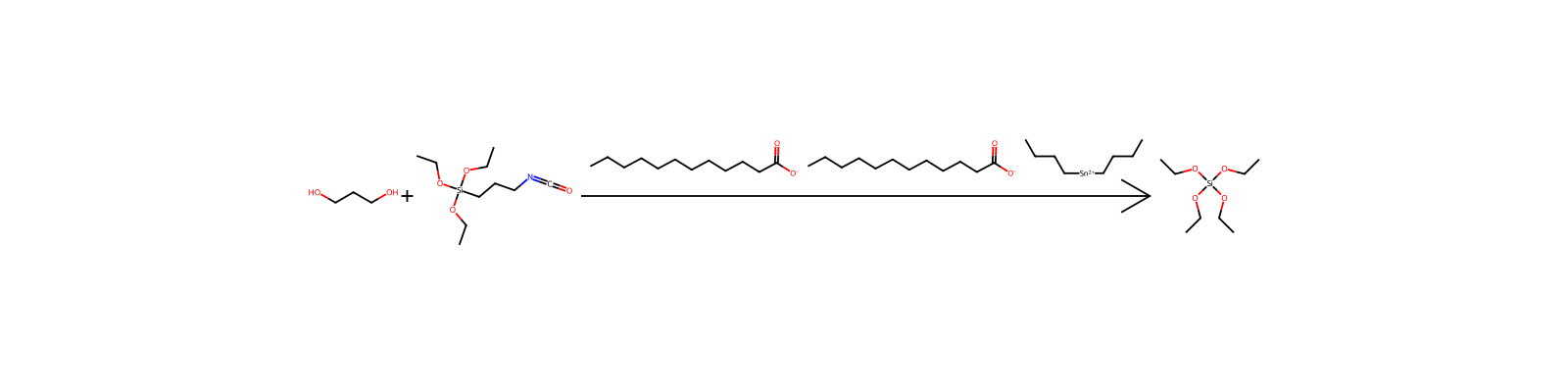
UsesDibutyltin dilaurate has been used as a catalyst in a protocol for the covalent attachment of poly(ethylene glycol) (PEG) to silicon oxide to form a hydrophilic non-fouling surface. It can also be used as a catalyst in the preparation of polymers by reacting hydroxyl-terminated macromonomers and aliphatic diisocyanates.
General DescriptionClear yellow viscous liquid.
Upstream & downstream products
Upstream raw materials
Downstream products
Suppliers50 total
国药集团化学试剂有限公司86-21-63210123 · [email protected]
梯希爱(上海)化成工业发展有限公司021-67121386 · [email protected]
上海阿拉丁生化科技股份有限公司400-6206333 13167063860 · [email protected]
Shandong chuangyingchemical Co., Ltd.18853181302 · [email protected]
Career Henan Chemica Co+86-0371-86658258 +86-13203830695 · [email protected]
合肥翰刚医药科技有限公司+8618062405514 · [email protected]
武汉欣扬瑞和化学科技有限公司153-07155313 15307155313 · [email protected]
河北创海生物科技有限公司+86-86-13131129325 · [email protected]
Dayang Chem (Hangzhou) Co.,Ltd.+86-0571-88938639 17705817739 · [email protected]
济南龙城有机硅有限公司0531-88779682 13655318696
常州凯瑞化学科技有限公司+86 (519) 8689-6136 · [email protected]
杭州瑞科化工有限公司+86 0571 88254703 · [email protected]
Syntechem Co.,Ltd[email protected]
上海迈瑞尔生化科技有限公司4006356688 18621169109 · [email protected]
天津中信凯泰化工有限公司022-66880623 · [email protected]
阿法埃莎(中国)化学有限公司400-6106006 · [email protected]
安耐吉化学&3A(安徽泽升科技股份有限公司)400-0056266 · [email protected]
武汉卡诺斯科技有限公司027-83238443 15327105076 · [email protected]
上海瀚鸿科技股份有限公司021-54306202 13764082696 · [email protected]
河北缤享新材料科技有限公司+8618633865755 · [email protected]
上海景颜化工科技有限公司13817811078 · [email protected]
池州捷峰生物科技有限公司0566-8928158 · [email protected]
合肥天健化工有限公司551-65418679 15856988503;15837135945 · [email protected]
山东西亚化学有限公司13355009207 13355009207 · [email protected]
玛雅试剂+86 (573) 82222445 (0)18006601000 452520369 · [email protected]
HONG KONG IPURE BIOLOGY CO.,LIMITED86 18062405514 18062405514 · [email protected]
四川库利南科技有限公司400-1166-196 18981987031 · [email protected]
天津希恩思生化科技有限公司400 638 7771 · [email protected]
艾科试剂4008-755-333 18080918076 · [email protected]
上海思域化工科技有限公司86-21-34053660 · [email protected]
赛默飞世尔科技(中国)有限公司800-810-5118 · [email protected]
TCI AMERICA800-4238616 · [email protected]
TOKYO CHEMICAL INDUSTRY CO., LTD.03-36680489 · [email protected]
TCI Europe320-37350700 · [email protected]
HBCChem, Inc.+1-510-219-6317 · [email protected]
福斯曼科技(北京)有限公司64646565 18210196513 · [email protected]
日照力德士化工有限公司010-51268198 · [email protected]
美岚实业(上海)有限公司021-58958189 · [email protected]
上海爱蝶实业有限公司021-58957966 18930537195 · [email protected]
成都零六生物科技有限公司400-1166-196 13458535857 · [email protected]
广拓化学(上海)有限公司021-60899189-8001 18918189673 · [email protected]
上海麦克林生化科技股份有限公司15221275939 15221275939 · [email protected]
杭州杰恒化工有限公司0571-87396432 · [email protected]
武汉励合化学新材料有限公司027-88395709
成都润泽本土化工有限公司13096311329 028-88469284 616445927 · [email protected]
池州凯隆进出口贸易有限公司[email protected]
Sigma-Aldrich西格玛奥德里奇(上海)贸易有限公司021-61415566 800-8193336 · [email protected]
南通濠泰化工产品有限公司0513-81063598 15996548297
九鼎化学(上海)科技有限公司4009209199 · [email protected]
尤尼威尔化学品(上海)有限公司021-61932772 13012862996 · [email protected]
Related reactions
196 records



Linked notes
Loading…