
HRID 435464As reactant

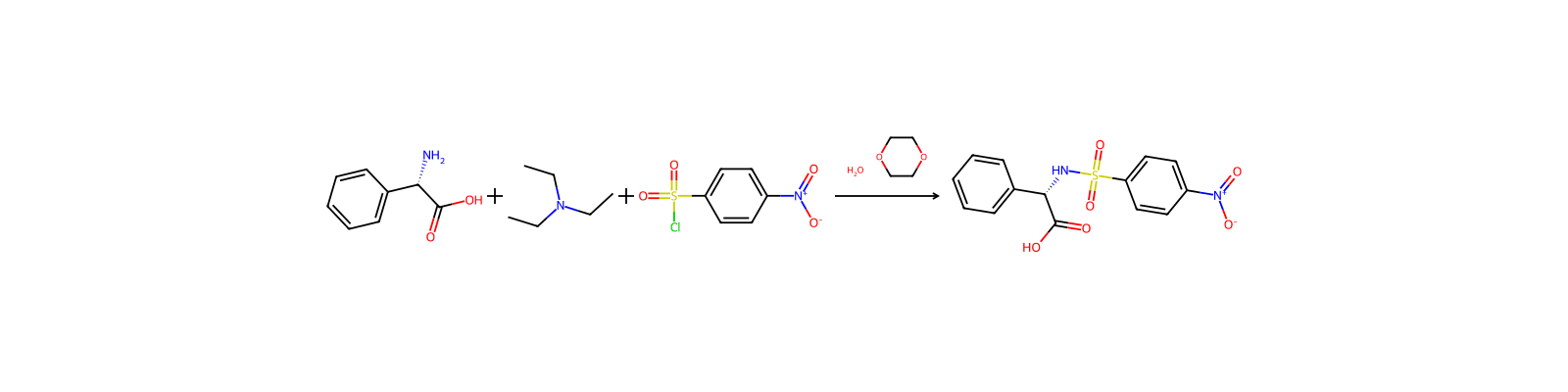
2935-35-5N[C@H](C(=O)O)c1ccccc1ZGUNAGUHMKGQNY-ZETCQYMHSA-NL-alpha-phenylglycine is the S stereoisomer of alpha-phenylglycine. It is an enantiomer of a D-alpha-phenylglycine. It is a tautomer of a L-alpha-phenylglycine zwitterion.
2935-35-5DTXSID801022916CHEMBL378605CHEBI:439819Safety information is for reference only and does not replace the supplier’s Safety Data Sheet (SDS), applicable regulations, or professional assessment.
This chemical does not meet GHS hazard criteria for 33.3% (1 of 3) of reports.
Warning
H315 (66.7%): Causes skin irritation [Warning Skin corrosion/irritation]
P261, P264, P264+P265, P271, P280, P302+P352, P304+P340, P305+P351+P338, P319, P321, P332+P317, P337+P317, P362+P364, P403+P233, P405, and P501 (click each P-code to see the statement)
Aggregated GHS information provided per 3 reports by companies from 3 notifications to the ECHA C&L Inventory. Each notification may be associated with multiple companies.
DescriptionL-Phenylglycine is an amide that belongs to the group of pyridoxal phosphate analogues. It has been shown to be a response element for enzymes and natural compounds in Escherichia coli and Saccharomyces cerevisiae. It inhibits aminotransferase activity, dopamine synthesis, and microbial metabolism in these organisms. This compound also has a structural analysis that includes x-ray diffraction data, which can be used to identify its three-dimensional structure.
UsesL-(+)-2-Phenylglycine is a derivative of Glycine (G615990), the smallest of all the amino acids, and is also used to treat schizophrenia, stroke, and benign prostatic hyperplasia. L-(+)-2-Phenylglycine is also used as an N-linked side chain of an SMTP (Stachybotrys microspora tripenyl phenols) congener, which was potent in enhancing plasminogen activation in S. microspora.




DefinitionChEBI: The S stereoisomer of alpha-phenylglycine.