
Phenylacetaldehyde
Completing data — refresh the page later to see the latest
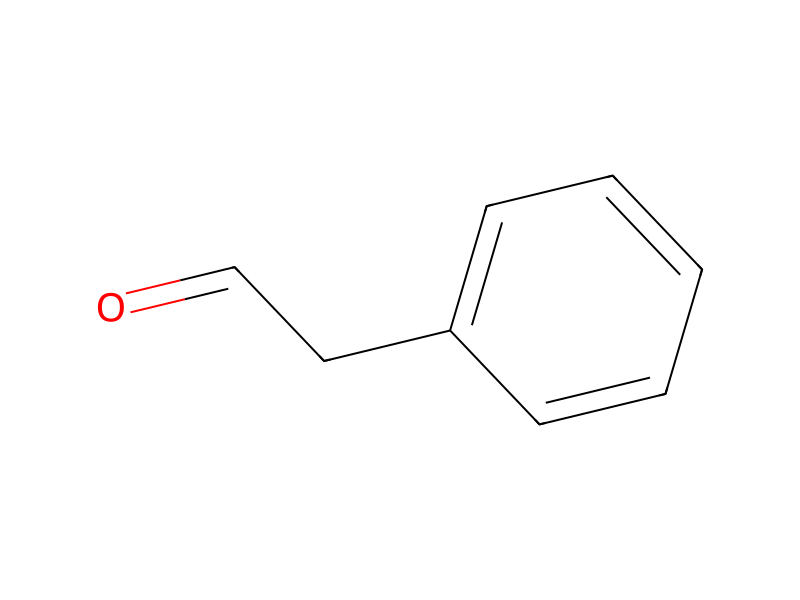
Basic information
- CAS
122-78-1- Standard SMILES
O=CCc1ccccc1- InChIKey
DTUQWGWMVIHBKE-UHFFFAOYSA-N- Molecular formula
- C8H8O
- Average molar mass
- 120.15 g/mol
- Monoisotopic mass
- 120.05751487
Overview
Phenylacetaldehyde is an aldehyde that consists of acetaldehyde bearing a methyl substituent; the parent member of the phenylacetaldehyde class of compounds. It has a role as a mouse metabolite, a Saccharomyces cerevisiae metabolite, an Escherichia coli metabolite and a human metabolite. It is a member of phenylacetaldehydes and an alpha-CH2-containing aldehyde.
Names & identifiers
- Preferred name
- Phenylacetaldehyde
- IUPAC
- 2-phenylacetaldehyde
- English name
- Phenylacetaldehyde
- Molecular formula
- C8H8O
- Molecular weight
- 120.15
Names & synonyms
phenylacetaldehyde2-phenylacetaldehyde122-78-1Benzeneacetaldehyde2-Phenylethanalalpha-TolualdehydePhenylethanalPhenylacetic aldehydealpha-Toluic aldehydeOxophenylethaneAcetaldehyde, phenyl-Benzylcarboxaldehyde
Show more names
HyacinthinFEMA 2874phenylacetadehydeBenzenacetaldehydeα-Tolualdehydeα-tolyaldehyde
1-Oxo-2-phenylethanePhenacetaldehydealpha-PhenylacetaldehydeFEMA No. 2974DTXSID3021483U8J5PLW9MRNSC-406309DTXCID501483
Database identifiers
- CAS
122-78-1- PubChem CID
- 998
- DTXSID
DTXSID3021483- ChEMBL
CHEMBL1233464- ChEBI
CHEBI:16424- UNII
- U8J5PLW9MR
- EC Number
- 204-574-5
- Nikkaji
- J2.494E
Properties
Computed structural propertiesFilling in
- XLogP
- 1.8
- Topological polar surface area
- 17.1 Ų
- Hydrogen bond donors
- 0
- Hydrogen bond acceptors
- 1
- Rotatable bonds
- 2
- Heavy atoms
- 9
- Formal charge
- 0
- Complexity
- 82.6
Experimental & physicochemical properties
Chemical ClassesOther Classes -> Aldehydes
DrugsPharmaceuticals -> Listed in ZINC15
SpringerMaterials Properties13C nuclear magnetic resonance spectrum
FragrancesFragrance Ingredient (Phenylacetaldehyde) -> IFRA transparency List
LogP
1.78
1.78
Food AdditivesFLAVOR ENHANCER, FLAVORING AGENT OR ADJUVANT -> FDA Substance added to food
Density1.023-1.045
Flavoring AgentsEU Flavoring substances
Solubility
Slightly soluble in water; insoluble in water; soluble in oils, propylene glycol
1 mL in 2 mL 80% ethanol (in ethanol)
Endocrine Disruptors
Safety & regulation
Safety information is for reference only and does not replace the supplier’s Safety Data Sheet (SDS), applicable regulations, or professional assessment.
GHS classification
GHS Classification
Danger
H302 (99.8%): Harmful if swallowed [Warning Acute toxicity, oral]
P260, P261, P264, P264+P265, P270, P272, P280, P301+P317, P301+P330+P331, P302+P352, P302+P361+P354, P304+P340, P305+P354+P338, P316, P317, P321, P330, P333+P317, P362+P364, P363, P405, and P501 (click each P-code to see the statement)
Aggregated GHS information provided per 1836 reports by companies from 21 notifications to the ECHA C&L Inventory. Each notification may be associated with multiple companies.
Hazard information
Regulatory Information
Chemical: Benzeneacetaldehyde
Commission Regulation (EC) No 1565/2000 (Repealed by Com. Implementing Reg. (EU) No 872/2012)
REACH registered substance: Phenylacetaldehyde (EC: 204-574-5)
Phenylacetaldehyde: Does not have an individual approval but may be used under an appropriate group standard
Hazards Summary
Causes somnolence in acute inhalation studies of mice; Causes somnolence and ataxia in oral lethal-dose studies of rats; Causes cutaneous sensitization in 3-day intermittent dermal studies of mice; [RTECS] Has been reported to be a fragrance allergen in consumers, and is a moderately potent allergen; [EC: SCCP] Safe when used as a flavoring agent in food; [JECFA] May cause irritation; May cause skin sensitization; Harmful by ingestion; [Acros Organics MSDS]
Hazard Classes and CategoriesAcute Tox. 4 (99.8%)
Toxicology
Adverse EffectsSkin Sensitizer - An agent that can induce an allergic reaction in the skin.
Chemistry & industry
Pharmacology
Metabolism/MetabolitesPhenylacetaldehyde is a known human metabolite of fentanyl.
Cellular LocationsCytoplasm
Uses & manufacturing
Uses
Permitted for use as an inert ingredient in non-food pesticide products; [EPA] Used in perfumery and as an intermediate in organic synthesis; [Merck Index] Used as flavoring agent or adjuvant; [FDA]
This is an endogenously produced metabolite found in the human body. It is used in metabolic reactions, catabolic reactions or waste generation.
IFRA Fragrance Standards
Phenylacetaldehyde
Benzeneacetaldehyde; Benzylcarboxaldehyde; Hyacinthin; 1-Oxo-2-phenylethane; α-Tolualdehyde; α-Toluic aldehyde; Phenylacetic aldehyde; Phenyl acetic aldehyde (pure) (commercial name)
IFRA_STD_073.pdf
49
IFRA 51st Amendment - Guidance for the use of IFRA Standards
Restriction: This material should be used only in the limited quantity as stated in the Standard
Household ProductsInformation on 5 consumer products that contain Phenylacetaldehyde in the following categories is provided:
Use Classification
Fragrance Ingredients
Flavouring Agent -> FLAVOURING_AGENT -> JECFA Functional Classes
Flavoring Agents -> JECFA Flavorings Index
Flavouring Agent -> FLAVOURING_AGENT -> JECFA Functional Classes
Flavouring Agent -> FLAVOURING_AGENT -> JECFA Functional Classes
Flavouring Agent -> FLAVOURING_AGENT -> JECFA Functional Classes
General Manufacturing InformationBenzeneacetaldehyde: ACTIVE
Restriction Limits in the Finished Product (%)
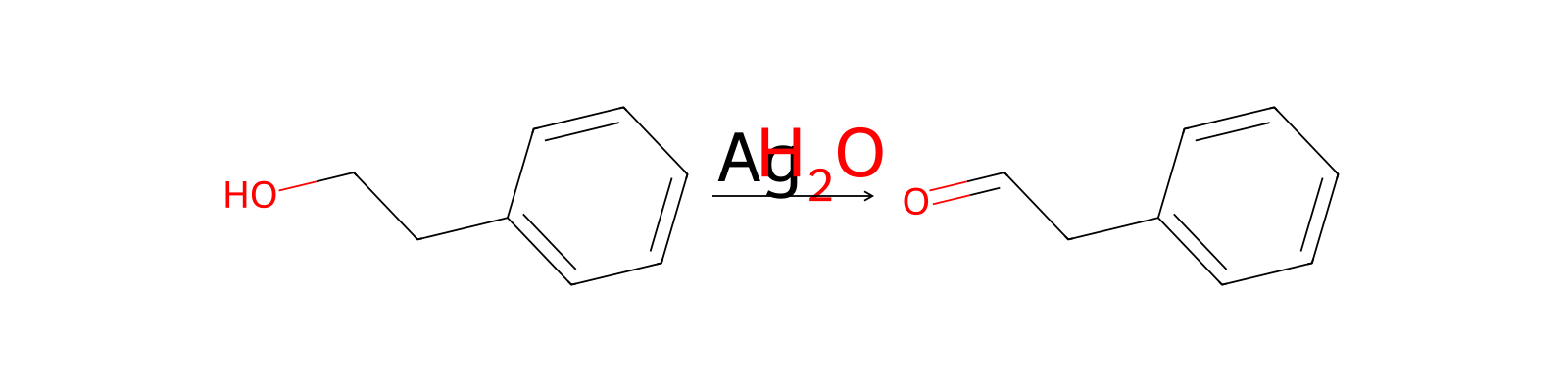
Related reactions
262 records



Compound notes
Loading…