1-Bromo-4-fluorobenzene

Basic information
- CAS
460-00-4- Standard SMILES
Fc1ccc(Br)cc1- InChIKey
AITNMTXHTIIIBB-UHFFFAOYSA-N- Molecular formula
- C6H4BrF
- Average molar mass
- 175 g/mol
- Monoisotopic mass
- 173.94804
Overview
1-bromo-4-fluorobenzene is a colorless liquid. (NTP, 1992)
Names & identifiers
- Preferred name
- 1-Bromo-4-fluorobenzene
- IUPAC
- 1-bromo-4-fluorobenzene
- English name
- 4-Bromofluorobenzene
- Molecular formula
- C6H4BrF
- Molecular weight
- 175
Names & synonyms
1-Bromo-4-fluorobenzene4-Bromofluorobenzene460-00-44-Fluorobromobenzenep-Bromofluorobenzenep-Fluorobromobenzene4-Fluorophenyl bromideBenzene, 1-bromo-4-fluoro-1-Fluoro-4-bromobenzene4-Fluoro-1-bromobenzenep-Fluorophenyl bromide4-bromo-1-fluorobenzene
Show more names
BFBPBFB4-BROMO FLUORO BENZENPARA FLUORO BROMO BENZENEnsc10268p-BrF-Ph
DTXSID4027153A7ZH69I3KH4-BROMOPHENYL FLUORIDENSC-9460NSC-10268P-BROMOPHENYL FLUORIDE4-FLUOROBENZENE BROMIDECHEBI:141551
Database identifiers
- CAS
460-00-4- PubChem CID
- 9993
- DTXSID
DTXSID4027153- ChEMBL
CHEMBL1876826- ChEBI
CHEBI:141551- UNII
- A7ZH69I3KH
- EC Number
- 207-300-2
- Nikkaji
- J37.677I
Properties
Computed structural properties
- XLogP
- 3.2
- Topological polar surface area
- 0 Ų
- Hydrogen bond donors
- 0
- Hydrogen bond acceptors
- 1
- Rotatable bonds
- 0
- Heavy atoms
- 8
- Formal charge
- 0
- Complexity
- 66.9
Experimental & physicochemical properties
Chemical ClassesOther Classes -> Halogenated Monoaromatics
SpringerMaterials Properties13C nuclear magnetic resonance spectrum
Density
1.4946 at 68 °F (NTP, 1992) - Denser than water; will sink
1.593 @ 15°C
Flash Point140 °F (NTP, 1992)
Boiling Point
306 °F at 764 mmHg (NTP, 1992)
151.5 °C @760 [mm Hg]
Melting Point
18 °F (NTP, 1992)
-17.4 °C
Vapor Pressure2.84 [mmHg]
Physical Description
1-bromo-4-fluorobenzene is a colorless liquid. (NTP, 1992)
Colorless to slightly yellow liquid; [NTP] Colorless liquid with an aromatic odor; [Alfa Aesar MSDS]
Physicochemical properties
- Melting point
- 16 °C · −16 °C(lit.)
- Boiling point
- 150 °C · 150 °C(lit.)
- Density
- 1.593 g/mL · 1.593 g/mL at 25 °C(lit.)
- vapor pressure
- 4.99 hPa · 4.99hPa at 25℃
- refractive index
- 20 · n20/D 1.527(lit.)
- Flash point
- 140 °F · 140 °F
- storage temp.
- 2 · 2-8°C
- solubility
- 0.136 g/l · 0.136g/l
- form
- Liquid
- color
- Clear colorless
- Water Solubility
- Soluble in water(0.14g/L).
- BRN
- 774102 · 774102
- Henry's Law Constant
- 5.3 · 5.3×10-3 mol/(m3Pa) at 25℃, Hiatt (2013)
- InChI
- 1S/C6H4BrF/c7-5-1-3-6(8)4-2-5/h1-4H
- InChIKey
- AITNMTXHTIIIBB-UHFFFAOYSA-N
- SMILES
- Fc1ccc(Br)cc1
- LogP
- 3.018 at · 3.018 at 25℃
- CAS DataBase Reference
- 460 · 460-00-4(CAS DataBase Reference)
- EWG's Food Scores
- 1 · 1
- FDA UNII
- 7 ZH69I3KH · A7ZH69I3KH
- NIST Chemistry Reference
- p-Bromofluorobenzene(460-00-4)
- EPA Substance Registry System
- p-Bromofluorobenzene (460-00-4)
- UNSPSC Code
- 12352100 · 12352100
- NACRES
- 22 · NA.22
- Symbol(GHS)
- 2 · GHS02,GHS07
- Signal word
- Warning
- Hazard statements
- 226 · H226-H332
- Precautionary statements
- 210 · P210-P304+P340+P312
- PPE
- Eyeshields, Faceshields, Gloves, type ABEK (EN14387) respirator filter
- Hazard Codes
- Xi,F,Xn,T
- Risk Statements
- 10 · 10-36/37/38-20-39/23/24/25-23/24/25-11-20/21/22
- Safety Statements
- 26 · 26-36-37/39-16-45-36/37-7
- RIDADR
- 1993 · UN 1993 3/PG 3
- WGK Germany
- 1 · 1
- RTECS
- 9033750 · CY9033750
- Hazard Note
- Flammable/Irritant
- TSCA
- TSCA listed
- HazardClass
- 3 · 3
- PackingGroup
- III
- HS Code
- 29036990 · 29036990
- Storage Class
- 3 · 3 - Flammable liquids
- Hazard Classifications
- 2 Flam · Eye Irrit. 2Flam. Liq. 3Skin Irrit. 2
- REACH Registrations
- Active
- Limited Quantities
- 5 L · 5.0 L (1.3 gallons) (liquid)
- Excepted Quantities
- Max Inner Pack (30g or 30ml) and Max Outer Pack (1Kg or 1L)
Safety & regulation
Safety information is for reference only and does not replace the supplier’s Safety Data Sheet (SDS), applicable regulations, or professional assessment.
GHS classification
GHS Classification
This chemical does not meet GHS hazard criteria for 1.2% (2 of 161) of reports.
Warning
H226 (98.8%): Flammable liquid and vapor [Warning Flammable liquids]
P210, P233, P240, P241, P242, P243, P261, P264, P264+P265, P270, P271, P280, P301+P317, P302+P352, P303+P361+P353, P304+P340, P305+P351+P338, P317, P319, P321, P330, P332+P317, P337+P317, P362+P364, P370+P378, P403+P233, P403+P235, P405, and P501 (click each P-code to see the statement)
Aggregated GHS information provided per 161 reports by companies from 16 notifications to the ECHA C&L Inventory. Each notification may be associated with multiple companies.
Hazard information
Regulatory Information
Chemical: Benzene, 1-bromo-4-fluoro-
SP - indicates a substance that is identified in a proposed Significant New Use Rule.
REACH registered substance: 1-bromo-4-fluorobenzene (EC: 207-300-2)
1-Bromo-4-fluorobenzene: Does not have an individual approval but may be used under an appropriate group standard
DOT LabelFlammable Liquid
Fire HazardsExcerpt from ERG Guide 128 [Flammable Liquids (Water-Immiscible)]:
Health HazardsACUTE/CHRONIC HAZARDS: Irritant. (NTP, 1992)
Hazards Summary
A skin and eye irritant in rabbits; A mild skin sensitizer in guinea pigs (20% sensitization rate in the Magnusson and Kligman test); Acute oral and inhalation studies of rats produced tremor, changes in motor activity, ataxia, and/or dyspnea; Structurally similar compounds are hepatotoxins and animal carcinogens; [NTP] A mild skin and strong eye irritant; Harmful by inhalation; [Alfa Aesar MSDS] See p-Dichlorobenzene.
Reactive GroupAryl Halides
Reactivity AlertsHighly Flammable
Reactivity Profile
Simple aromatic halogenated organic compounds, such as 1-BROMO-4-FLUOROBENZENE, are very unreactive. Halogenated organics generally become less reactive as more of their hydrogen atoms are replaced with halogen atoms. Materials in this group may be incompatible with strong oxidizing and reducing agents. Also, they may be incompatible with many amines, nitrides, azo/diazo compounds, alkali metals, and epoxides.
Air and Water ReactionsHighly flammable. Insoluble in water.
Hazard Classes and CategoriesFlam. Liq. 3 (98.8%)
Safety & protection
Fire FightingTo extinguish a fire involving this chemical you may use a dry chemical, carbon dioxide, foam or halon extinguisher; a water spray may also be used. (NTP, 1992)
First Aid
EYES: First check the victim for contact lenses and remove if present. Flush victim's eyes with water or normal saline solution for 20 to 30 minutes while simultaneously calling a hospital or poison control center. Do not put any ointments, oils, or medication in the victim's eyes without specific instructions from a physician. IMMEDIATELY transport the victim after flushing eyes to a hospital even if no symptoms (such as redness or irritation) develop.
Nonfire Spill Response
SMALL SPILLS AND LEAKAGE: If you spill this chemical, use absorbent paper to pick up all liquid spill material. Your contaminated clothing and absorbent paper should be sealed in a vapor-tight plastic bag for eventual disposal. Solvent wash all contaminated surfaces with alcohol followed by washing with a strong soap and water solution. Do not reenter the contaminated area until the Safety Officer (or other responsible person) has verified that the area has been properly cleaned.
Isolation and EvacuationExcerpt from ERG Guide 128 [Flammable Liquids (Water-Immiscible)]:
Protective Action Criteria (PAC)
12 [mg/m3]
130 [mg/m3]
790 [mg/m3]
Personal Protective Equipment (PPE)
RECOMMENDED RESPIRATOR: Where the neat test chemical is weighed and diluted, wear a NIOSH-approved half face respirator equipped with an organic vapor/acid gas cartridge (specific for organic vapors, HCl, acid gas and SO2) with a dust/mist filter.
Toxicology
Adverse EffectsOccupational hepatotoxin - Secondary hepatotoxins: the potential for toxic effect in the occupational setting is based on cases of poisoning by human ingestion or animal experimentation.
Toxicity DataLC50 (rat) = 18,000 mg/m3/4hr
RAIS Toxicity Values
0.03
SCREEN Current
0.0003
SCREEN Current
0.003
PPRTV Current
EPA Provisional Peer-Reviewed Toxicity Values
p-Bromofluorobenzene
PDF Document
Inadequate information to assess carcinogenic potential
2017
Hazard Quotient Level 0.1 or Cancer Risk Level 1E-06
2.30e+01
3.50e+02
4.60e+00
1.00e+01
4.40e-03
3.00e-04
Hazard Quotient Level 3 or Cancer Risk Level 1E-04
7.00e+01
1.10e+03
1.40e+01
1.00e+01
3.00e-04
Volatile
Safety data
- PPE
- Eyeshields, Faceshields, Gloves, type ABEK (EN14387) respirator filter
- wgk
- 1
- tsca
- TSCA listed
- rtecs
- CY9033750
- ridadr
- UN 1993 3/PG 3
- hs_code
- 29036990
- risk_code
- 10-36/37/38-20-39/23/24/25-23/24/25-11-20/21/22
- Signal word
- Warning
- Symbol(GHS)
- GHS02,GHS07
- hazard_code
- Xi,F,Xn,T
- hazard_note
- Flammable/Irritant
- safety_code
- 26-36-37/39-16-45-36/37-7
- hazard_class
- 3
- Storage Class
- 3 - Flammable liquids
- packing_group
- III
- Hazard statements
- H226-H332
- Limited Quantities
- 5.0 L (1.3 gallons) (liquid)
- Excepted Quantities
- Max Inner Pack (30g or 30ml) and Max Outer Pack (1Kg or 1L)
- REACH Registrations
- Active
- Hazard Classifications
- Eye Irrit. 2Flam. Liq. 3Skin Irrit. 2
- Precautionary statements
- P210-P304+P340+P312
Chemistry & industry
Uses & manufacturing
UsesUsed as an intermediate for agrochemicals, in organic syntheses, and as a tuning, internal, or surrogate standard for gas chromatography/mass spectrometry in the determination of volatile organic compounds; [NTP]
General Manufacturing InformationBenzene, 1-bromo-4-fluoro-: ACTIVE
Applications
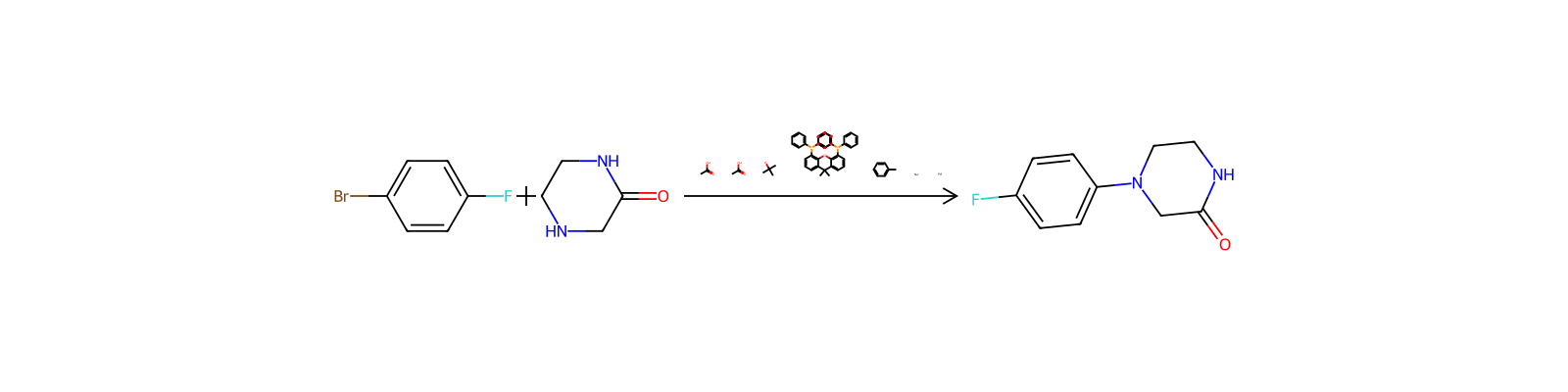
Uses4-Bromofluorobenzene is a dihalogenated benzene used in the preparation of pharmaceutical compounds such as atypical antipsychotic agents.
Uses1-Bromo-4-fluorobenzene is used as an intermediate in the synthesis of atypical antipsychotic agents.
Uses4-Bromofluorobenzene can act like a surrogate standard for the:determination of toxicity of diesel and water accommodated diesel fraction (WAF), towards microalgal species like Pseudokirchneriella subcapitata and Chlorella sp.MM3, using gas chromatography coupled with mass spectrometry (GC-MS).determination of the chemicals like benzene, toluene, ethylbenzene and xylene (BTEX) and their stable carbon isotopic values, in gasoline contaminated ground-water, using gas chromatography coupled with mass spectrometry (GC-MS).
General DescriptionColorless liquid.
Upstream & downstream products
Upstream raw materials
Downstream products
Additional notes
DefinitionChEBI: 1-bromo-4-fluorobenzene is a member of the class of bromobenzenes that is bromobenzene carrying a fluoro atom at position 4. It is a member of bromobenzenes and a member of monofluorobenzenes.
Related reactions
481 records







Compound notes
Loading…