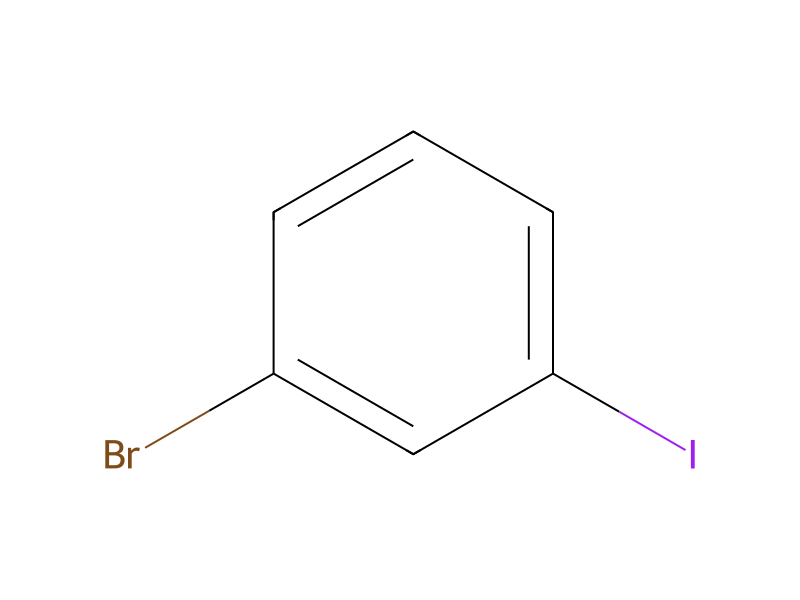
[Br:1][C:2]1[CH:3]=[C:4](I)[CH:5]=[CH:6][CH:7]=1.[C:9]1([C:18]2[CH:23]=[CH:22][CH:21]=[CH:20][CH:19]=2)[CH:14]=[CH:13][CH:12]=[C:11](B(O)O)[CH:10]=1.C(=O)([O-])[O-].[Na+].[Na+]>C1(C)C=CC=CC=1>[Br:1][C:2]1[CH:3]=[C:4]([C:20]2[CH:21]=[CH:22][CH:23]=[C:18]([C:9]3[CH:14]=[CH:13][CH:12]=[CH:11][CH:10]=3)[CH:19]=2)[CH:5]=[CH:6][CH:7]=1Commercial 3-bromoiodobenzene in an amount of 11 g, 8.7 g of commercial 3-biphenylboronic acid and 130 ml of toluene were mixed together. To the resultant mixture, 0.9 g of tetrakis(triphenyl-phosphine)palladium and 75 ml of a 2 M aqueous solution of sodium carbonate were added, and the reaction system was purged with argon. After the reaction mixture was heated under the refluxing condition for 8 hours, the reaction mixture was cooled by leaving standing. The formed crystals were separated by filtration and subjected to extraction with toluene. The organic layer was washed with water and a saturated aqueous solution of sodium chloride and dried with anhydrous sodium sulfate. The solvent was removed using an evaporator. The residue was purified in accordance with the silica gel column chromatography (the developing solvent: hexane), and 11.8 g of 3-bromo-m-terphenyl was obtained as a white solid substance (the yield: 96%).