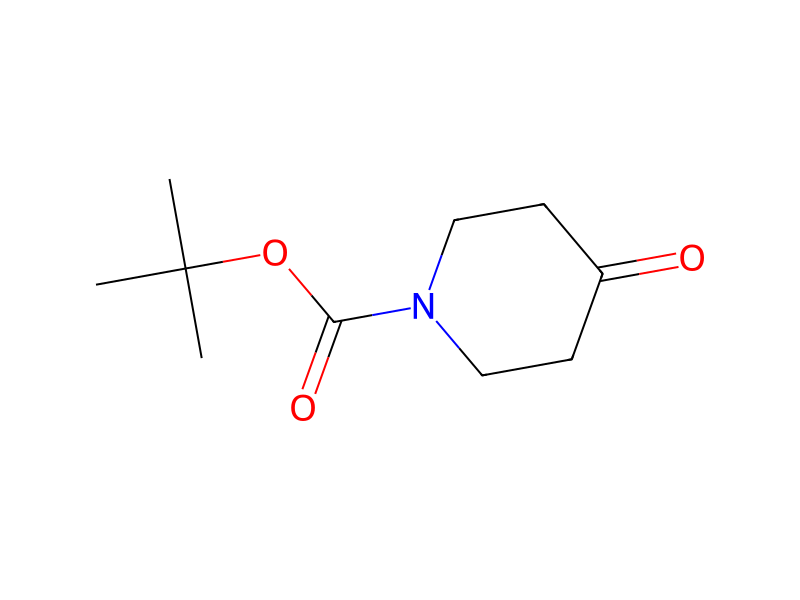
A solution of potassium tert-butoxide (3.26 g, 27.6 mmol) in tert-butanol (40 mL) was treated with tert-butyl 4-oxopiperidine-1-carboxylate (5 g, 25.09 mmol), causing the reaction to turn bright orange. The mixture was stirred for 1 h, then treated with (2-chloroethyl)dimethylsulfonium iodide (5.70 g, 22.59 mmol), added in three portions at 10 minute intervals. This addition caused the color of the reaction to gradually fade to pale yellow. The mixture was stirred for 2 hours, then diluted with tert-butanol (10 mL), treated with potassium tert-butoxide (2.96 g, 25.09 mmol), and stirred overnight at room temperature. The reaction was poured into water (100 mL) and extracted 3× with 100 mL ethyl acetate. The combined organic phases were washed with water and brine, then dried over sodium sulfate and concentrated in-vacuo. The residue was purified over a 5×15 cm silica gel column, eluting with ethyl acetate/hexanes (10%-15%-20%-25% EtOAc, 1 L at each concentration), to yield the title compound (1.15 g, 5.10 mmol, 20.34% yield) as a colorless oil.