Ethylenediamine → HCID 178422332, compound
Reaction equation

[CH3:1][C:2]1[C:10]2[NH:9][CH:8]=[N:7][C:6]=2[CH:5]=[C:4]([CH3:11])[C:3]=1[N:12]=C=S.[CH2:15]([NH2:18])[CH2:16][NH2:17].[CH2:19](Cl)Cl>CO>[CH3:1][C:2]1[C:10]2[NH:9][CH:8]=[N:7][C:6]=2[CH:5]=[C:4]([CH3:11])[C:3]=1[NH:12][N:17]1[CH2:16][CH2:15][N:18]=[CH:19]1Participants
5
Reactant 3
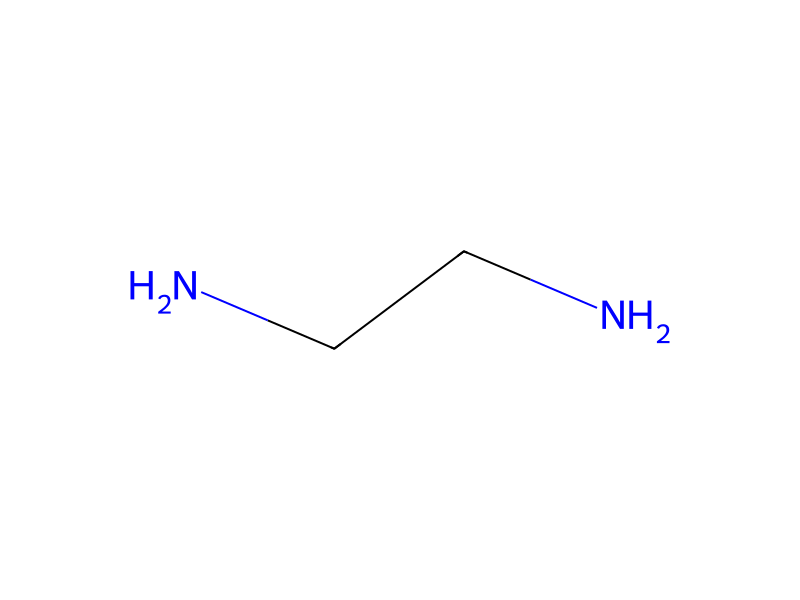


Product 1

Reagents, catalysts & solvents 1

Procedure
A solution of 4,6-dimethyl-5-isothiocyanatobenzimidazole (250 mg, 1.23 mmol) in methylene chloride (5 mL) is added dropwise to a solution of ethylenediamine (370 mg, 6.2 mmol) in methylene chloride (5 mL). The resulting solution is stirred at room temperature for 15 minutes then rotary evaporated. The residue is dissolved in methanol (10 mL) and to this solution is added mercuric acetate (390 mg, 1.23 mmol). The resulting reaction mixture is stirred at room temperature for 1 hour, filtered through a pad of silica gel and rotary evaporated. The residue is purified by chromatography on silica gel (70:30:0.5 methylene chloride:methanol:ammonium hydroxide) to afford 4,6-dimethyl-5-(2-imidazolinylamino)benzimidazole as a white solid.