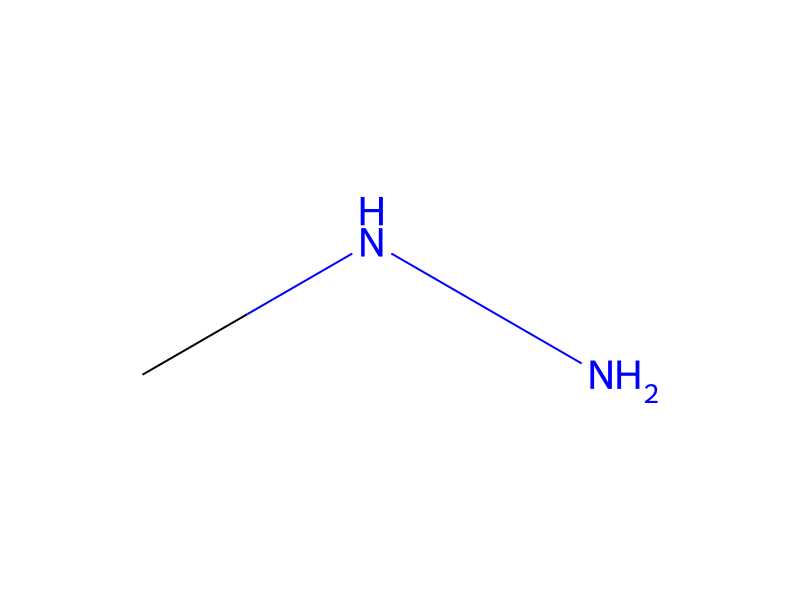
Methylhydrazine → HCID 19025427, compound
Reaction equation

[Cl:1][C:2]1[CH:7]=[C:6]([N+:8]([O-:10])=[O:9])[CH:5]=[CH:4][C:3]=1[N:11]=[C:12]=[S:13].[CH3:14][NH:15][NH2:16]>C(O)C>[Cl:1][C:2]1[CH:7]=[C:6]([N+:8]([O-:10])=[O:9])[CH:5]=[CH:4][C:3]=1[NH:11][C:12](=[S:13])[N:15]([CH3:14])[NH2:16]Participants
4
Reactant 2

Product 1

Reagents, catalysts & solvents 1

Conditions
- Temperature
- 65 °C
Procedure
To a stirred solution of 60.0 g (0.280 mole) of 2-chloro-4-nitrophenyl isothiocyanate in 500 ml of ethanol was added 12.9 g (0.280 mole) of methylhydrazine. This mixture was heated and was stirred at 65° C. for approximately 18 hours. The mixture was then heated to reflux and was cooled. A solid had formed and was collected by filtration. The filter cake was rinsed with aqueous ethanol and was dried under reduced pressure to yield 59.0 g of 4-(2-chloro-4-nitrophenyl)-2-methyl-3-thiosemicarbazide, mp 164°-167° C. The nmr spectrum was consistent with the proposed structure.