Reaction equation

N[C:2]1NC(=O)C2C(=NC=CN=2)N=1.[NH2:13][C@H:14]([C:20]([O-:22])=[O:21])[CH2:15][CH2:16][C:17]([O-:19])=[O:18].CC#N.[CH:26]1[C:31]([C:32]([OH:34])=O)=[CH:30][CH:29]=[C:28]([NH:35][CH2:36][C:37]2[N:42]=[C:41]3[C:43]([NH2:48])=[N:44][C:45]([NH2:47])=[N:46][C:40]3=[N:39][CH:38]=2)[CH:27]=1>CC([O-])=O.[Na+].[Cl-].[Cl-].[Zn+2]>[CH3:2][N:35]([C:28]1[CH:29]=[CH:30][C:31]([C:32]([NH:13][C@H:14]([C:20]([OH:22])=[O:21])[CH2:15][CH2:16][C:17]([OH:19])=[O:18])=[O:34])=[CH:26][CH:27]=1)[CH2:36][C:37]1[CH:38]=[N:39][C:40]2[N:46]=[C:45]([NH2:47])[N:44]=[C:43]([NH2:48])[C:41]=2[N:42]=1Participants


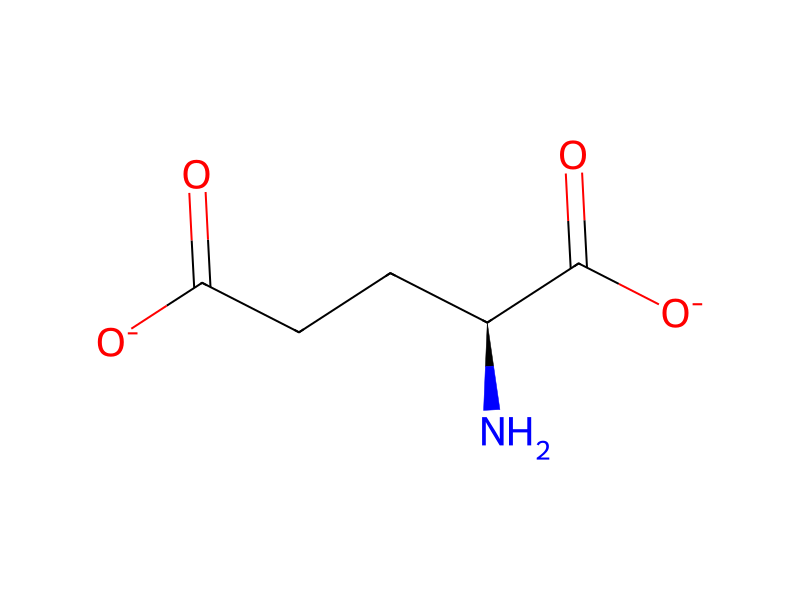




Procedure
Small samples (1 mg) of the end products of Examples 1 and 2 were treated at room temperature in 1M NaOAc (10 mL) containing ZnCl2 (10 mg) with freshly thawed carboxypeptidase G1 enzyme solution (0.3 μL, 4500 U/mL). In less than 15 min, glutamate hydrolysis was nearly complete according to HPLC analysis (20% MeCN 0.1M NH4OAc, pH 7.5), which showed the disappearance of >95% of the starting material (Example 1, 2.5 min; Example 2, 2.89 min) and the appearance of new peaks (3.0 and 3.3 min) assumed to be the 2-desamino and 2-desamino-2-methyl derivates of 4-amino-4-deoxypteroic acid, respectively. Under identical conditions, clinical grade methotrexate (mainly the L-form, 3.0 min) was cleaved to 4-amino-4-deoxy-N10 -methylpteroic acid (4.0 min), whereas D MTX (4.0 min, pre-formed from clinical grade MTX by carboxypeptidase G1 treatment) was resistant tc further treatment with the enzyme. Since the enzyme carboxypeptidase G1 is well known to cleave L-MTX to 4-amino-4-deoxy-N10 -methylpteroic acid under conditions that leave D-MTX unaffected, these results show that my desamino analogues are essentially pure L-enantiomers.
Workup
- waitIn less than 15 min
- customthe appearance of new peaks (3.0 and 3.3 min)
Sources & evidence
- ORD record
- ord-7cd562cd343f4b4f99ff414b94e9ceeb
- Source dataset
- uspto-grants-1990_09
- Patent number
- US04956461
Linked notes
Loading…