HomeMCPWorkbenchSkills
HomeWorkbenchNotificationsMe
llms.txt · MCP GuidePrivacy Policy · Terms of Service · Supportv1.8.3
  1. Home
  2. /Reaction

Benzophenone imine → 3-Bromo-2-chloro-5-fluoroaniline

HRID 1043701
Print

Reaction equation

HRID 1043701 reaction equation
[Br:1][C:2]1[CH:7]=[C:6]([F:8])[CH:5]=[C:4](Br)[C:3]=1[Cl:10].C(=[NH:24])(C1C=CC=CC=1)C1C=CC=CC=1.CC(C)([O-])C.[Na+].C1C=CC(P(C2C=CC3C(=CC=CC=3)C=2C2C3C(=CC=CC=3)C=CC=2P(C2C=CC=CC=2)C2C=CC=CC=2)C2C=CC=CC=2)=CC=1>C1C=CC(/C=C/C(/C=C/C2C=CC=CC=2)=O)=CC=1.C1C=CC(/C=C/C(/C=C/C2C=CC=CC=2)=O)=CC=1.C1C=CC(/C=C/C(/C=C/C2C=CC=CC=2)=O)=CC=1.[Pd].[Pd].C1(C)C=CC=CC=1>[Br:1][C:2]1[C:3]([Cl:10])=[C:4]([CH:5]=[C:6]([F:8])[CH:7]=1)[NH2:24]
ParticipantsConditionsProcedureWorkupSources & evidenceReaction notes

Participants

7

Reactant 4

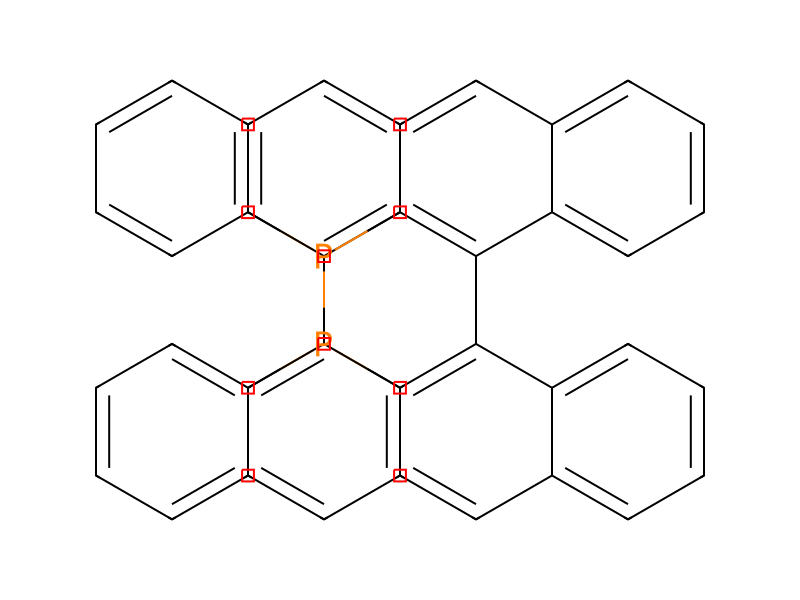
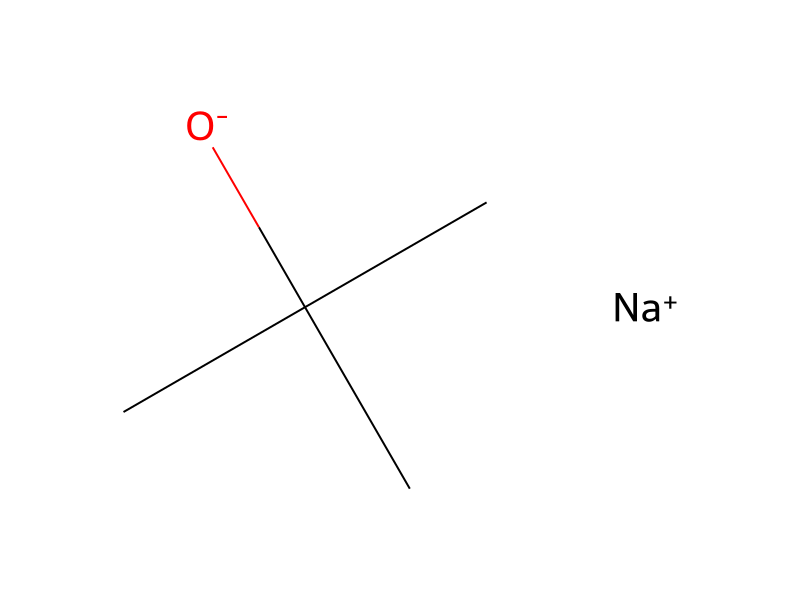
HCID 136809Benzophenone imineHCID 634876Binap, (A+-)-HCID 27246041,3-Dibromo-2-chloro-5-fluorobenzeneHCID 23676156Sodium t-butoxide

Product 1

HCID 585538243-Bromo-2-chloro-5-fluoroaniline

Reagents, catalysts & solvents 2

HCID 9811564
Bis(dibenzylideneacetone)palladium
Catalyst
HCID 1140TolueneSolvent

Conditions

Temperature
85 °C

Procedure

To a sealable glass tube was charged 1,3-dibromo-2-chloro-5-fluorobenzene (12.52 g, 43.4 mmol), benzophenone imine (8.26 g, 45.6 mmol), sodium tert-butoxide (6.26 g, 65.1 mmol), and toluene (100 mL). The resulting mixture was thoroughly sparged with Argon, followed by the addition of Pd2(dba)3 (0.398 g, 0.434 mmol) and (S)-BINAP (0.81 g, 1.3 mmol), and follow by another Argon sparge. The reaction tube was sealed and heated to 85° C. in an oil bath and maintained overnight. The reaction was allowed to cool to room temperature and quenched with water (20 mL). The resulting layers were partitioned and separated. The organic phase was concentrated and assayed to be a mixture of mono- and bis-aminated products (˜4:1 by HPLC area at 220 nm). The residue was dissolved in THF (70 mL), treated with aqueous 3.0 M HCl (20 mL) at room temperature for 1 hour and basified with saturated aqueous Na2CO3 solution (40 mL). The reaction mixture was allowed to partition and the layers were separated. The organic portion was separated, washed with brine, concentrated and the resulting residue was purified by flash chromatography (SiO2, 0-15% EtOAc in heptane) and 3-bromo-2-chloro-5-fluoroaniline was obtained as a light yellow solid (6.82 g, 30.4 mmol): LCMS (m/z): not ionized (MH+), tR=0.95 minute; 1H NMR (CDCl3, 300 MHz) δ 4.32 (br s, 2H), 6.44 (dd, J=9.8, 2.8 Hz, 1H), 6.77 (dd, J=7.9, 2.6 Hz, 1H).

Workup

  1. customThe resulting mixture was thoroughly sparged with Argon
  2. customsparge
  3. customThe reaction tube was sealed
  4. temperaturemaintained overnight
  5. temperatureto cool to room temperature
  6. customquenched with water (20 mL)
  7. customThe resulting layers were partitioned
  8. customseparated
  9. concentrationThe organic phase was concentrated
  10. additiona mixture of mono- and bis-aminated products (˜4:1 by HPLC area at 220 nm)
  11. dissolutionThe residue was dissolved in THF (70 mL)
  12. additiontreated with aqueous 3.0 M HCl (20 mL) at room temperature for 1 hour
  13. customto partition
  14. customthe layers were separated
  15. customThe organic portion was separated
  16. washwashed with brine
  17. concentrationconcentrated
  18. customthe resulting residue was purified by flash chromatography (SiO2, 0-15% EtOAc in heptane)

Sources & evidence

ORD record
ord-ab02c5a6721f46848eebdcaeae3f2051
Source dataset
uspto-grants-2013_10
DOI
10.6084/m9.figshare.5104873.v1
Patent number
US08563553B2

Reaction notes

On this pageParticipantsConditionsProcedureWorkupSources & evidenceReaction notes