Reaction equation

[N+]([C:4]1[CH:9]=[CH:8][CH:7]=[C:6]([N+:10]([O-:12])=[O:11])[CH:5]=1)([O-])=O.[Cl:13][C:14]1[CH:19]=[CH:18][C:17]([OH:20])=[CH:16][C:15]=1[CH2:21][CH3:22].C(=O)([O-])[O-].[Cs+].[Cs+]>CS(C)=O>[Cl:13][C:14]1[CH:19]=[CH:18][C:17]([O:20][C:4]2[CH:5]=[C:6]([N+:10]([O-:12])=[O:11])[CH:7]=[CH:8][CH:9]=2)=[CH:16][C:15]=1[CH2:21][CH3:22]Participants
Reactant 3


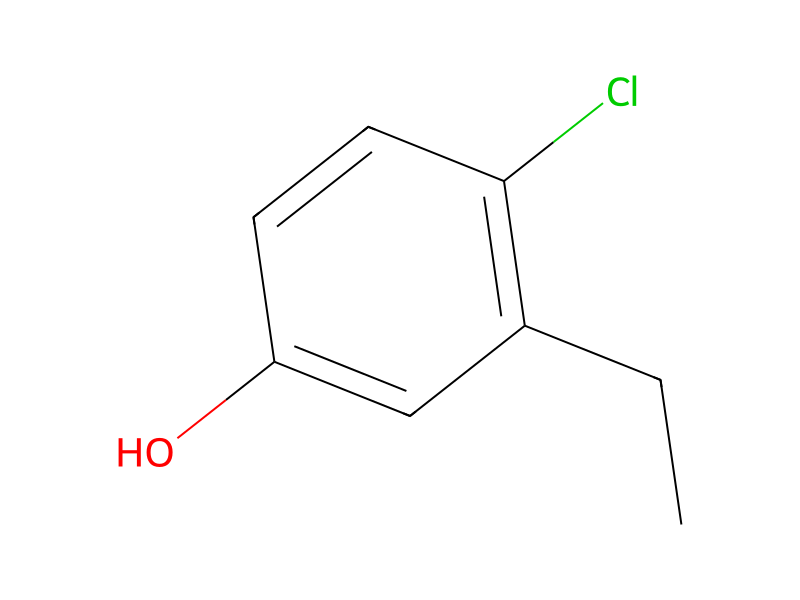
Product 1

Reagents, catalysts & solvents 1

Conditions
- Temperature
- 100 °C
Procedure
EX-8A) To a solution of 1,3-dinitrobenzene (16.8 g, 0.1 mol) and 4-chloro-3-ethylphenol (15.6 g, 0.1 mol) in 200 mL of dimethylsulfoxide was added cesium carbonate (65 g, 0.2 mol). The reaction mixture was heated at 100° C. under nitrogen overnight then cooled to room temperature. The reaction mixture was filtered through celite then rinsed with diethyl ether and a small amount of water. The filtrate was extracted several times with diethyl ether. The organic layers were combined, washed with water and brine, dried over MgSO4, and concentrated in vacuo to give 21.8 g (78%) of the desired 3-(4-chloro-3-ethylphenoxy)-1-nitrobenzene product as a dark orange oil, which was greater than 90% pure by reverse phase HPLC analysis. HRMS calcd. for C14H12ClNO3: 295.0849 [M+NH4]+, found 295.0862.
Workup
- temperaturethen cooled to room temperature
- filtrationThe reaction mixture was filtered through celite
- washthen rinsed with diethyl ether
- extractionThe filtrate was extracted several times with diethyl ether
- washwashed with water and brine
- dry with materialdried over MgSO4
- concentrationconcentrated in vacuo
Sources & evidence
- ORD record
- ord-f27ed7a0f6344a57a081cd61060ee66e
- Source dataset
- uspto-grants-2003_02
- Patent number
- US06521607B1
Linked notes
Loading…