Phenyl isocyanate → N-(4-pyridazinyl)-N'-phenylurea
HRID 1065941
Reaction equation

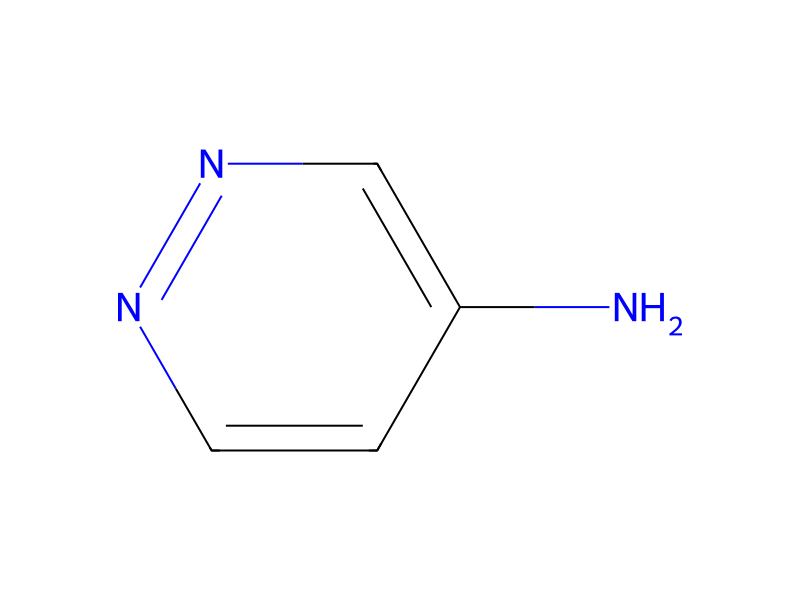
[NH2:1][C:2]1[CH:7]=[CH:6][N:5]=[N:4][CH:3]=1.[C:8]1([N:14]=[C:15]=[O:16])[CH:13]=[CH:12][CH:11]=[CH:10][CH:9]=1>CC(C)=O>[N:5]1[CH:6]=[CH:7][C:2]([NH:1][C:15]([NH:14][C:8]2[CH:13]=[CH:12][CH:11]=[CH:10][CH:9]=2)=[O:16])=[CH:3][N:4]=1Participants
4
Reactant 2

Product 1

Reagents, catalysts & solvents 1

Procedure
200 mg. of 4-aminopyridazine was suspended in 50 ml. of acetone. To the resulting suspension, 1.2 times the amount of phenyl isocyanate theoretically calculated was added and the mixture then reacted at room temperature overnight. The crystals formed were taken out by filtration. By recrystallization from an excess of methanol, N-(4-pyridazinyl)-N'-phenylurea was obtained (yield, greater than 80%); melting point higher than 250° C.