Reaction equation
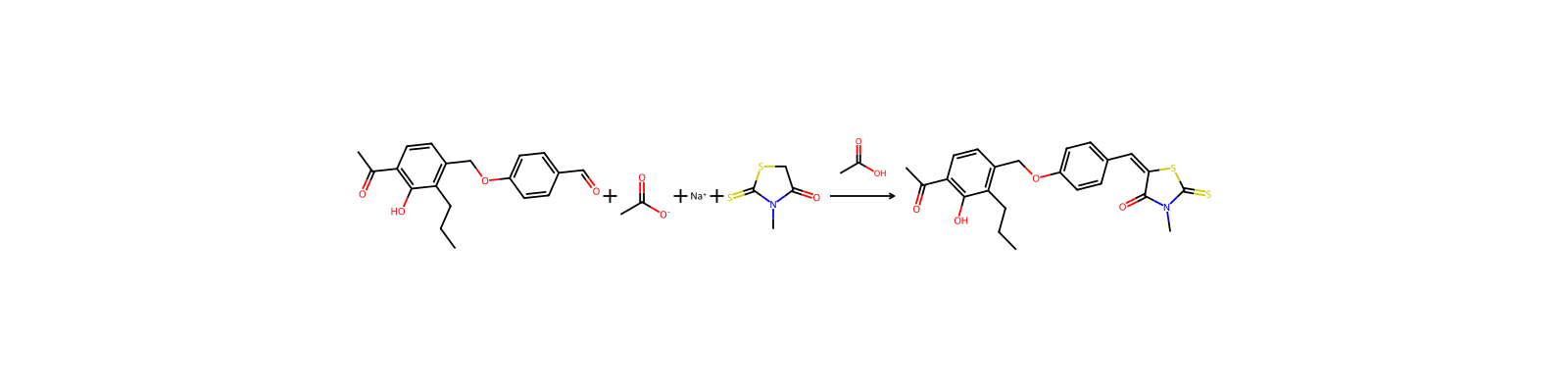
[C:1]([C:4]1[CH:9]=[CH:8][C:7]([CH2:10][O:11][C:12]2[CH:19]=[CH:18][C:15]([CH:16]=O)=[CH:14][CH:13]=2)=[C:6]([CH2:20][CH2:21][CH3:22])[C:5]=1[OH:23])(=[O:3])[CH3:2].C([O-])(=O)C.[Na+].[CH3:29][N:30]1[C:34](=[O:35])[CH2:33][S:32][C:31]1=[S:36]>C(O)(=O)C>[C:1]([C:4]1[CH:9]=[CH:8][C:7]([CH2:10][O:11][C:12]2[CH:19]=[CH:18][C:15]([CH:16]=[C:33]3[S:32][C:31](=[S:36])[N:30]([CH3:29])[C:34]3=[O:35])=[CH:14][CH:13]=2)=[C:6]([CH2:20][CH2:21][CH3:22])[C:5]=1[OH:23])(=[O:3])[CH3:2]Participants
5
Reactant 3


Product 1

Reagents, catalysts & solvents 1

Conditions
- Temperature
- 100 °C
Procedure
Under a nitrogen atmosphere in a three-neck round bottom flask 4-[(4-acetyl-3-hydroxy-2-propylphenyl)methoxy]benzaldehyde (90.0 mg, 0.29 mmol) was dissolved in acetic acid (1.5 ml) with stirring. To this solution was added sodium acetate (82.8 mg, 1.00 mmol) and N-methylrhodanine (42.5 mg, 0.29 mmol). The reaction mixture was then heated to 100° C. and maintained at this temperature for about two hours at which time the reaction mixture was raised to the reflux temperature and allowed to reflux for about 28 hours. The reaction progress was monitored by thin layer chromatography.
Workup
- temperaturemaintained at this temperature for about two hours at which time the reaction mixture
- temperaturewas raised to the reflux temperature
- temperatureto reflux for about 28 hours
Sources & evidence
- ORD record
- ord-03a655ea75a4460ca91808761dd55d17
- Source dataset
- uspto-grants-2001_06
- Patent number
- US06251928B1
Linked notes
Loading…