5-Fluorouracil → 5-Fluoro-4-thiouracil
Reaction equation

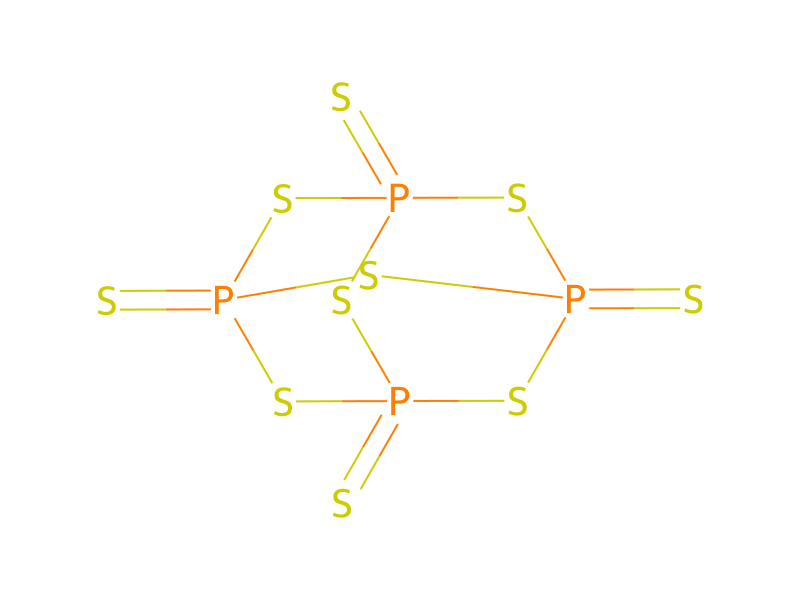
[F:1][C:2]1[C:3](=O)[NH:4][C:5](=[O:8])[NH:6][CH:7]=1.P12(SP3(SP(SP(S3)(S1)=S)(=S)S2)=S)=[S:11].O1CCOCC1>N1C=CC=CC=1>[F:1][C:2]1[C:3](=[S:11])[NH:4][C:5](=[O:8])[NH:6][CH:7]=1Participants
5
Reactant 3


Product 1

Reagents, catalysts & solvents 1

Procedure
Prepared from 5-fluorouracil by the method of Ueda and Fox (see above) using phosphorus pentasulphide in pyridine. We find that dioxan is a better solvent in this reaction in which case the yield was 80% of a more pure product.
Workup
- customin this reaction in which case the yield was 80% of a more pure product
Sources & evidence
- ORD record
- ord-2a6589d625fe475292c6216055f43040
- Source dataset
- uspto-grants-1983_07
- Patent number
- US04395406
Reaction notes
Loading…