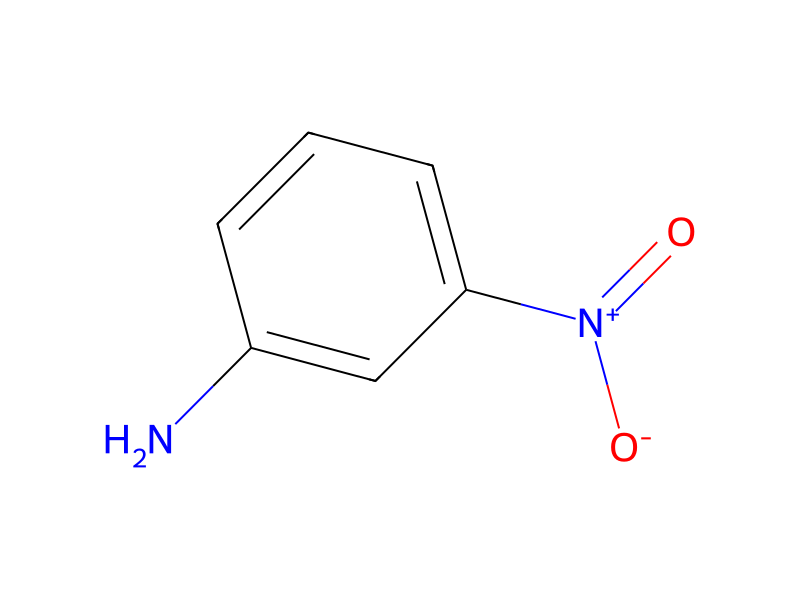
3-Nitroaniline → 3-chloro-N-(3-nitrophenyl)propanamide
HRID 1076933
Reaction equation

[N+:1]([C:4]1[CH:5]=[C:6]([CH:8]=[CH:9][CH:10]=1)[NH2:7])([O-:3])=[O:2].[Cl:11][CH2:12][CH2:13][C:14](Cl)=[O:15]>C1C=CC=CC=1>[N+:1]([C:4]1[CH:5]=[C:6]([NH:7][C:14](=[O:15])[CH2:13][CH2:12][Cl:11])[CH:8]=[CH:9][CH:10]=1)([O-:3])=[O:2]Participants
4
Reactant 2

Product 1

Reagents, catalysts & solvents 1

Procedure
3-Nitroaniline (0.3 moles), β-chloropropionyl chloride (0.35 mole) and benzene (100 ml) are charged into a glass reaction vessel equipped with a mechanical stirrer, thermometer and reflux condenser. The reaction mixture is heated at reflux with stirring for a period of about 4 hours. After this time the reaction mixture is cooled to room temperature and is washed with dilute aqueous sodium bicarbonate, with dilute hydrochloric acid and with water. The washed mixture is then dried over anhydrous magnesium sulfate, filtered and stripped of benzene under reduced pressure to yield the desired product N-(3-nitrophenyl)-β-chloropropionamide as the residue.