Reaction equation
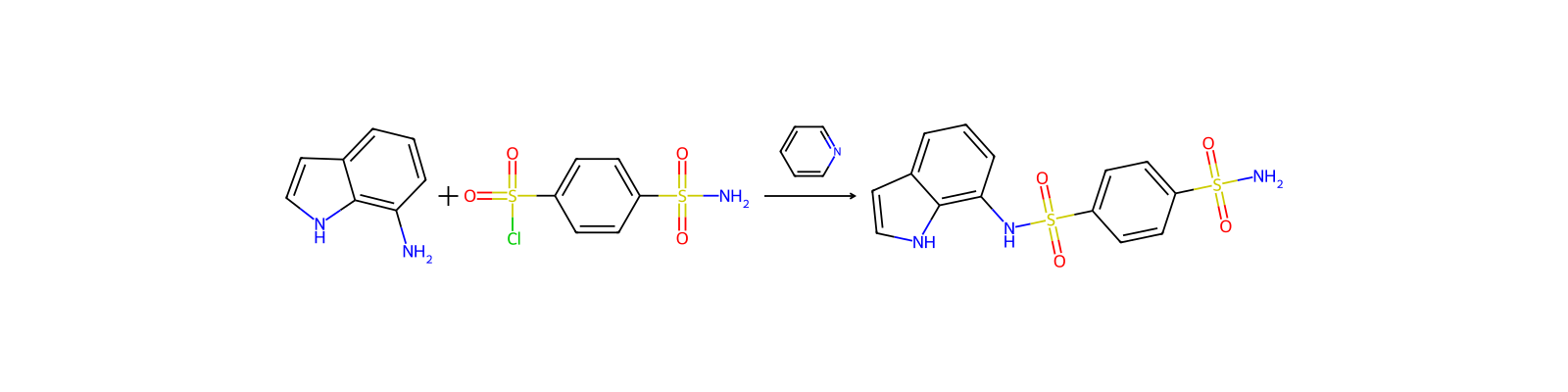
[NH2:1][C:2]1[CH:3]=[CH:4][CH:5]=[C:6]2[C:10]=1[NH:9][CH:8]=[CH:7]2.[S:11]([C:15]1[CH:20]=[CH:19][C:18]([S:21](Cl)(=[O:23])=[O:22])=[CH:17][CH:16]=1)(=[O:14])(=[O:13])[NH2:12]>N1C=CC=CC=1>[NH:9]1[C:10]2[C:6](=[CH:5][CH:4]=[CH:3][C:2]=2[NH:1][S:21]([C:18]2[CH:17]=[CH:16][C:15]([S:11](=[O:14])(=[O:13])[NH2:12])=[CH:20][CH:19]=2)(=[O:23])=[O:22])[CH:7]=[CH:8]1Participants
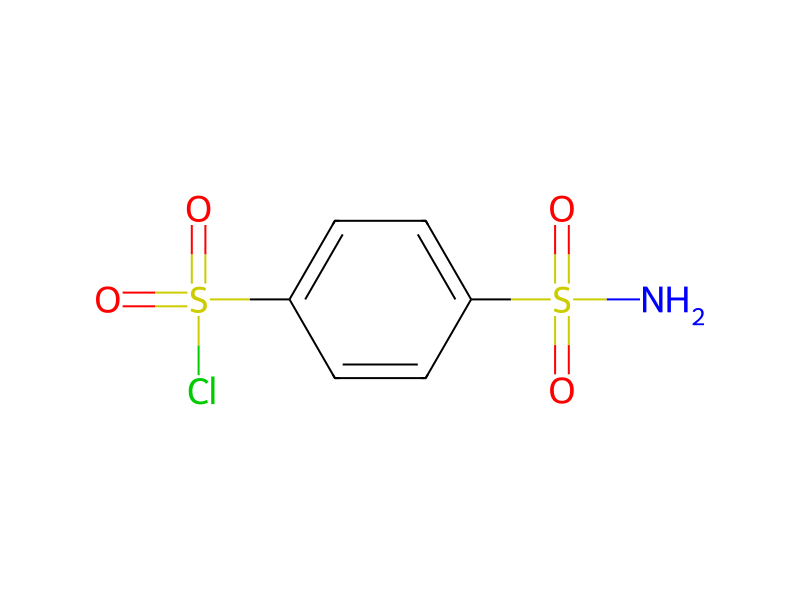
Reactant 2

Product 1

Reagents, catalysts & solvents 1

Procedure
The synthesis of the present compound can be carried out according to the process disclosed in JP-A-7-165708. For example, the present compound can be synthesized as follows. After dissolving 264 mg (2 mmol) of 7-amino-1H-indole in pyridine, 767 mg (3 mmol) of 4-sulfamoylbenzenesulfonyl chloride is added thereto under stirring at room temperature. After the mixture is stirred overnight at room temperature, the solvent is evaporated under reduced pressure. Ethyl acetate and 0.2 N hydrochloric acid are added to the resulting residue. The organic layer is separated, washed with water, and dried over magnesium sulfate, followed by evaporation of the solvent. The resulting residue is purified by silica gel column chromatography to give 445 mg of N-(1H-indol-7-yl)-4-sulfamoylbenzenesulfonamide.
Workup
- customThe synthesis of the present compound
- additionis added
- stirringAfter the mixture is stirred overnight at room temperature
- customthe solvent is evaporated under reduced pressure
- additionEthyl acetate and 0.2 N hydrochloric acid are added to the resulting residue
- customThe organic layer is separated
- washwashed with water
- dry with materialdried over magnesium sulfate
- customfollowed by evaporation of the solvent
- customThe resulting residue is purified by silica gel column chromatography
Sources & evidence
- ORD record
- ord-43a8760c721b4de49c9f488aa7441b9f
- Source dataset
- uspto-grants-2000_05
- Patent number
- US06060498
Linked notes
Loading…