Reaction equation
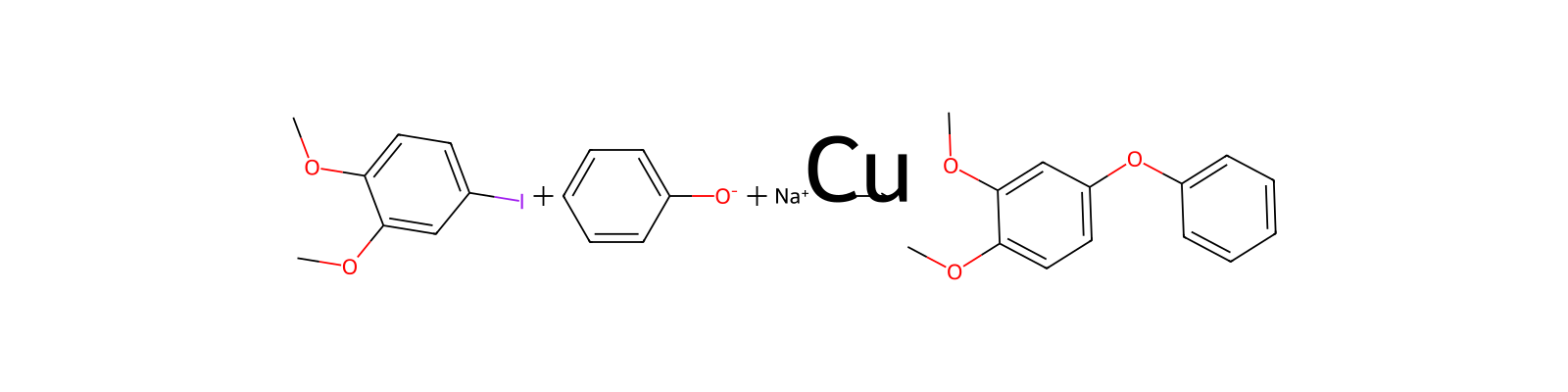
I[C:2]1[CH:3]=[C:4]([O:10][CH3:11])[C:5]([O:8][CH3:9])=[CH:6][CH:7]=1.[O-:12][C:13]1[CH:18]=[CH:17][CH:16]=[CH:15][CH:14]=1.[Na+]>[Cu]>[CH3:9][O:8][C:5]1[C:4](=[CH:3][C:2]([O:12][C:13]2[CH:18]=[CH:17][CH:16]=[CH:15][CH:14]=2)=[CH:7][CH:6]=1)[O:10][CH3:11]Participants
4
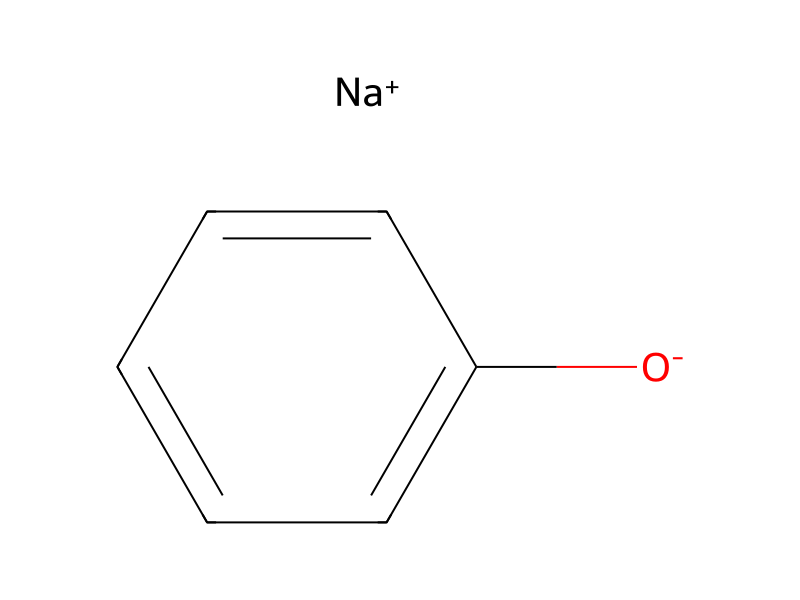
Reactant 2

Product 1

Reagents, catalysts & solvents 1

Procedure
R = 4-phenoxy. Heating a mixture of 4-iodoveratrol (Janssen et al., J. Org. Chem. 20, 1326 (1955)), sodium phenoxide and a catalytic amount of copper powder at about 200° C. for about 4 hours, then pouring the mixture over ice, extracting the mixture with an organic solvent such as ether, drying the extract, stripping the solvent and distilling the residue to give 4-phenoxycatechol dimethyl ether. Treating this product with an anhydrous aluminum chloride/sodium chloride melt (Janssen et al., supra), pouring the resulting mixture into ice-hydrochloric acid, extracting the mixture with an organic solvent, stripping the solvent under reduced pressure and fractionally distilling the residue gives the desired 4-phenoxycatechol.
Workup
- temperatureHeating
- additionpouring the mixture over ice
- extractionextracting the mixture with an organic solvent such as ether
- customdrying the extract
- distillationdistilling the residue
Sources & evidence
- ORD record
- ord-1fd62c14731248899ee72535d88a4184
- Source dataset
- uspto-grants-1978_10
- Patent number
- US04118507
Linked notes
Loading…