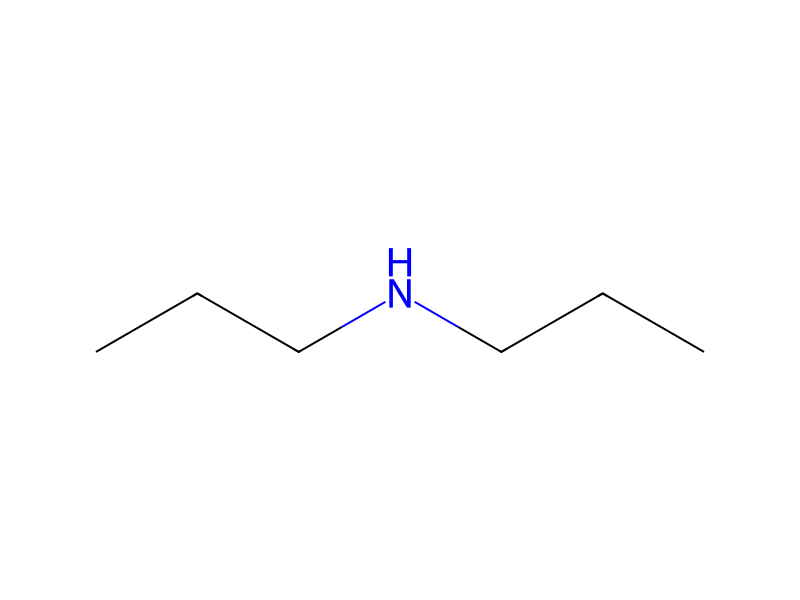
Dipropylamine → Trifluralin
HRID 1112188
Reaction equation

Cl[C:2]1[C:7]([N+:8]([O-:10])=[O:9])=[CH:6][C:5]([C:11]([F:14])([F:13])[F:12])=[CH:4][C:3]=1[N+:15]([O-:17])=[O:16].[CH2:18]([NH:21][CH2:22][CH2:23][CH3:24])[CH2:19][CH3:20]>>[CH2:18]([N:21]([CH2:22][CH2:23][CH3:24])[C:2]1[C:7]([N+:8]([O-:10])=[O:9])=[CH:6][C:5]([C:11]([F:14])([F:13])[F:12])=[CH:4][C:3]=1[N+:15]([O-:17])=[O:16])[CH2:19][CH3:20]Participants
3


Procedure
Each of two samples of the treated 1-chloro-2,6-dinitro-4-(trifluoromethyl)benzene was reacted with di-n-propylamine, yielding N,N-di-n-propyl-2,6-dinitro-4-(trifluoromethyl)aniline. Each product was analyzed for N-nitroso-N,N-di-n-propylamine by each of three different analytical laboratories (twice, in the GC-TEA method). The results were as follows.
Sources & evidence
- ORD record
- ord-6b76afa69d144c228dedb736d40bd8c9
- Source dataset
- uspto-grants-1978_10