Reaction equation

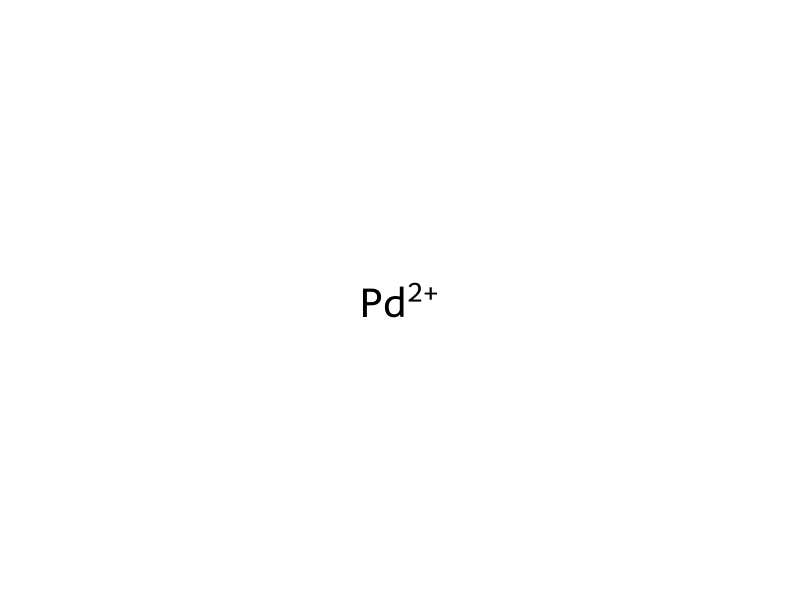
[Br:1][C:2]1[CH:3]=[C:4]([CH:8]=[CH:9][CH:10]=1)[C:5](Cl)=O.[C:11](#[N:14])[CH:12]=C.C(C(CCCC)CN(CC(CC)CCCC)CC(CC)CCCC)C>C(#N)CC.[Pd+2]>[Br:1][C:2]1[CH:3]=[C:4]([CH:8]=[CH:9][CH:10]=1)[CH:5]=[CH:12][C:11]#[N:14]Participants
6
Reactant 3


Product 1

Reagents, catalysts & solvents 2

Procedure
The procedure described in Example 1 is repeated, except that 21.94 g (0.1 mol) of 3-bromobenzoyl chloride, 6.63 g (0.125 mol) of acrylonitrile, 35.37 g (0.1 mol) of tris-(2-ethylhexyl)-amine and 0.3046 g (0.001 mol) of bis-acetylacetonato)-palladium(II) in 50 ml of propionitrile are used. After a reaction time of 3 hours at 100° C., 2.05 g (0.0099 mol) of 3-bromocinnamonitrile are obtained, corresponding to a yield of 9.9% of theory; melting point 62° C. Analysis for C9H6NBr (molecular weight 208): calculated C 51.96%, H 2.91%, N 6.73%; found C 52.29%, H 2.95%, N 6.91%.
Sources & evidence
- ORD record
- ord-c397fa561b0048608ff65610d05320f6
- Source dataset
- uspto-grants-1982_06
- Patent number
- US04335054
Linked notes
Loading…