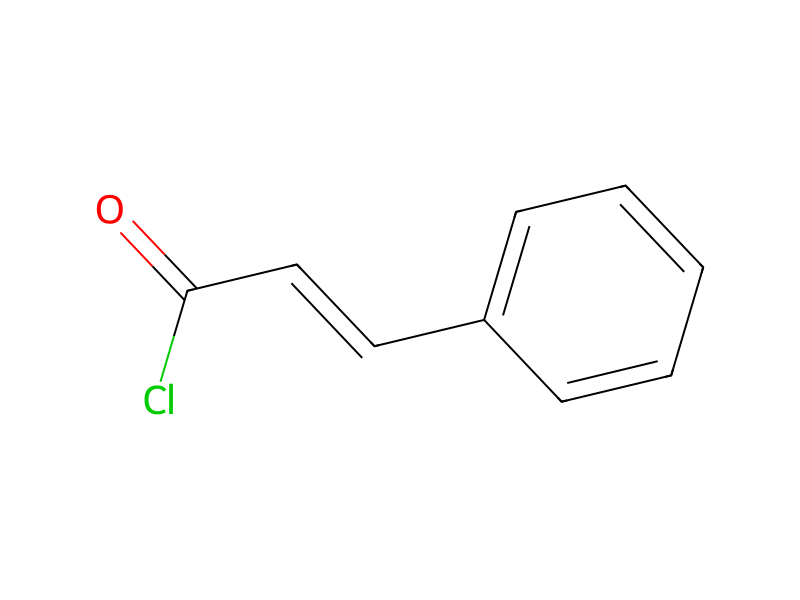
[C:1](Cl)(=[O:10])[CH:2]=[CH:3][C:4]1[CH:9]=[CH:8][CH:7]=[CH:6][CH:5]=1.[CH2:12]([N:19]1[CH2:26][CH:25]2[C:27]([CH3:29])([CH3:28])[CH:21]([CH2:22][NH:23][CH2:24]2)[CH2:20]1)[C:13]1[CH:18]=[CH:17][CH:16]=[CH:15][CH:14]=1>ClCCl.O>[C:1]([N:23]1[CH2:24][CH:25]2[C:27]([CH3:29])([CH3:28])[CH:21]([CH2:20][N:19]([CH2:12][C:13]3[CH:18]=[CH:17][CH:16]=[CH:15][CH:14]=3)[CH2:26]2)[CH2:22]1)(=[O:10])[CH:2]=[CH:3][C:4]1[CH:9]=[CH:8][CH:7]=[CH:6][CH:5]=13.9 g cinnamic acid chloride were dissolved in 20 ml dichloromethane, and to this solution a solution of 5.5 g 3-benzyl-9,9-dimethyl-3,7-diazabicyclo[3,3,1]nonane in 10 ml dichloromethane was added with ice cooling. Subsequently the reaction mixture was stirred for 3 hours at room temperature. Then, for working up, the solvent was distilled off and the residue containing the 7-cinnamyl-3-benzyl-9,9-dimethyl-3,7-diazabicyclo[3,3,1]nonane which had formed was dissolved in water. To remove non-basic fractions, extraction was carried out using ethyl acetate. Then the aqueous phase was made alkaline with dilute sodium hydroxide solution, and the reaction product was extracted with ethyl acetate. The ethyl acetate extract was dried over magnesium sulfate, filtered, and the solvent was distilled off. 5 g 7-cinnamoyl-3-benzyl-9,9-dimethyl-3,7-diazabicyclo[3,3,1]nonane were obtained as a residue.