HomeMCPWorkbenchSkills
HomeWorkbenchNotificationsMe
llms.txt · MCP GuidePrivacy Policy · Terms of Service · Supportv1.8.3
  1. Home
  2. /Reaction

Imidazolium cation → Imidazole

HRID 1167590
Print

Reaction equation

HRID 1167590 reaction equation
[NH+:1]1[CH:5]=[CH:4][NH:3][CH:2]=1.[NH+:6]1[NH:7][N:8]=[CH:9][CH:10]=1.[NH+]1C=CC=CC=1.CN(C)C1C=C[NH+]=CC=1>>[NH:3]1[CH2:4][CH2:5][N:1]=[CH:2]1.[NH:1]1[CH:5]=[CH:4][N:3]=[CH:2]1.[NH:6]1[CH:10]=[CH:9][N:8]=[N:7]1
ParticipantsProcedureWorkupSources & evidenceReaction notes

Participants

7

Reactant 4

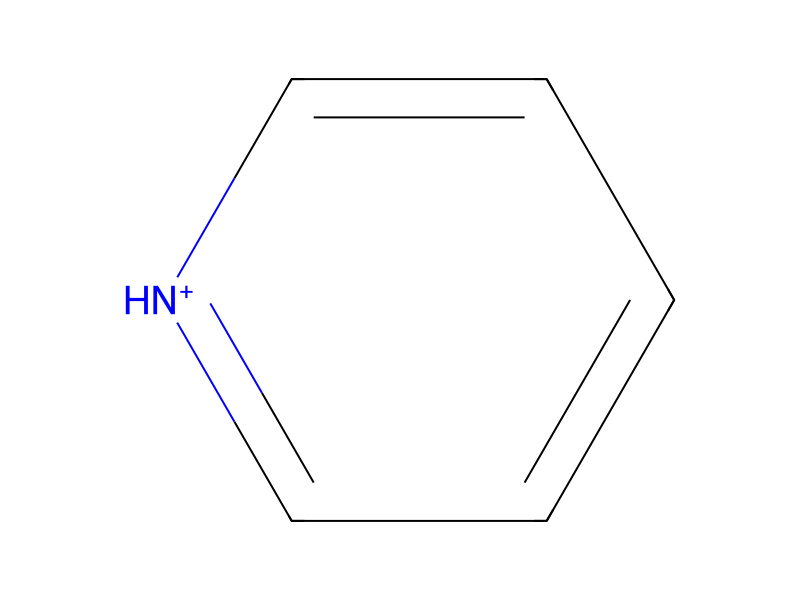
HCID 444234Imidazolium cationHCID 27350204-(Dimethylamino)pyridiniumHCID 4989215PyridiniumHCID 571967762H-triazol-1-ium

Product 3

HCID 795ImidazoleHCID 681562-Imidazoline
HCID 178418936
HCID 178418936, compound

Procedure

The onium cation can be chosen so as to introduce, into the salt, substituents which make it possible to confer specific properties on the said salt. For example, the M+ cation can be a cationic heterocycle of aromatic nature comprising at least one quaternized nitrogen atom in the ring. Mention may be made, by way of example, of the imidazolium, triazolium, pyridinium and 4-(dimethylamino)pyridinium ions, the said cations optionally carrying a substituent on the carbon atoms of the ring. Among these cations, those which give a salt with a melting point of less than 150° C. are advantageous, because they give ionic compositions which have a protonic conduction. A particularly preferred composition with protonic conduction comprises a salt in which the cation is formed by addition of a proton to the nitrogen of an imidazoline, of an imidazole or of a triazole, as well as the corresponding nitrogenous base, in a proportion of 0.5 to 10 by molar ratio.

Workup

  1. additionto introduce, into the salt, substituents which
  2. customAmong these cations, those which give a salt with a melting point of less than 150° C.
  3. customgive ionic compositions which

Sources & evidence

ORD record
ord-5fe258ed618e4371b7026cf42af2a2ff
Source dataset
uspto-grants-2003_09
DOI
10.6084/m9.figshare.5104873.v1
Patent number
US06620546B1

Reaction notes

On this pageParticipantsProcedureWorkupSources & evidenceReaction notes