Oxalic Acid → N-(3-chloro-2-propenyl)-N-methyl-1-naphthalene-methanamine oxalate
HRID 1182425
Reaction equation
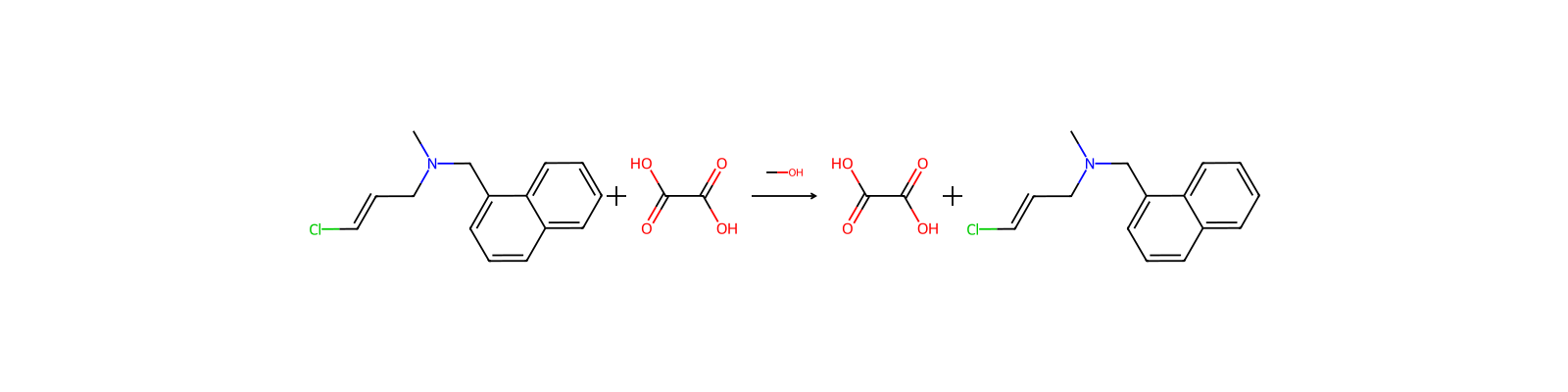
[Cl:1][CH:2]=[CH:3][CH2:4][N:5]([CH3:17])[CH2:6][C:7]1[C:16]2[C:11](=[CH:12][CH:13]=[CH:14][CH:15]=2)[CH:10]=[CH:9][CH:8]=1.[C:18]([OH:23])(=[O:22])[C:19]([OH:21])=[O:20]>CO>[C:18]([OH:23])(=[O:22])[C:19]([OH:21])=[O:20].[Cl:1][CH:2]=[CH:3][CH2:4][N:5]([CH3:17])[CH2:6][C:7]1[C:16]2[C:11](=[CH:12][CH:13]=[CH:14][CH:15]=2)[CH:10]=[CH:9][CH:8]=1Participants
4
Reactant 2
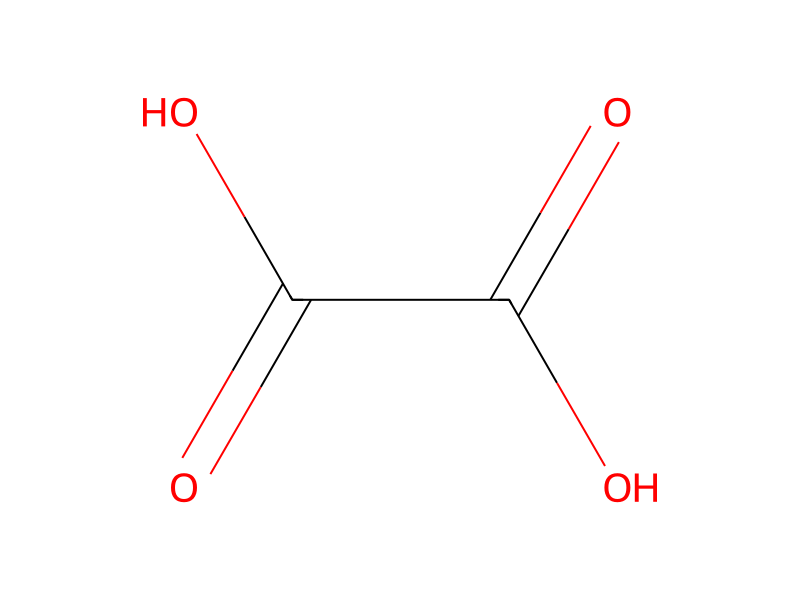

Product 1

Reagents, catalysts & solvents 1

Procedure
A 500 ml 4-necked round-bottom flask equipped with thermometer and magnetic stirrer, under nitrogen atmosphere, is loaded with 80 g of N-(3-chloro-2-propenyl)-N-methyl-1-naphthalenemethanamine (325 mmoles) (E/Z=80/20) and 317 g of methanol at room temperature. The resulting solution is added with 29.3 g of oxalic acid (325 mmoles), keeping stirring for 15′, then the precipitate is filtered and the product is washed with methanol on the filter. 94.0 g of N-(3-chloro -2-propenyl)-N-methyl-1-naphthalene-methanamine oxalate (279.9 mmoles) are obtained, 86% (E/Z=80/20) molar yield.