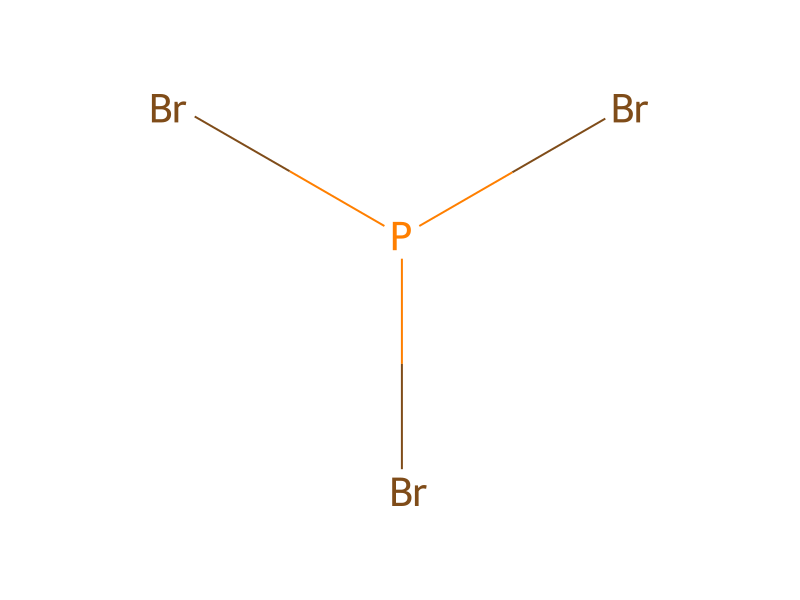
Phosphorus tribromide → methyl 8-(1-bromoethyl)-2-morpholino-4-oxo-4H-chromene-6-carboxylate
HRID 1187178
Reaction equation

[Br:1]P(Br)Br.O[CH:6]([C:8]1[CH:9]=[C:10]([C:25]([O:27][CH3:28])=[O:26])[CH:11]=[C:12]2[C:17]=1[O:16][C:15]([N:18]1[CH2:23][CH2:22][O:21][CH2:20][CH2:19]1)=[CH:14][C:13]2=[O:24])[CH3:7]>C(Cl)Cl>[Br:1][CH:6]([C:8]1[CH:9]=[C:10]([C:25]([O:27][CH3:28])=[O:26])[CH:11]=[C:12]2[C:17]=1[O:16][C:15]([N:18]1[CH2:23][CH2:22][O:21][CH2:20][CH2:19]1)=[CH:14][C:13]2=[O:24])[CH3:7]Participants
4



Procedure
Tribromophosphine (1.65 mL, 1.65 mmol) was added to a stirred suspension of methyl 8-(1-hydroxyethyl)-2-morpholino-4-oxo-4H-chromene-6-carboxylate (500 mg, 1.50 mmol) in DCM (10 mL) in an ice bath under nitrogen. The resulting solution was stirred at room temperature for 24 hrs. The reaction was incomplete and further tribromophosphine (0.300 mL, 0.30 mmol) was added and the reaction mixture stirred for an additional 12 hrs. The solvent was evaporated, the residue was suspended in water and ice and a sodium carbonate solution was carefully added until pH 6. The precipitate was collected by filtration, washed with water then with diethylether and dried to afford methyl 8-(1-bromoethyl)-2-morpholino-4-oxo-4H-chromene-6-carboxylate (470 mg, 79%) as a dark beige solid. Mass Spectrum: M+H+ 398.