HomeMCPSkillsWorkbenchOpenChem
HomeWorkbenchNotificationsMe
llms.txt · skill.md · MCP GuidePrivacy Policy · Terms of Service · Supportv1.8.5
  1. Home
  2. /Reaction

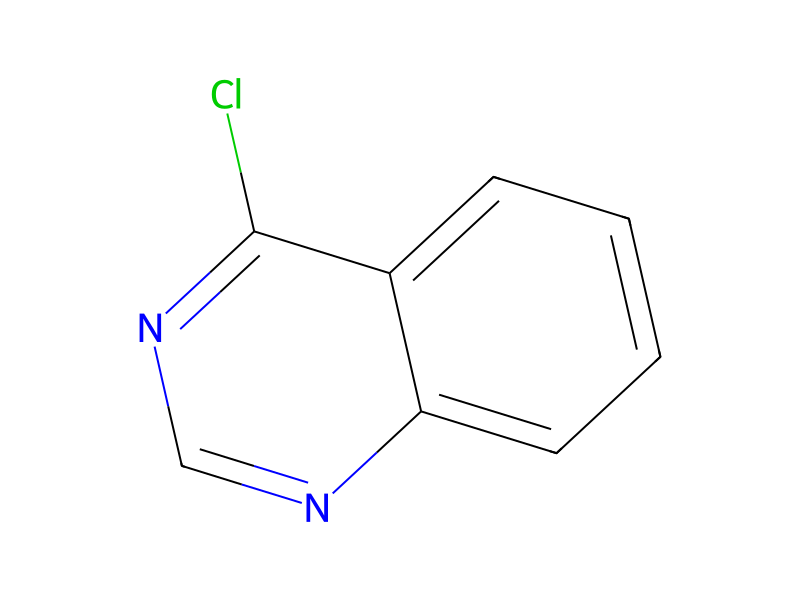
4-Chloroquinazoline → 4-Quinazolin-4-yl-3,6-dihydro-2H-pyridine-1-carboxylic acid benzyl ester

HRID 1192391
Print

Reaction equation

[CH2:1]([O:8][C:9]([N:11]1[CH2:16][CH:15]=[C:14](OS(C(F)(F)F)(=O)=O)[CH2:13][CH2:12]1)=[O:10])[C:2]1[CH:7]=[CH:6][CH:5]=[CH:4][CH:3]=1.C(OC(N1CCC(=O)CC1)=O)C1C=CC=CC=1.Cl[C:43]1[C:52]2[C:47](=[CH:48][CH:49]=[CH:50][CH:51]=2)[N:46]=[CH:45][N:44]=1.[Cl-].[Li+]>C1C=CC([P]([Pd]([P](C2C=CC=CC=2)(C2C=CC=CC=2)C2C=CC=CC=2)([P](C2C=CC=CC=2)(C2C=CC=CC=2)C2C=CC=CC=2)[P](C2C=CC=CC=2)(C2C=CC=CC=2)C2C=CC=CC=2)(C2C=CC=CC=2)C2C=CC=CC=2)=CC=1.O1CCOCC1>[CH2:1]([O:8][C:9]([N:11]1[CH2:16][CH:15]=[C:14]([C:43]2[C:52]3[C:47](=[CH:48][CH:49]=[CH:50][CH:51]=3)[N:46]=[CH:45][N:44]=2)[CH2:13][CH2:12]1)=[O:10])[C:2]1[CH:7]=[CH:6][CH:5]=[CH:4][CH:3]=1
ParticipantsProcedureWorkupSources & evidenceReaction notes

Participants

7

Reactant 4

HCID 788644-ChloroquinazolineHCID 433294Lithium ChlorideHCID 643496Benzyl 4-oxopiperidine-1-carboxylateHCID 11303044benzyl 4-(trifluoromethylsulfonyloxy)-5,6-dihydropyridine-1(2H)-carboxylate

Product 1

HCID 675400354-Quinazolin-4-yl-3,6-dihydro-2H-pyridine-1-carboxylic acid benzyl esterYield 73%

Reagents, catalysts & solvents 2

HCID 178418397HCID 178418397, compoundCatalystHCID 312751,4-DioxaneSolvent

Procedure

To a 25 mL flask was charged 4-Trifluoromethanesulfonyloxy-3,6-dihydro-2H-pyridine-1-carboxylic acid benzyl ester (prepared from 4-Oxo-piperidine-1-carboxylic acid benzyl ester according to the literature: Wustrow, D. J. et. al. (1991), Synthesis, 993-995. 1.14 g, 3.12 mmol), 4-chloroquinazoline (0.512 g, 3.12 mmol), lithium chloride (0.397 g, 9.36 mmol), Pd(PPh3)4 (0.180 g, 0.156 mmol) and hexamethyl ditin (1.02 g, 3.12 mmol). 1,4-Dioxane (20 mL) was added and the reaction was degassed with N2 for 15 minutes. The mixture was stirred at reflux overnight. After cooling, the black suspension was poured into saturated aqueous potassium fluoride solution. The mixture was diluted with EtOAc and stirred for 2 hours. The organic phase was separated. The aqueous phase was extracted with EtOAc. The combined organic layers were washed with brine, dried and concentrated. The residue was purified by column chromatography (hexanes:EtOAc, 2:3) to give 4-Quinazolin-4-yl-3,6-dihydro-2H-pyridine-1-carboxylic acid benzyl ester (0.790 g, 73%) as a colorless oil. 1H NMR (CDCl3, 400 MHz) δ 9.27 (s, 1H), 8.19 (d, J=7.2 Hz, 1H), 8.07 (d, J=8.8 Hz, 1H), 7.91 (m, 1H), 7.62 (t, J=7.2 Hz, 1H), 7.41 (m, 6H), 6.18 (m, 1H), 5.23 (s, 2H), 4.32 (s, 2H), 3.85 (t, J=5.6 Hz, 1H), 2.80 (br s, 2H). LCMS (APCI+) m/z 346 [M+H]+; Rt=3.16 min.

Workup

  1. customet. al. (1991), Synthesis, 993-995
  2. customthe reaction was degassed with N2 for 15 minutes
  3. temperatureat reflux overnight
  4. temperatureAfter cooling
  5. additionthe black suspension was poured into saturated aqueous potassium fluoride solution
  6. additionThe mixture was diluted with EtOAc
  7. stirringstirred for 2 hours
  8. customThe organic phase was separated
  9. extractionThe aqueous phase was extracted with EtOAc
  10. washThe combined organic layers were washed with brine
  11. customdried
  12. concentrationconcentrated
  13. customThe residue was purified by column chromatography (hexanes:EtOAc, 2:3)

Sources & evidence

ORD record
ord-f177ab0c91954f1c98967c4674a9d8ae
Source dataset
uspto-grants-2014_03
DOI
10.6084/m9.figshare.5104873.v1
Patent number
US08680114B2

Reaction notes

On this pageParticipantsProcedureWorkupSources & evidenceReaction notes