HomeMCPWorkbenchSkills
HomeWorkbenchNotificationsMe
llms.txt · MCP GuidePrivacy Policy · Terms of Service · Supportv1.8.3
  1. Home
  2. /Reaction

Perilla alcohol → Perilla alcohol

HRID 1195186
Print

Reaction equation

HRID 1195186 reaction equation
[CH3:1][C:2]([C@@H:4]1[CH2:9][CH:8]=[C:7]([CH2:10][OH:11])[CH2:6][CH2:5]1)=[CH2:3]>O.C(O)C(O)C.OCC(CO)O>[CH3:3][C:2]([C@@H:4]1[CH2:5][CH:6]=[C:7]([CH2:10][OH:11])[CH2:8][CH2:9]1)=[CH2:1].[CH3:10][C:7]1[CH2:8][CH2:9][C@@H:4]([C:2]([CH3:3])=[CH2:1])[CH2:5][CH:6]=1
ParticipantsProcedureSources & evidenceReaction notes

Participants

6

Reactant 1

HCID 369312Perilla alcohol2×

Product 2

HCID 369312Perilla alcoholHCID 440917(+)-Limonene

Reagents, catalysts & solvents 3

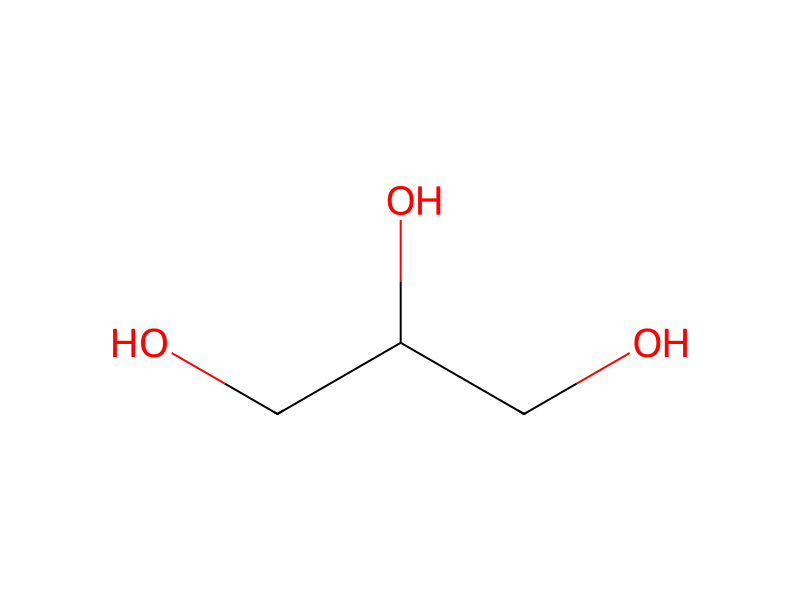
HCID 753GlycerolSolventHCID 962WaterSolventHCID 1030Propylene GlycolSolvent

Procedure

Perillyl alcohol is an oil with a terpenic aroma. It is insoluble in water, is poorly soluble in propylene glycol, and is almost insoluble in glycerine. Perillyl alcohol is soluble in alcohol and is miscible in oil. It is used as a flavoring agent for cosmetics and perfumes, but heretofore, it has not been used as a bactericide. Perillyl alcohol can be produced by the oxidation of limonene as was demonstrated by Blumann in Chemical Abstracts, Volume 63, 1965 on page 1819, and Bardychev in Chemical Abstracts, Volume 80, 1974, page 359. It can be produced by the acetylation of limonene as described by Ansari, Hifzure R. (German Offen 2,513,910 and Canadian Patent No. 1,077,959). Walling made perillyl alcohol (Canadian Patent No. 981,695) from beta pinene by adding benzyl peroxide to beta pinene followed by alkaline hydrolysis to perillyl alcohol.

Sources & evidence

ORD record
ord-b35cbd246ae24975bec1314e01d4eae7
Source dataset
uspto-grants-1992_05
DOI
10.6084/m9.figshare.5104873.v1
Patent number
US05110832

Reaction notes

On this pageParticipantsProcedureSources & evidenceReaction notes