Reaction equation

[NH2:1][C:2]1[CH:3]=[C:4]([CH:8]=[CH:9][C:10]=1[NH2:11])C(O)=O.NC1C=C(C(O)=O)C(=CC=1N)C(O)=O.O[C:27]1[CH:28]=[C:29]([C:34]2C=CC(N)=C(O)[CH:35]=2)[CH:30]=[CH:31][C:32]=1N.NC1C=CC(C2C=CC(N)=CC=2)=CC=1>>[C:29]1([C:34]2[CH:35]=[N:1][C:2]3[C:10](=[CH:9][CH:8]=[CH:4][CH:3]=3)[N:11]=2)[CH:30]=[CH:31][CH:32]=[CH:27][CH:28]=1Participants
5


Procedure
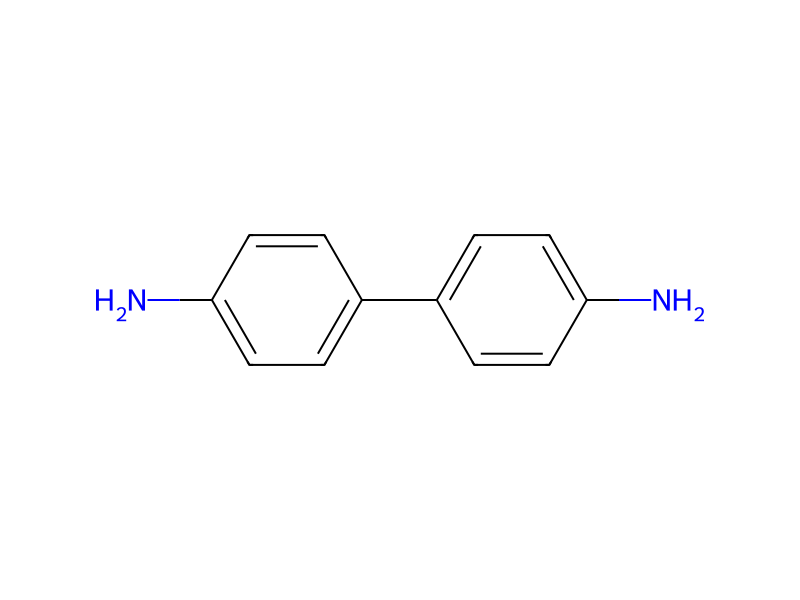
One proceeds in accordance with Example 1, where in place of 3,4-diaminobenzoic acid, 4,5-diaminophthalic acid is used, and in place of 3,3'-dihydroxy-4,4'-diaminobiphenyl, 4.4'- diaminobiphenyl is used. Via tetracarboxylic acid, or the corresponding acid chloride, as an intermediate stage, a copolymer with phenylquinoxaline units and o-carboxyamide groupings (-CO-NH-) is thereby obtained. When annealed to approximately 400° C., they cyclize into imide structures.
Sources & evidence
- ORD record
- ord-154d779a13a44ad69320c66de37f660d
- Source dataset
- uspto-grants-1994_01
- Patent number
- US05278277
Linked notes
Loading…