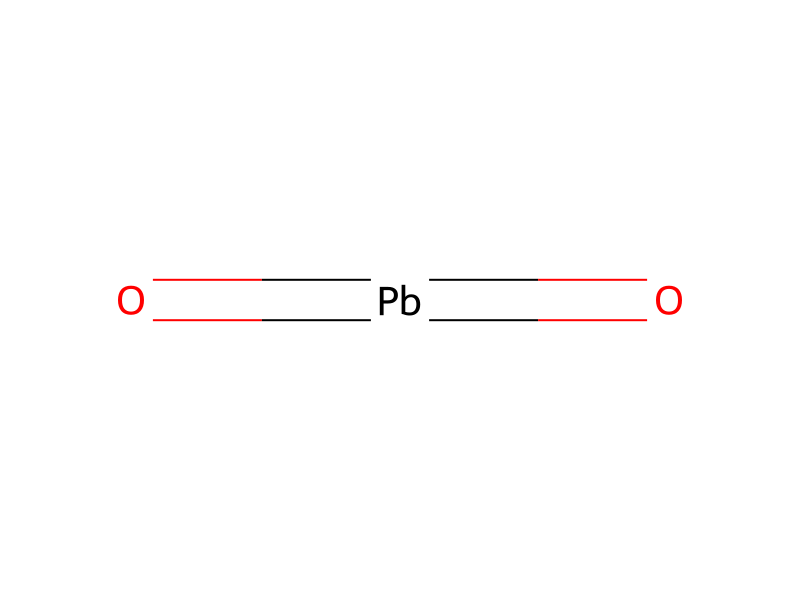
Lead dioxide → 1,1-Bis(4-pyrrolidinophenyl)ethylene
HRID 1199112
Reaction equation

[N:1]1([C:6]2[CH:11]=[CH:10][C:9]([C:12]([C:17]3[CH:22]=[CH:21][C:20]([N:23]4[CH2:27][CH2:26][CH2:25][CH2:24]4)=[CH:19][CH:18]=3)(C)[C:13](O)=O)=[CH:8][CH:7]=2)[CH2:5][CH2:4][CH2:3][CH2:2]1.[Pb](=O)=O>C1(C)C=CC=CC=1>[N:1]1([C:6]2[CH:7]=[CH:8][C:9]([C:12]([C:17]3[CH:22]=[CH:21][C:20]([N:23]4[CH2:24][CH2:25][CH2:26][CH2:27]4)=[CH:19][CH:18]=3)=[CH2:13])=[CH:10][CH:11]=2)[CH2:2][CH2:3][CH2:4][CH2:5]1Participants
4
Reactant 2

Product 1

Reagents, catalysts & solvents 1

Procedure
Into 500 ml of toluene was dissolved 5 g of 2,2-bis(4-pyrrolidinophenyl)propionic acid. Thereto was added 3.7 g of lead dioxide and the mixture was reacted at room temperature with stirring for one hour. The lead compound was removed by filtration and the toluene layer was washed with 100 ml of 5% aqueous solution of sodium hydroxide. Toluene was removed by distillation at a reduced pressure. The residue was recrystallized from ethanol to obtain 3.3 g (yield 76%) of 1,1-bis(4-pyrrolidinophenyl)ethylene, having a melting point of 220°~223° C.