Reaction equation
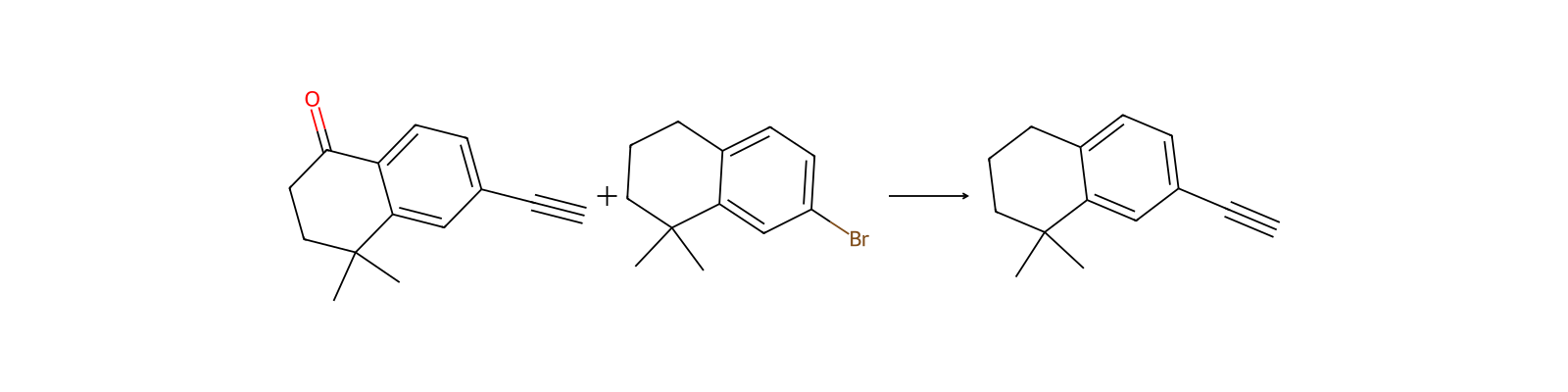
[C:1]([C:3]1[CH:4]=[C:5]2[C:10](=[CH:11][CH:12]=1)[C:9](=O)[CH2:8][CH2:7][C:6]2([CH3:15])[CH3:14])#[CH:2].BrC1C=C2C(CCCC2(C)C)=CC=1>>[C:1]([C:3]1[CH:4]=[C:5]2[C:10]([CH2:9][CH2:8][CH2:7][C:6]2([CH3:15])[CH3:14])=[CH:11][CH:12]=1)#[CH:2]Participants
3

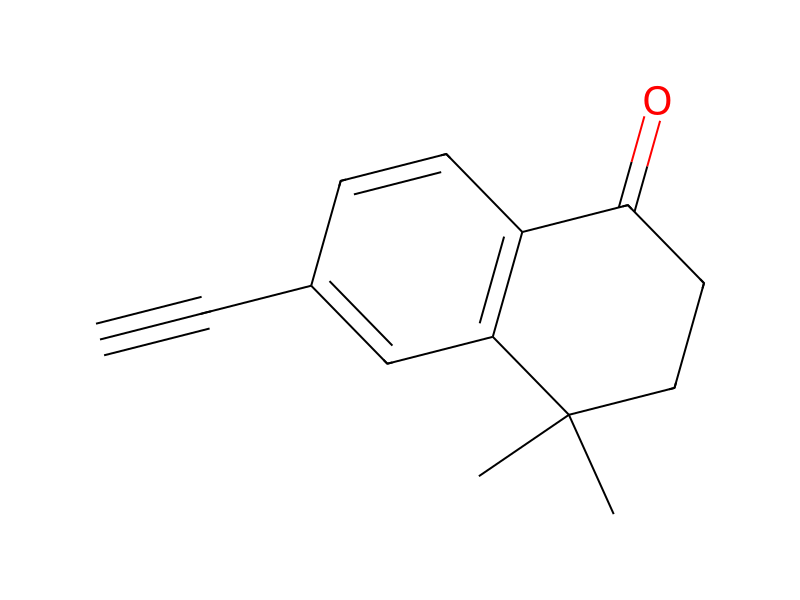

Procedure
Employing the same general procedure as for the preparation of 6-ethynyl-3,4-dihydro-4,4-dimethylnaphthalen-1(2H)-one (Compound K), 2.1 g (8.8 mmol) of 7-bromo-1,1-dimethyl-1,2,3,4-tetrahydronaphthalene was converted into the title compound using 10 ml (93.9 mmol) of trimethylsilyl acetylene, 1.25 g (1.8 mmol) of bis(triphenylphosphine)palladium(II) chloride, 0.53 g (2.8 mmol) of cuprous iodide and 10 ml (20.0 mmol) of K2CO3 (2M solution in methanol).
Sources & evidence
- ORD record
- ord-084c85907fd245078e2f7acbc10ccaab
- Source dataset
- uspto-grants-1998_03
- Patent number
- US05723620
Linked notes
Loading…