Reaction equation
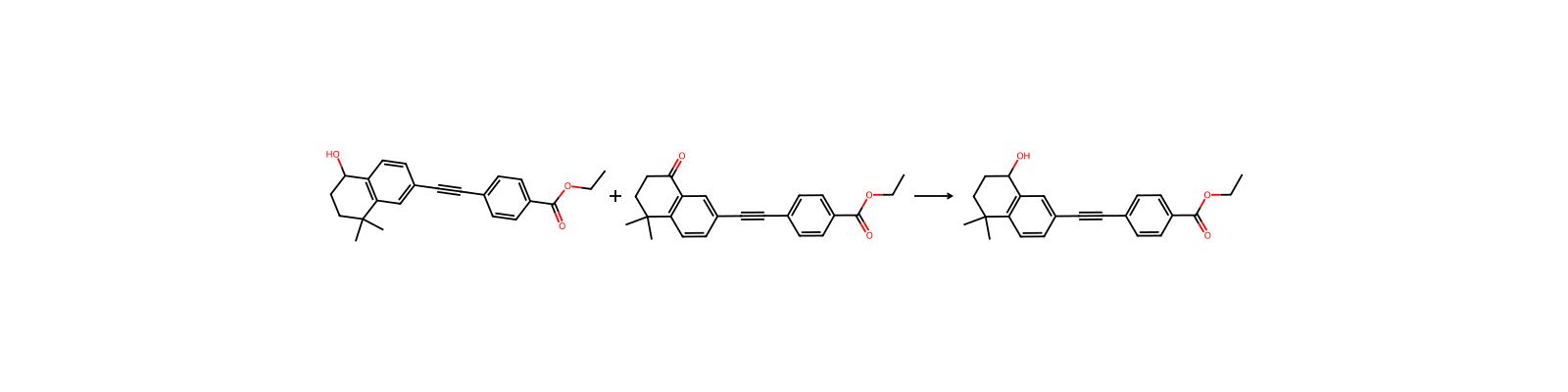
OC1CCC(C)(C)C2C=C(C#CC3C=CC(C(OCC)=O)=CC=3)C=CC1=2.[CH3:27][C:28]1([CH3:52])[C:37]2[CH:36]=[CH:35][C:34]([C:38]#[C:39][C:40]3[CH:50]=[CH:49][C:43]([C:44]([O:46][CH2:47][CH3:48])=[O:45])=[CH:42][CH:41]=3)=[CH:33][C:32]=2[C:31](=[O:51])[CH2:30][CH2:29]1>>[OH:51][CH:31]1[CH2:30][CH2:29][C:28]([CH3:27])([CH3:52])[C:37]2[CH:36]=[CH:35][C:34]([C:38]#[C:39][C:40]3[CH:41]=[CH:42][C:43]([C:44]([O:46][CH2:47][CH3:48])=[O:45])=[CH:49][CH:50]=3)=[CH:33][C:32]1=2Participants
3
Reactant 2
Product 1

Procedure
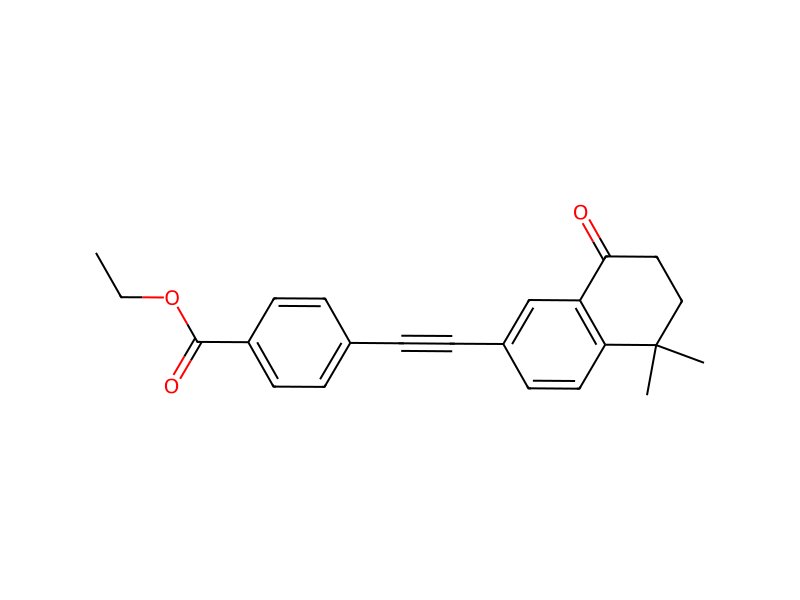
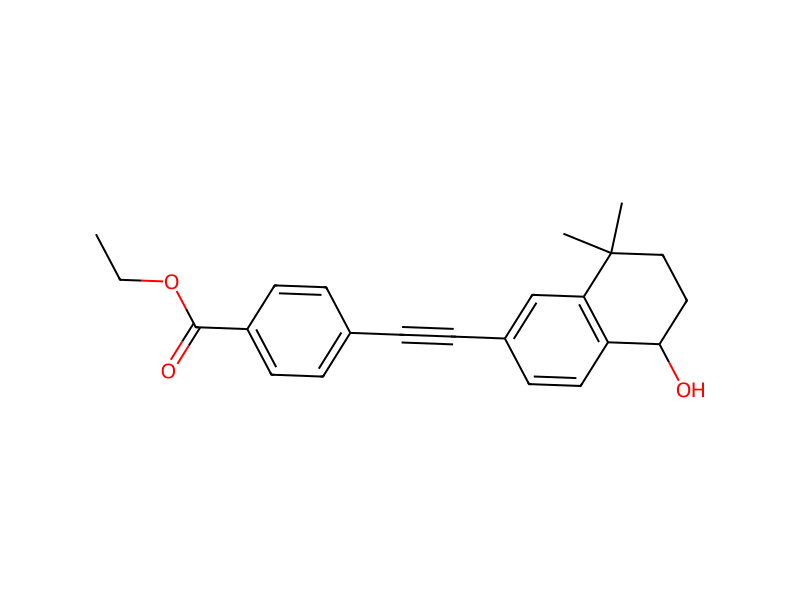
Employing the same general procedure as for the preparation of ethyl 4-[(5,6,7,8-tetrahydro-5-hydroxy-8,8-dimethylnaphth-2-yl)ethynyl]benzoate (Compound 9), 1 g (2.88 mmol) of ethyl 4-[(5,6,7,8-tetrahydro-8,8-dimethyl-5-oxonaphth-3-yl)ethynyl]benzoate (Compound 2) (was converted into the title compound using 60 mg (1.6 mmol) of sodium borohydride.
Sources & evidence
- ORD record
- ord-29ccf8ac4f5a4867bec6dfaabe5da5da
- Source dataset
- uspto-grants-1998_03
- Patent number
- US05723620
Linked notes
Loading…