Reaction equation

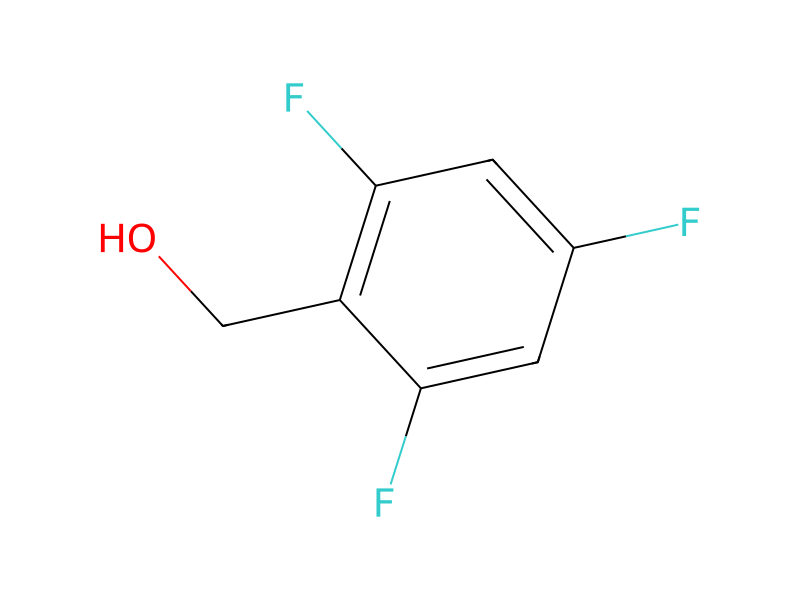
[CH3:1][O:2][C:3]([C@@H:5]1[CH2:9][C:8](=[O:10])[N:7]([C:11]2[CH:16]=[CH:15][C:14]([OH:17])=[CH:13][CH:12]=2)[CH2:6]1)=[O:4].[F:18][C:19]1[CH:26]=[C:25]([F:27])[CH:24]=[C:23]([F:28])[C:20]=1[CH2:21]O>>[CH3:1][O:2][C:3]([C@@H:5]1[CH2:9][C:8](=[O:10])[N:7]([C:11]2[CH:12]=[CH:13][C:14]([O:17][CH2:21][C:20]3[C:19]([F:18])=[CH:26][C:25]([F:27])=[CH:24][C:23]=3[F:28])=[CH:15][CH:16]=2)[CH2:6]1)=[O:4]Participants
3


Procedure
In an analogous manner to that described in Example 28b), the alkylation of the (R)-1-(4-hydroxy-phenyl)-5-oxo-pyrrolidine-3-carboxylic acid methyl ester [Example 28a)] with 2,4,6-trifluorobenzylalcohol yields the (R)-5-oxo-1-[4-(2,4,6-trifluoro-benzyloxy)-phenyl]-pyrrolidine-3-carboxylic acid methyl ester as a white solid. MS: m/e=380 (M+H)+.
Sources & evidence
- ORD record
- ord-8999ae3e0b4748469f801fd33821a630
- Source dataset
- uspto-grants-2006_10
- Patent number
- US07122562B2
Linked notes
Loading…