Ethyl orthoformate → 8-Methyl-6-(3-pyridinyl)imidazo[1,5-d]-1,2,4-triazin-1(2H)-one
Reaction equation

[CH3:1][C:2]1[NH:6][C:5]([C:7]2[CH:8]=[N:9][CH:10]=[CH:11][CH:12]=2)=[N:4][C:3]=1[C:13]([NH:15][NH2:16])=[O:14].[CH2:17](OC(OCC)OCC)C>C(O)C>[CH3:1][C:2]1[N:6]=[C:5]([C:7]2[CH:8]=[N:9][CH:10]=[CH:11][CH:12]=2)[N:4]2[C:3]=1[C:13](=[O:14])[NH:15][N:16]=[CH:17]2Participants
4
Reactant 2
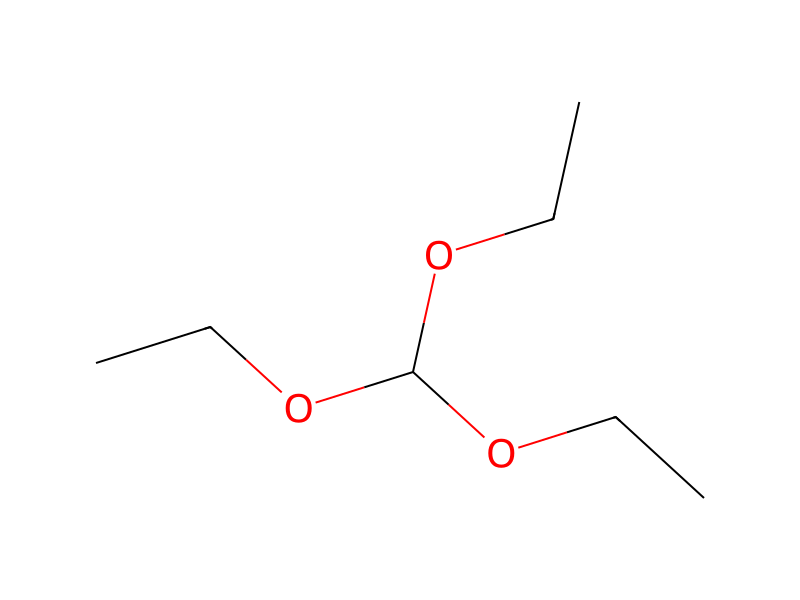

Product 1

Reagents, catalysts & solvents 1

Conditions
- Temperature
- 220 °C
Procedure
A 5 g portion of 5-methyl-2-(3-pyridinyl)-1H-imidazole-4-carboxylic acid, hydrazide in 100 ml of triethoxymethane was stirred at reflux for 18 hours in an oil bath at 220° C. The volatiles were boiled off as the temperature of the oil bath rose to 250°-260° C. The residue in the flask melted, then solidified, was kept at 250°-260° C. for 30 minutes and then cooled to room temperature. The solid was boiled in 200 ml of ethanol, the solid collected, dissolved in 100 ml of boiling methyl cellosolve, treated with charcoal and clarified. The filtrate was cooled at -5° C., the solid collected washed with ethanol and dried, giving 600 mg of the desired product, mp 292°-295° C. (dec.).