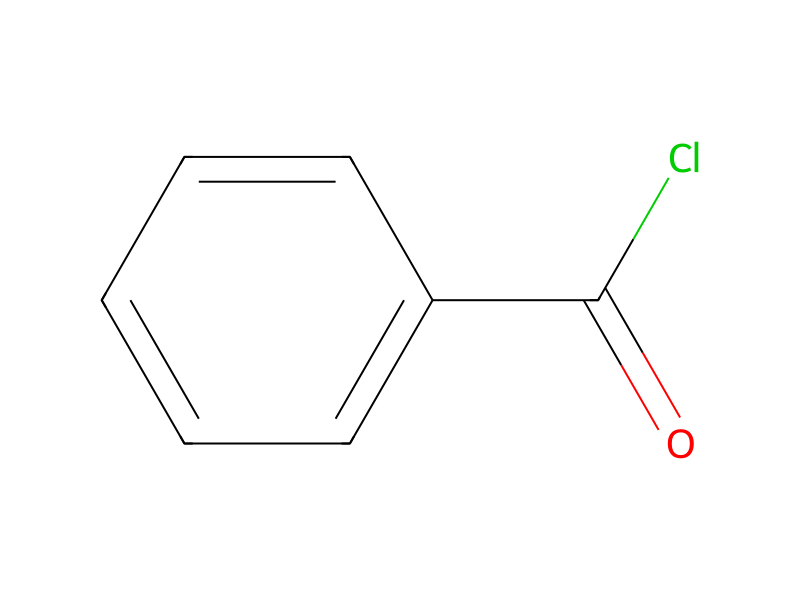
Benzoyl chloride → tert-butyl N-(4-{[3-(benzoylamino)quinolin-4-yl]amino}butyl)carbamate hydrochloride
HRID 1263504
Reaction equation

[C:1]([Cl:9])(=[O:8])[C:2]1[CH:7]=[CH:6][CH:5]=[CH:4][CH:3]=1.[NH2:10][C:11]1[CH:12]=[N:13][C:14]2[C:19]([C:20]=1[NH:21][CH2:22][CH2:23][CH2:24][CH2:25][NH:26][C:27](=[O:33])[O:28][C:29]([CH3:32])([CH3:31])[CH3:30])=[CH:18][CH:17]=[CH:16][CH:15]=2>ClCCl>[ClH:9].[C:1]([NH:10][C:11]1[CH:12]=[N:13][C:14]2[C:19]([C:20]=1[NH:21][CH2:22][CH2:23][CH2:24][CH2:25][NH:26][C:27](=[O:33])[O:28][C:29]([CH3:31])([CH3:30])[CH3:32])=[CH:18][CH:17]=[CH:16][CH:15]=2)(=[O:8])[C:2]1[CH:7]=[CH:6][CH:5]=[CH:4][CH:3]=1Participants
4



Procedure
A solution of benzoyl chloride (5.3 g, 37.7 mmol) in dichloromethane (100 mL) was slowly added to a solution of tert-butyl N-{4-[(3-aminoquinolin-4-yl)amino]butyl}carbamate (12.5 g, 37.7 mmol) in dichloromethane (250 mL) at ambient temperature. The reaction mixture was maintained at ambient temperature overnight. The resulting precipitate was isolated by filtration and dried to provide 11.0 g of tert-butyl N-(4-{[3-(benzoylamino)quinolin-4-yl]amino}butyl)carbamate hydrochloride as a white solid.