Reaction equation

[Br:1][C:2]1[CH:11]=[CH:10][C:9]2[C:4](=[C:5]([Br:18])[C:6]([Br:17])=[C:7]3[C:15](=[O:16])[O:14][C:12](=[O:13])[C:8]3=2)[C:3]=1[Br:19].C12C(=O)OC(=[O:31])C1=CC=C1C=2C=CC=C1.BrBr>>[Br:1][C:2]1[CH:11]=[CH:10][C:9]2[C:4](=[C:5]([Br:18])[C:6]([Br:17])=[C:7]([C:15]([OH:14])=[O:16])[C:8]=2[C:12]([OH:31])=[O:13])[C:3]=1[Br:19]Participants
4
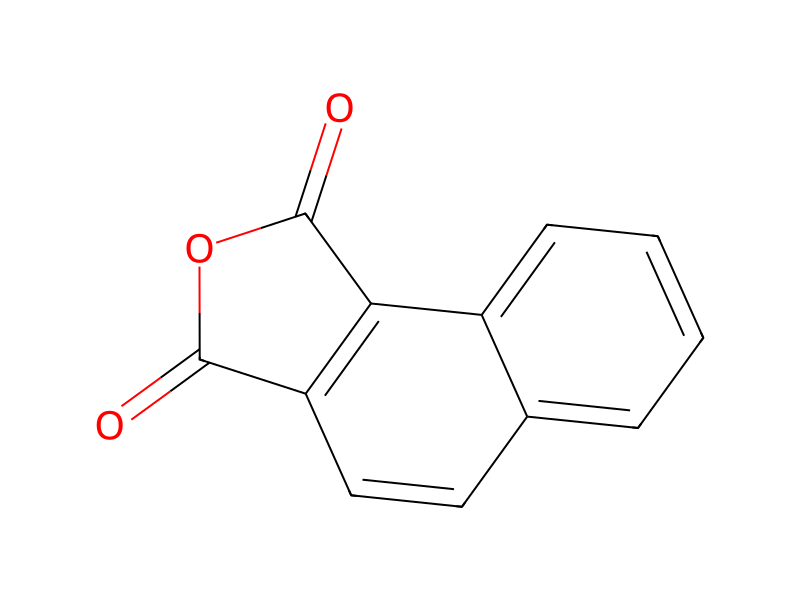



Procedure
Tetrabromonaphthalene-1,2-dicarboxylic anhydride: 2.0 g of naphthalene-1,2-dicarboxylic anhydride, 0.05 g of ferrum reductum and 5.2 ml of bromine are heated at 210° C. for 6 hours using a long intensive condenser. Working up analogously to Example 61a) gives 5.0 g of tetrabromonaphthalene-1,2-dicarboxylic acid, which is converted into the anhydride with acetic anhydride. Yield: 4.8 g (94%), bromine content: 62.4% (theoretical 62.7%).
Sources & evidence
- ORD record
- ord-8825e28c6bd044be90026b65480c3adb
- Source dataset
- uspto-grants-1995_11
- Patent number
- US05466805
Linked notes
Loading…