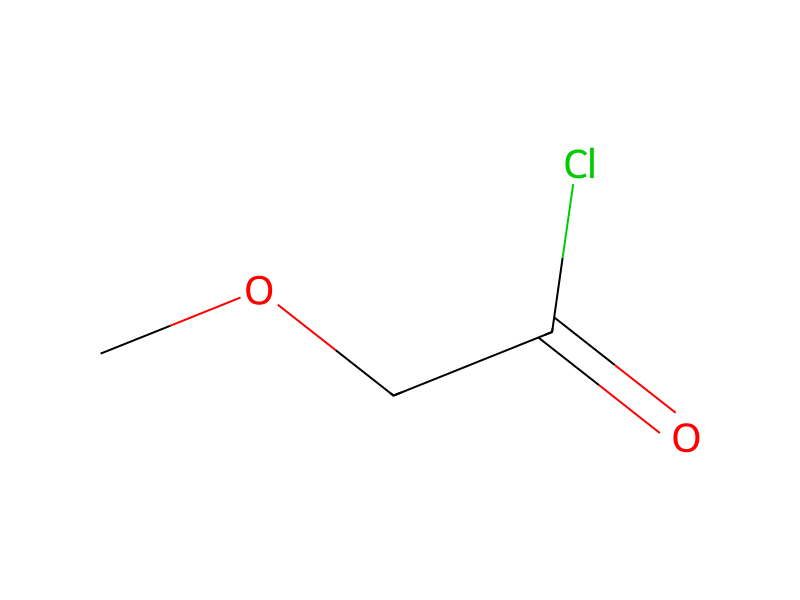
Methoxyacetyl chloride → 5-Methoxyacetylamino-2,4,6-triiodoisophthalic acid (2,3-diacetoxypropyl)amide chloride
HRID 1291972
Reaction equation

[CH3:1][O:2][CH2:3][C:4]([Cl:6])=[O:5].[Cl-].[C:8]([O:11][CH:12]([CH2:30][O:31][C:32](=[O:34])[CH3:33])[CH2:13][NH:14][C:15](=[O:29])[C:16]1[C:24]([I:25])=[C:23]([NH2:26])[C:22]([I:27])=[C:18]([C:19]([OH:21])=[O:20])[C:17]=1[I:28])(=[O:10])[CH3:9]>O1CCOCC1>[Cl-:6].[C:8]([O:11][CH:12]([CH2:30][O:31][C:32](=[O:34])[CH3:33])[CH2:13][NH:14][C:15](=[O:29])[C:16]1[C:24]([I:25])=[C:23]([NH:26][C:4](=[O:5])[CH2:3][O:2][CH3:1])[C:22]([I:27])=[C:18]([C:19]([OH:21])=[O:20])[C:17]=1[I:28])(=[O:10])[CH3:9]Participants
4



Procedure
24.7 g (150 mmol) of methoxyacetyl chloride is added at room temperature to a suspension of 73.4 g (100 mmol) of 5-amino-2,4,6-triiodisophthalic acid-N-(2,3-diacetoxypropyl)-amide-chloride (EP 0308364) in 500 ml of anhydrous dioxane, stirred with exclusion of moisture. The batch is refluxed for several hours, until no more feedstock can be detected according to thin-layer chromatography, then it is concentrated by evaporation, the residue is taken up in dichloromethane and shaken out with saturated aqueous sodium bicarbonate solution. After drying on anhydrous magnesium sulfate, the organic phase is concentrated by evaporation and the residue is recrystallized from ethyl acetate/tert-butyl methyl ether.