Reaction equation

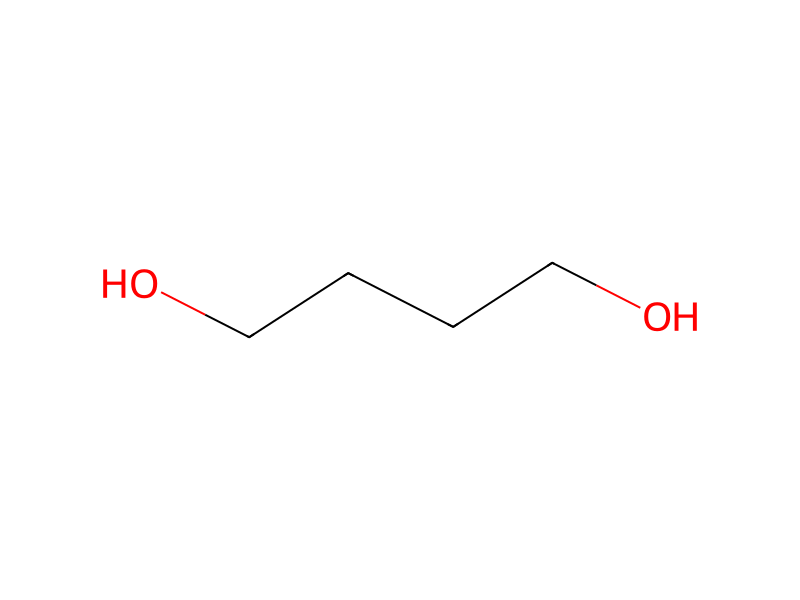
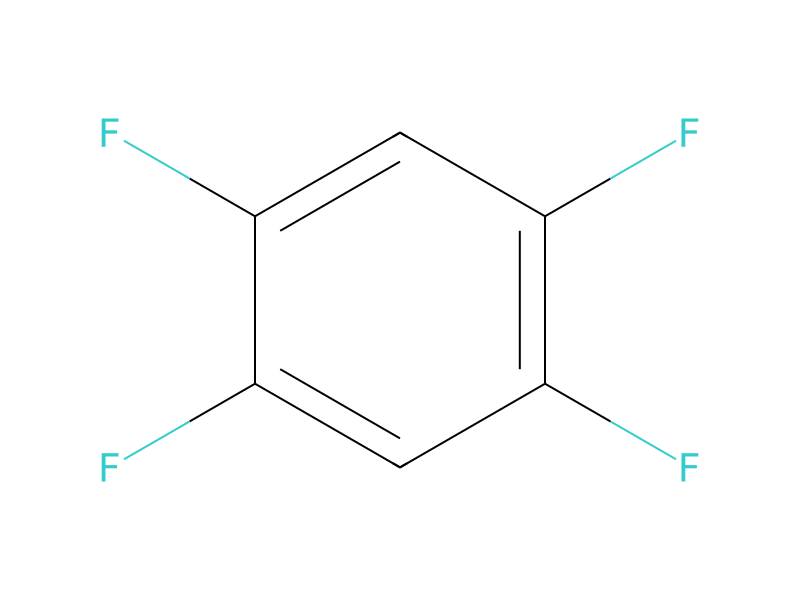
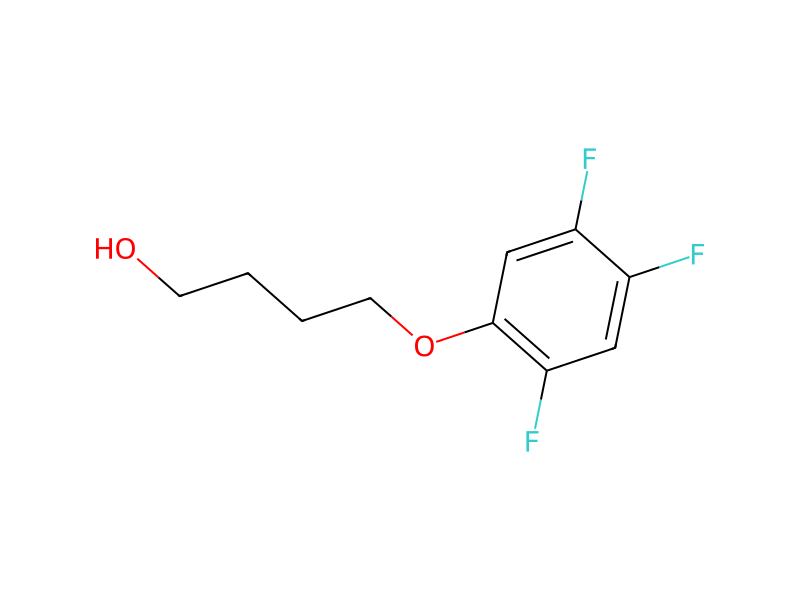
[CH2:1]([OH:6])[CH2:2][CH2:3][CH2:4][OH:5].CC([O-])(C)C.[K+].[F:13][C:14]1[CH:19]=[C:18]([F:20])[C:17]([F:21])=[CH:16][C:15]=1F.[Cl-].[Na+]>O.C1(C)C=CC=CC=1.CS(C)=O>[F:13][C:14]1[CH:19]=[C:18]([F:20])[C:17]([F:21])=[CH:16][C:15]=1[O:5][CH2:4][CH2:3][CH2:2][CH2:1][OH:6]Participants
8





Procedure
To a mixture of 1,4-butanediol (15 g, 0.17 mol) and t-BuOK (8.0 g, 0.071 mol) were added 1,2,4,5-tetrafluorobenzene (5.0 g, 33 mmol) and DMSO (50 g) at 60° C. After being stirred at this temperature for 18 h, toluene (200 mL), water (50 mL) and sodium chloride (10 g) were added to the reaction mixture. The layers were separated and the organic layer was concentrated in vacuo giving the title compound. This material was used directly in the next step.
Workup
- customThe layers were separated
- concentrationthe organic layer was concentrated in vacuo
Sources & evidence
- ORD record
- ord-663d6016ba36490f8673a3c4952bbb51
- Source dataset
- uspto-grants-2007_07
- Patent number
- US07244722B2
Linked notes
Loading…