HomeMCPWorkbenchSkills
HomeWorkbenchNotificationsMe
llms.txt · MCP GuidePrivacy Policy · Terms of Service · Supportv1.8.3
  1. Home
  2. /Reaction

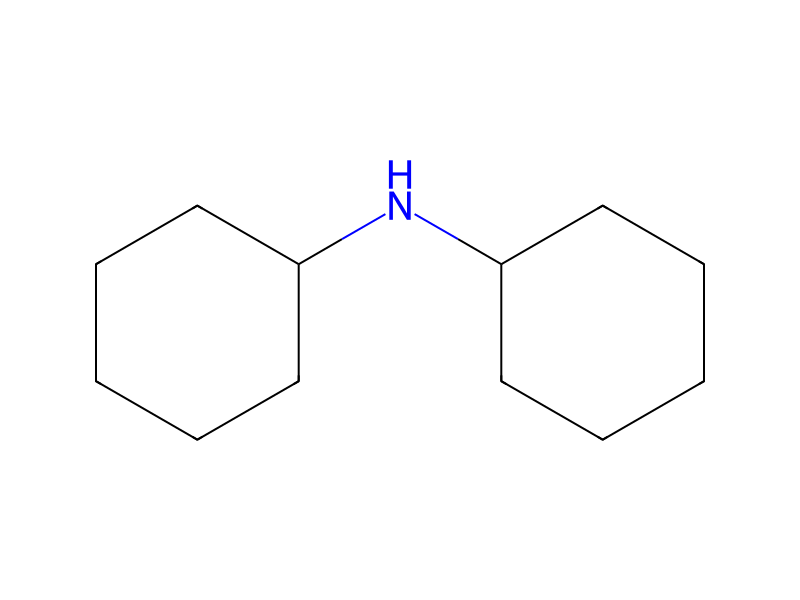
Dicyclohexylamine → Dicyclohexylammonium chloride

HRID 1376819
Print

Reaction equation

HRID 1376819 reaction equation
N1CCC(C2N=CNC=2)CC1.[CH:12]1([NH:18][CH:19]2[CH2:24][CH2:23][CH2:22][CH2:21][CH2:20]2)[CH2:17][CH2:16][CH2:15][CH2:14][CH2:13]1.C1(CCCCC([Cl:37])=O)CCCCC1>C(#N)C.ClCCl>[Cl-:37].[CH:19]1([NH2+:18][CH:12]2[CH2:13][CH2:14][CH2:15][CH2:16][CH2:17]2)[CH2:20][CH2:21][CH2:22][CH2:23][CH2:24]1
ParticipantsConditionsProcedureWorkupSources & evidenceReaction notes

Participants

6

Reactant 3

HCID 7582DicyclohexylamineHCID 152333055-Cyclohexylpentanoyl chlorideHCID 1784208734-(1H-imidazol-4-yl)piperidine

Product 1

HCID 69082364Dicyclohexylammonium chlorideYield 68%

Reagents, catalysts & solvents 2

HCID 6342AcetonitrileSolvent
HCID 6344
Dichloromethane
Solvent

Conditions

Temperature
60 °C

Procedure

To a mixture of 755 mg (5.00 mmol) 4-(4-piperidyl) 1-H-imidazole and 942 mg (5.20 mmol) of dicyclohexylamine in 10 ml anhydrous acetonitrile at 25° C. was slowly added 1.06 g (5.20 mmol) cyclohexanevaleroyl chloride in 2 ml dichloromethane. The acid chloride was added over a period of ten minutes and then heated at 60° C. for 1.5 hr. After cooling to ambient temperature, the solid obtained (dicyclohexylammonium chloride) was filtered off and the filtrate was concentrated in vacuo to remove acetonitrile. The resulting crude oil was crystallized with methanol: anhydrous diethyl ether to give 1.085 mg of analytically pure product as a yellow powder.

Workup

  1. temperatureAfter cooling to ambient temperature

Sources & evidence

ORD record
ord-779bdc88d81f41a193aeb733c48acf20
Source dataset
uspto-grants-1997_09
DOI
10.6084/m9.figshare.5104873.v1
Patent number
US05663350

Reaction notes

On this pageParticipantsConditionsProcedureWorkupSources & evidenceReaction notes