Reaction equation

[Br:1][C:2]1[C:6]([N+:7]([O-:9])=[O:8])=[C:5](Br)[N:4]([CH2:11][CH2:12][OH:13])[N:3]=1.O.[CH2:15]([NH2:22])[C:16]1[CH:21]=[CH:20][CH:19]=[CH:18][CH:17]=1>>[CH2:15]([NH:22][C:5]1[N:4]([CH2:11][CH2:12][OH:13])[N:3]=[C:2]([Br:1])[C:6]=1[N+:7]([O-:9])=[O:8])[C:16]1[CH:21]=[CH:20][CH:19]=[CH:18][CH:17]=1Participants
4



Procedure
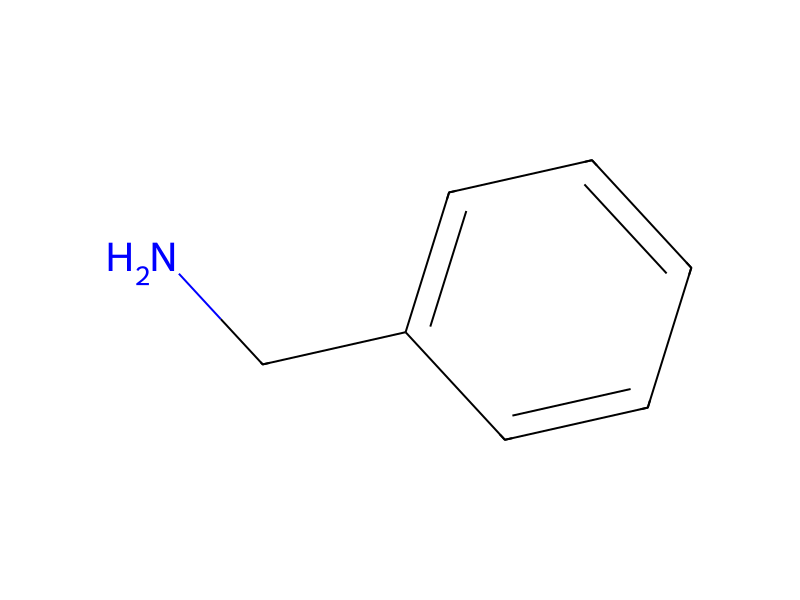
6.3 g (20 mmoles) 3,5-dibromo-1-(2'-hydroxyethyl)-4-nitropyrazole are heated in 20 ml benzylamine for 2 hours at 60° C. After cooling, the reaction mixture is poured on 50 ml of water, the separated product is filtered and recrystallized once from toluene/ligroine (1:1). 4 g (59 percent of theory) of 5-benzylamino-3-bromo-1-(2'-hydroxyethyl)-4-nitropyrazole are obtained in the form of yellow crystals with a melting point of 133° to 135° C.
Workup
- temperatureAfter cooling
- filtrationthe separated product is filtered
- customrecrystallized once from toluene/ligroine (1:1)
Sources & evidence
- ORD record
- ord-20bcebe5af98473aacffda94c882953a
- Source dataset
- uspto-grants-1997_09
- Patent number
- US05663366
Linked notes
Loading…